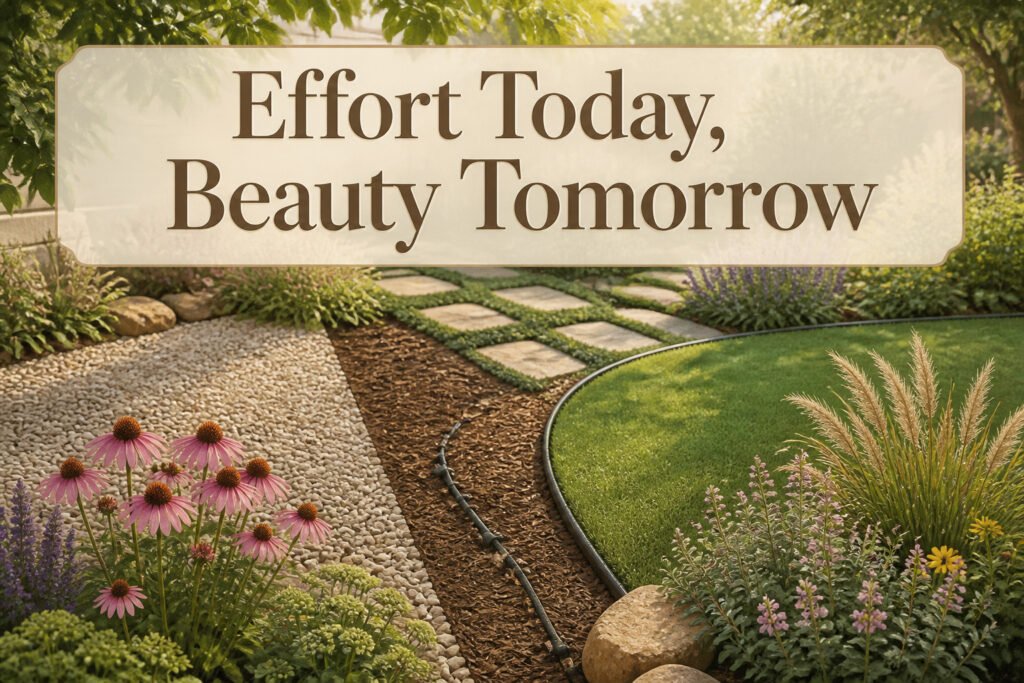
The ideas below range from a few bags of gravel to $18-per-square-foot artificial turf, and the right pick depends on whether your problem is time, water bills, or sheer physical labor. Most of them share a catch: the first season usually demands more effort than every year after. A drip line run under mulch, for instance, needs laying out now so you can ignore it later. The one detail that stopped me was that even native coneflowers need two full summers of shepherding before they truly fend for themselves.
1. Replace Lawn With Hardscaping
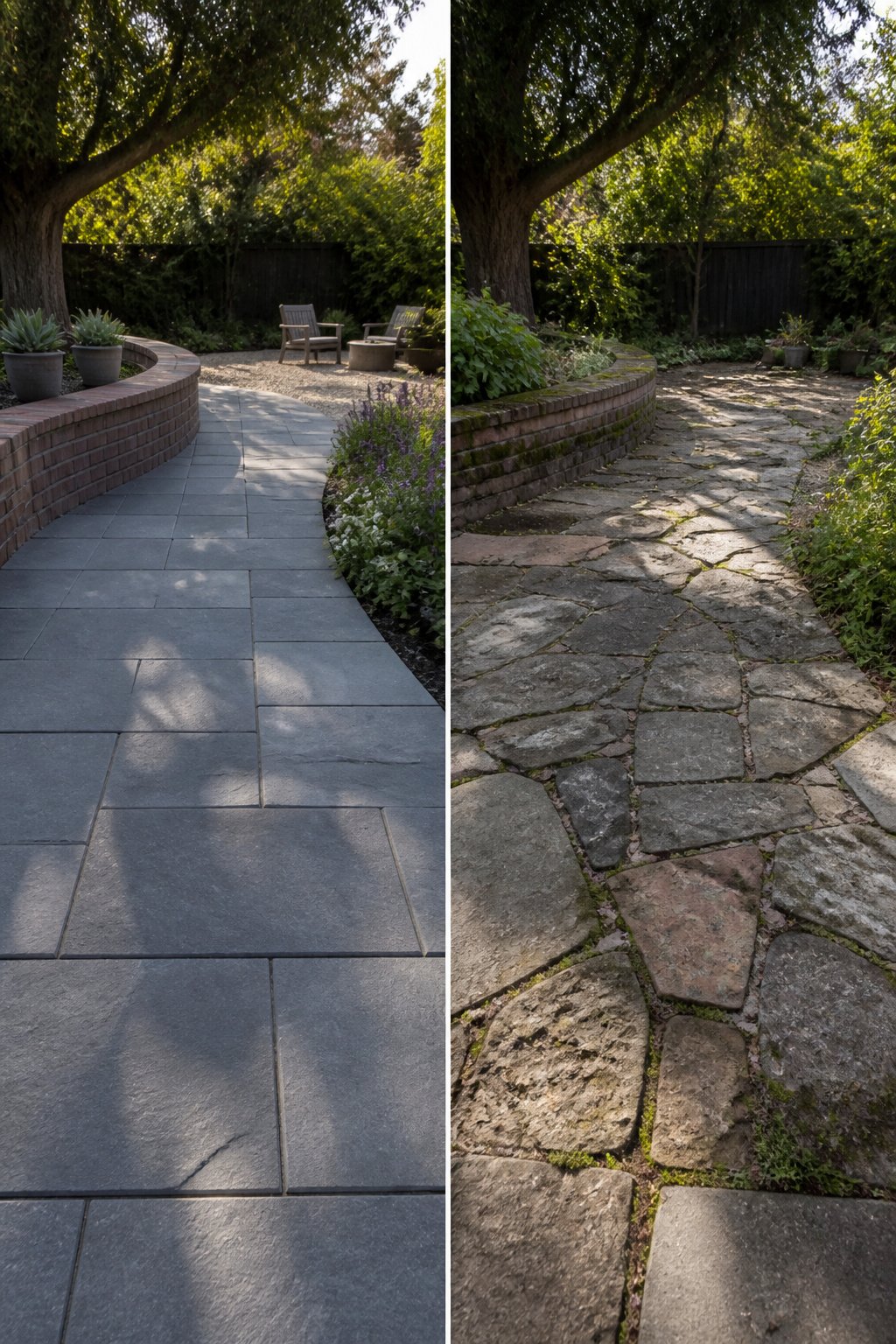
Less lawn equals less work, and hardscaping is the most frequently recommended path to get there. A patio, a gravel seating area, or a simple stone path adds structure you never have to mow, water, or reseed. The durability matters: pavers, natural stone, concrete, brick, or decomposed granite all hold up to foot traffic and weather with only occasional sweeping.
The look shifts with the material. Large-format pavers or poured concrete suit a modern house, while natural stone or pea gravel soften a cottage-style facade. Composite decking works for a raised surface if level ground is scarce. What convinced me, reading through a dozen of these plans, is how the choice of material matters less than committing to a shape that gives the yard purpose. A defined dining area or a path that curves to the driveway turns leftover grass into something intentional.
Gravel beds around the edges, raised planters built from stone, even a bench set on a brick pad all chip away at the turf without demanding a full backyard overhaul. Start with the spot that frustrates you most: the strip that browns in July, the corner where the mower barely fits. Replacing even that patch with hardscaping typically cuts weekly maintenance time by the full duration of a mow and trim.
2. Automate Watering Tasks
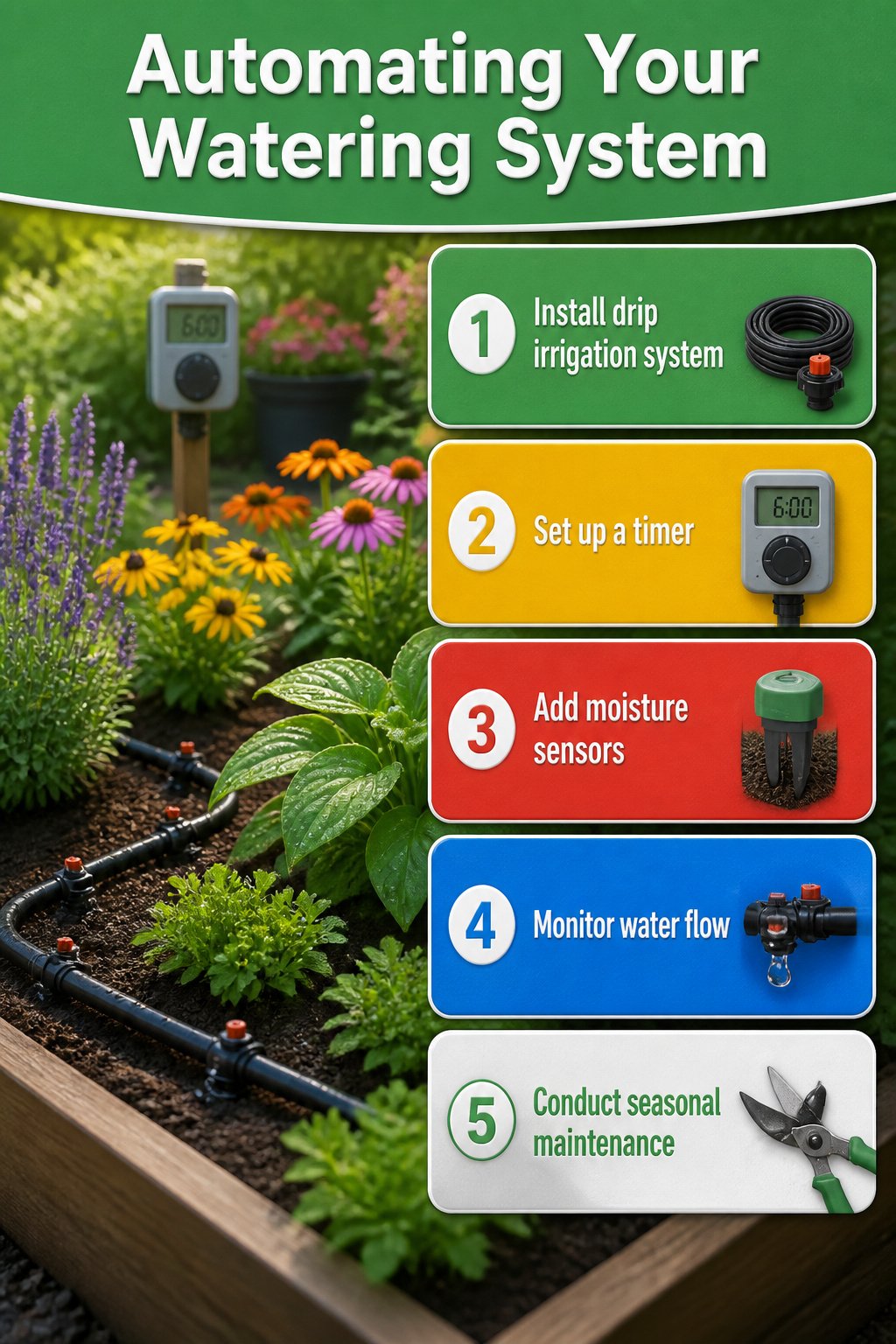
Drip irrigation changed how I think about watering. The tubing runs along the ground between plants and delivers water straight to the roots, which cuts evaporation and runoff the way broadcast sprinklers never will. I used to drag hoses through raised beds every evening; now the timer handles it.
That one-inch-per-week rule for lawns turns into a simple schedule you set once. Moisture sensors help, adjusting for rain or dry spells so you are not guessing. The same principle works for perennials, annuals, and groundcovers: deep, directed soaks encourage roots to grow downward instead of staying shallow and baking in summer heat.
Installation takes some planning, but after that the system mostly runs itself. Seasonal maintenance is the main task, and compared to hand-watering every container and bed, the trade feels easy.
3. Opt for Native Plants
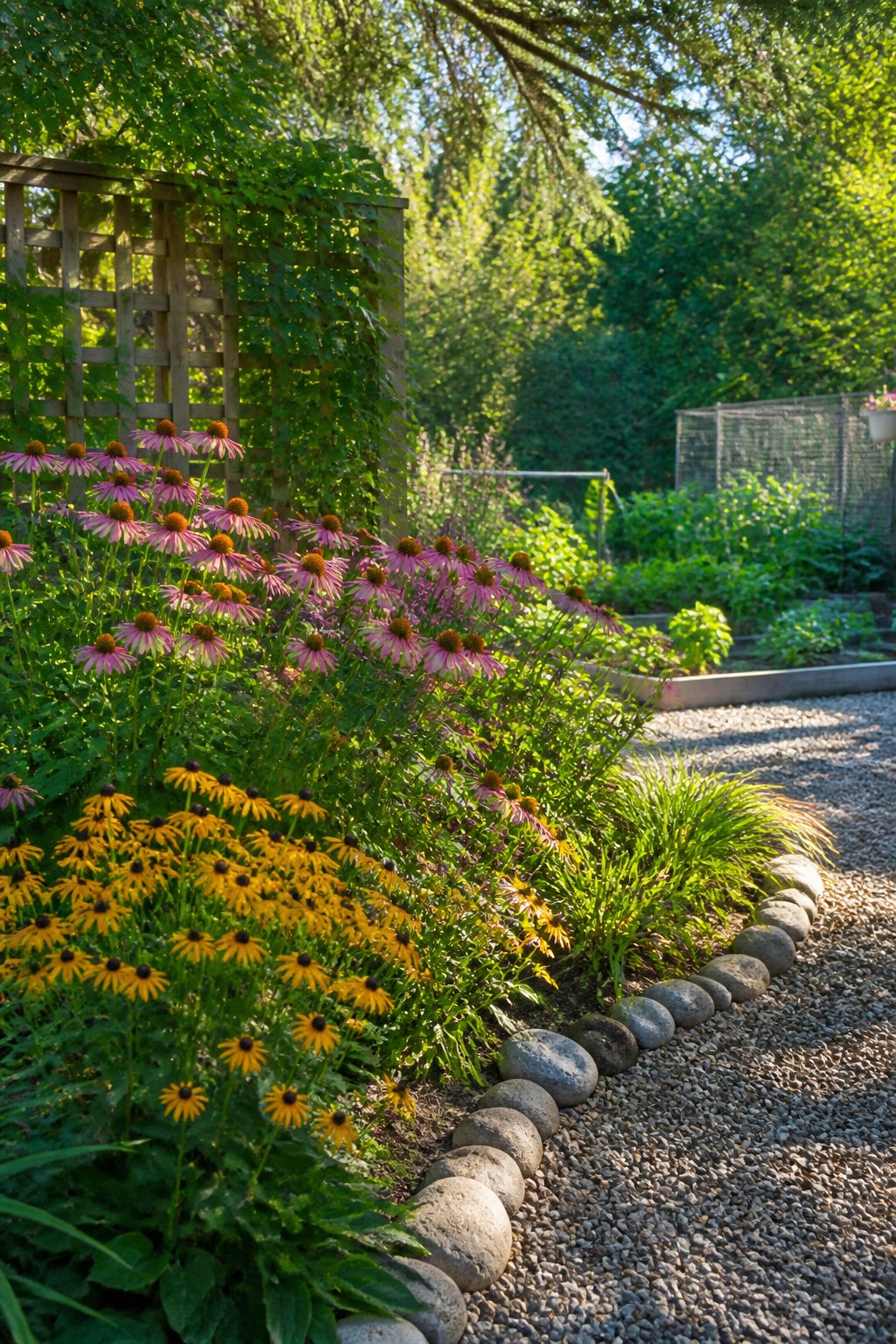
The year I stopped fighting my soil was the year my weekends opened up. I had been amending clay, coddling finicky cultivars, and still watching things wilt by August. Then I switched to a patch of purple coneflower and black-eyed Susan, both natives to my eastern region, and the difference was immediate. These plants needed no fertilizer and no extra watering once their roots were down, which took about two to three years before they truly settled in and the workload dropped.
Native species evolved in place long before anyone carted in bagged soil or sprinkler systems. That local adaptation means they shrug off regional pests and diseases that flatten non-natives, so chemical treatments become unnecessary. The savings add up: less water, no purchased amendments, fewer replacements after hard winters.
There is a caveat worth hearing. Garden writer Jo Ellen Meyers Sharp notes that natives are not zero-maintenance, only lower maintenance, and only after that establishment period. The first two seasons, you still shepherd them along.
Once established, though, the payoff extends past your own labor. Those same coneflowers feed bees and goldfinches through seasons when my ornamental beds sit silent. Native grasses, shrubs, and wildflowers knit into the local food web in ways cultivars rarely match. To find what belongs in your yard, search your state plus "native plants," or use the USDA Plant Hardiness Zone Map and the National Wildlife Federation’s Native Plant Finder. Most regions offer far more variety than people expect, from full-sun blooms to shade-tolerant understory plants, enough to build a whole landscape that mostly tends itself.
4. Use Artificial Turf
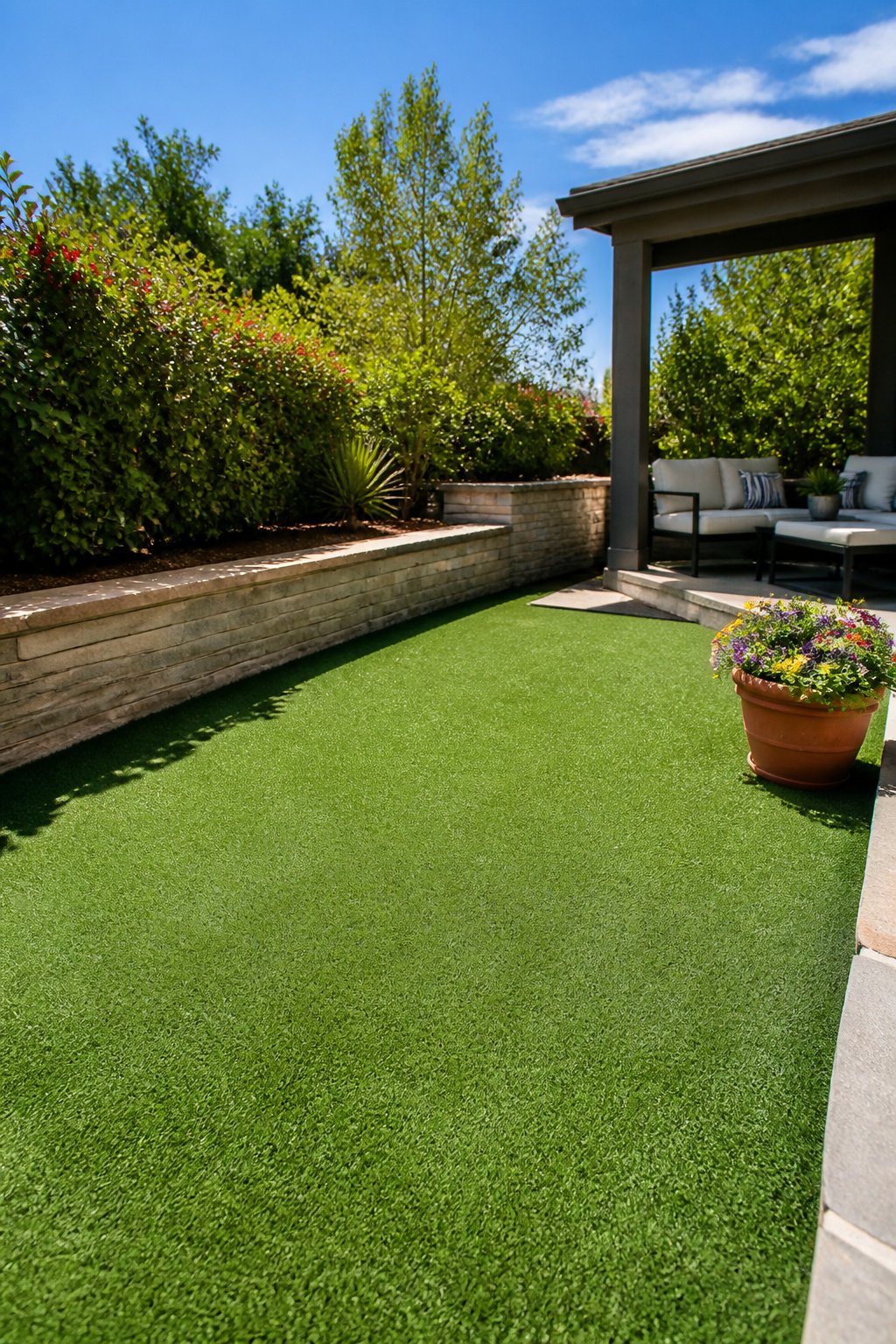
Synthetic grass has come a long way since the stiff Astroturf of decades past. Today’s nylon or polymer options carry varying blade heights and color gradations that read as real lawn from a few steps back, and you can even plant a tree straight through it. For a yard that needs zero water and zero mowing, artificial turf runs $7 to $18 per square foot installed, which puts it at the high end of low-maintenance alternatives.
The upfront sting is real. That same square footage in gravel or seed costs a fraction, and turf pays itself back only if you were already paying for professional mowing or live under strict watering restrictions. Heat retention is the other tradeoff worth naming: synthetic fiber absorbs and holds summer sun, so the surface runs noticeably hotter than living grass, enough to matter if pets or bare feet use the space.
Occasional rinsing keeps it presentable, particularly after pets, so "fuss-free" still means a hose and a few minutes of your month. Shade and heavy wear are where it genuinely outperforms natural grass, since neither mud patches nor thinning solve themselves here. The calculation is simple enough: if your lawn is small, your water bill is steep, and your weekends are short, the numbers can work. If your space is large and your climate mild, the cost and the warmth underfoot may push you toward ground cover instead.
5. Plant Evergreen Trees, Shrubs, and Ground Covers
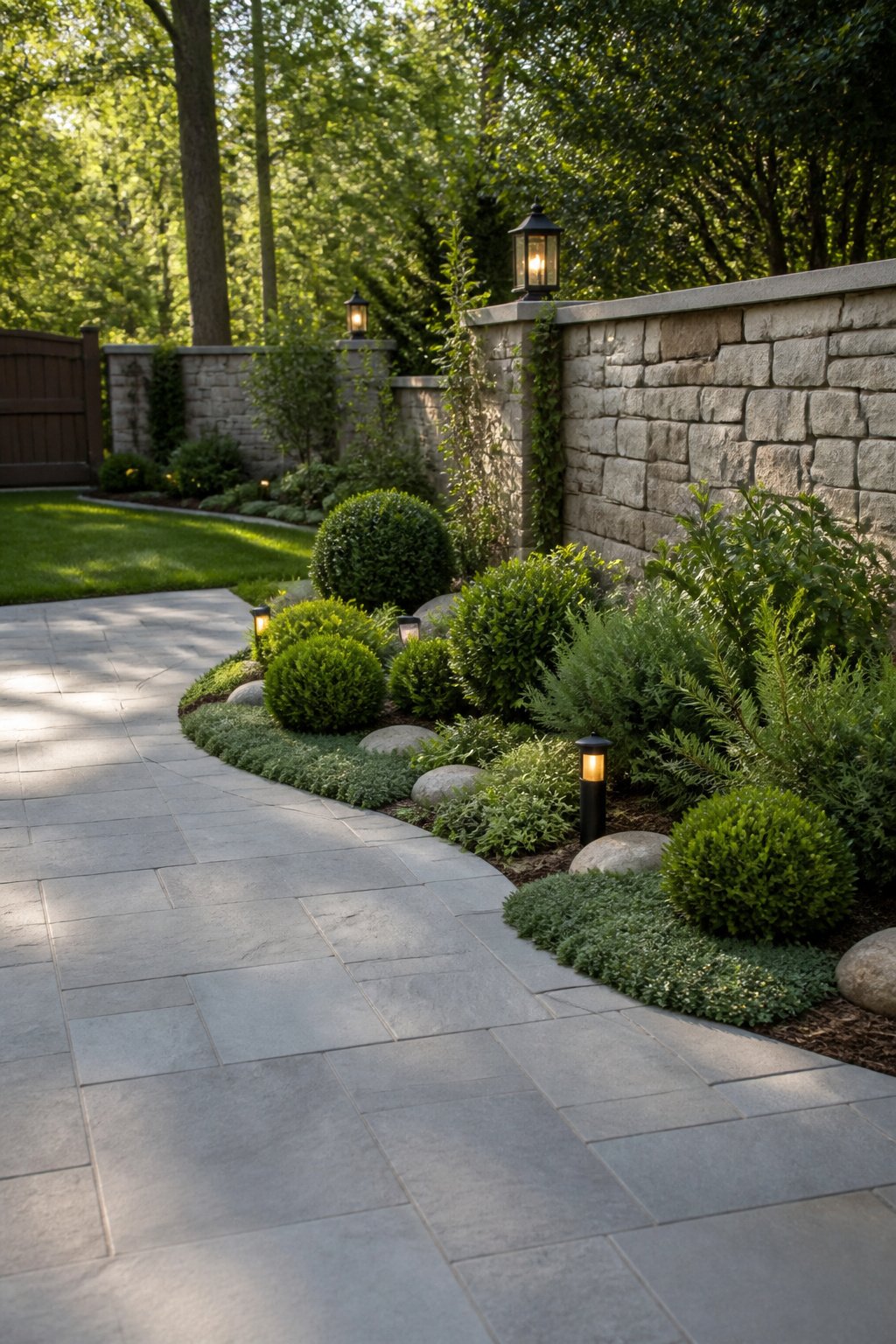
Evergreen shrubs like boxwood, juniper, and dwarf holly keep their color through every season without asking you to replant. Their water and pruning needs stay low once established, and many hold their shape well enough that frequent trimming becomes optional. Reduced leaf cleanup is the quiet payoff; deciduous trees dump their workload on you each fall, but these carry on with minimal debris.
Ground covers layer in underneath to finish the job. Creeping thyme, sweet woodruff, or clover spread naturally, suppress weeds, and eliminate the mowing cycle entirely. Where traditional grass demands water, fertilizer, and weekly cutting, these stay close to the ground and need far less of all three. Pair them with low-effort shrubs like boxwood or spirea and you get contrasting texture and color without the pruning calendar.
Two practical notes from what I read. Ivy sounds romantic but climbs everything, invades everywhere, and turns into constant maintenance; skip it. Deer complicate the picture depending on your neighborhood, and their tastes vary enough that local trial matters more than any list. Where they browse heavily, pachysandra and vinca typically get left alone, while liriope sometimes comes back half-chewed.
6. Use Monkey Grass for Borders
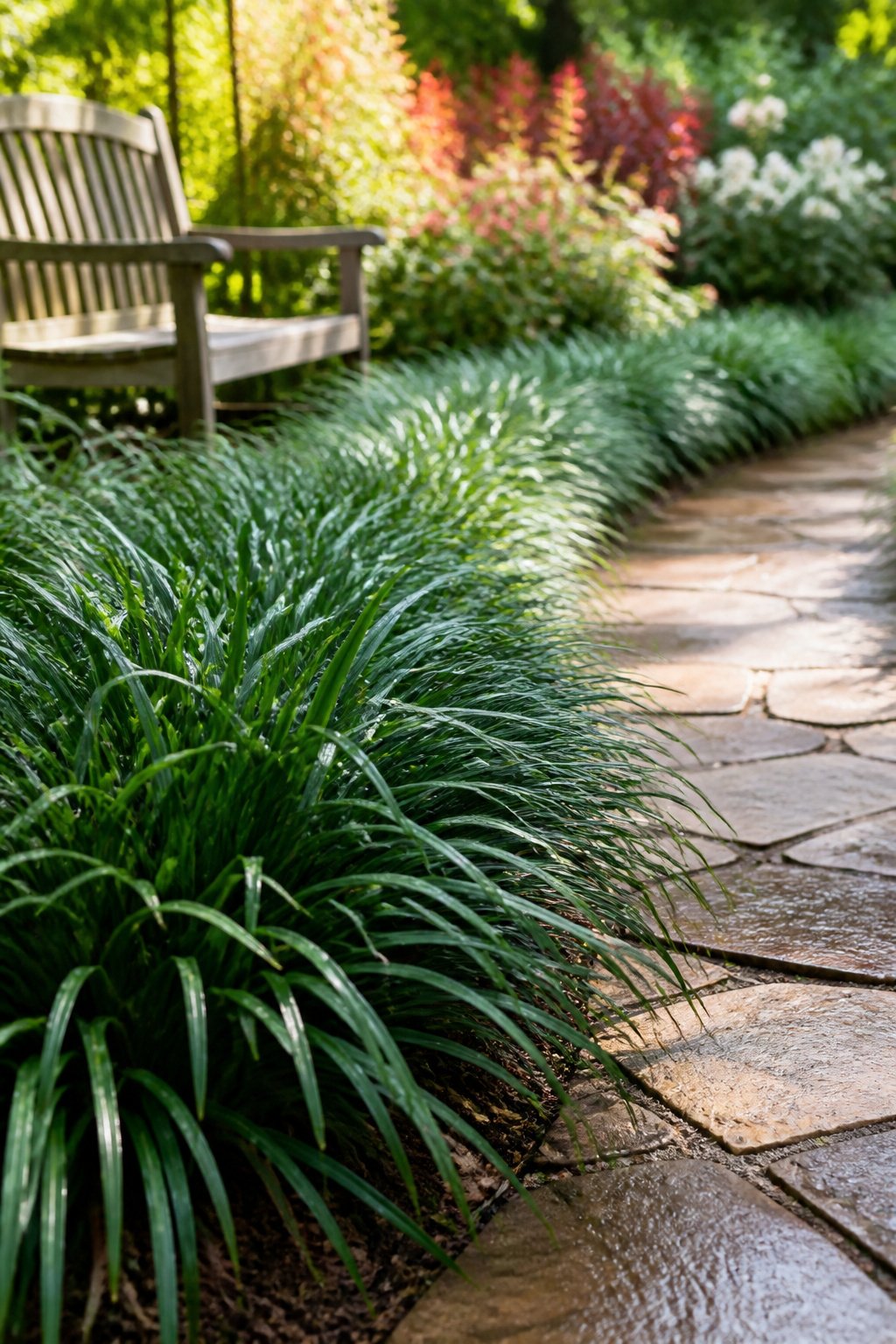
Monkey grass sits right at the edge of a bed or path and stays there, no creeping into the lawn, no bare spots widening where feet land. Liriope muscari forms neat clumps about 15 inches tall once it settles in, and after that first season it mostly handles itself. Deer walk past it, dogs run over it, and the usual bug pressure does not seem to bother the leaves much. I have watched it hold green through summer dry spells that turned other edging plants straw-colored, and it does not demand any particular soil to do it. The only choice you really face is whether to shear it back in late winter or let it grow out to its full height. Either way works; the plant does not sulk. For a $500-800 garden budget, a few clumps split and spread over a season or two will edge a surprising length of path for the cost of one afternoon and the initial plants.
7. Select Fewer Trees and Shrubs
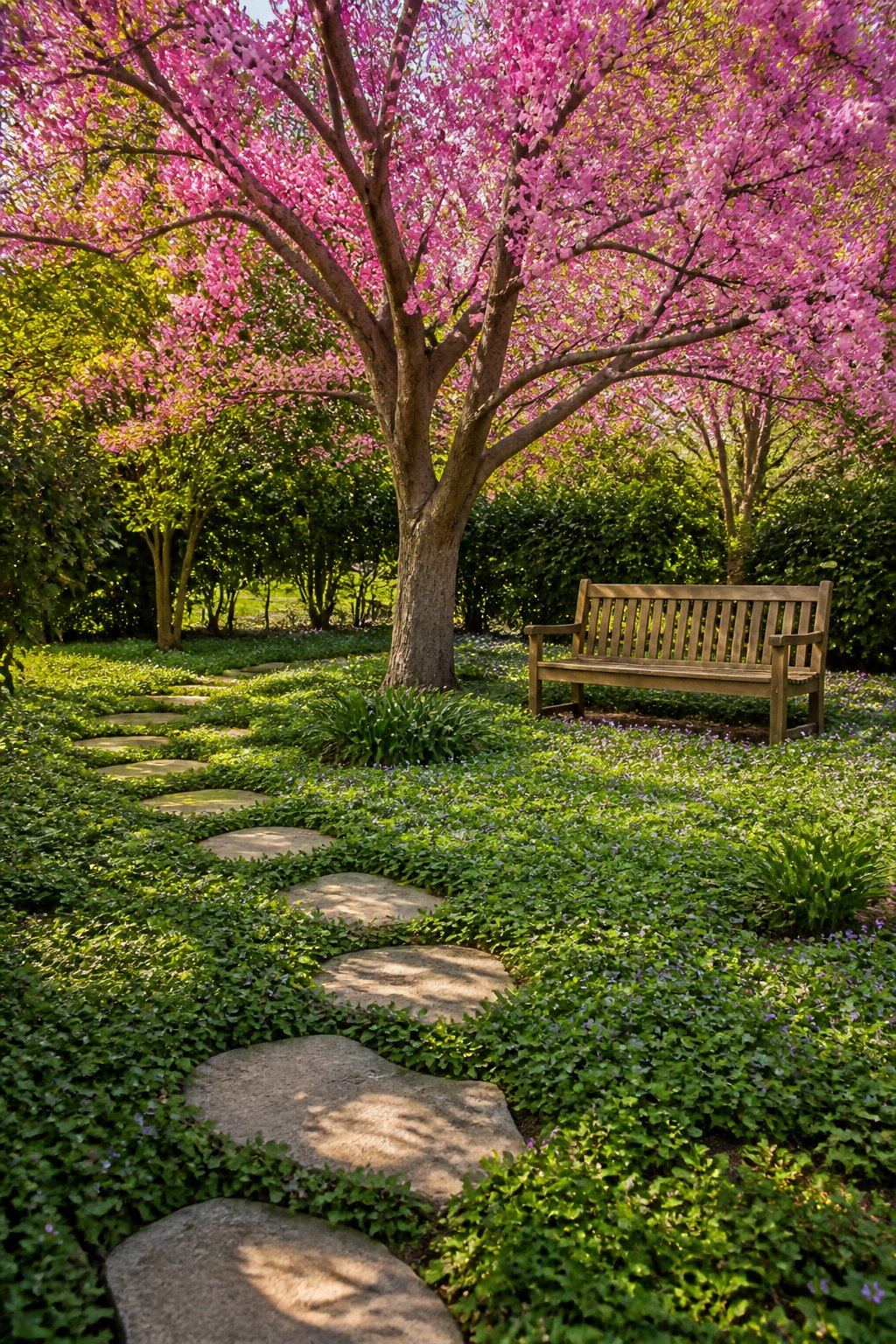
A front bed jammed with three dogwoods, two hydrangeas, and a handful of shrubs looked full the day I planted it. By year three, I was pruning every weekend from March through September, chasing crossing branches and powdery mildew that spread because air couldn’t move between the crowns. Fewer specimens means fewer pruning, feeding, and disease management tasks, period.
Slower-growing trees and shrubs eliminate most of that chase. A single well-chosen redbud or serviceberry gives you spring color and fall structure without the constant shaping that fast growers demand. The same bed, now holding just that one tree and a groundcover at its feet, needs maybe two hours of attention a season.
Plant selection matters as much as plant count. Pest-resistant varieties suited to your actual sun and soil won’t need the spraying and extra feeding that stressed specimens require. Know the mature height and spread before you buy, and put nothing in that will outgrow its spot. Changing your yard to suit a plant you fell for at the nursery is how maintenance multiplies.
8. Plant Hardy Succulents
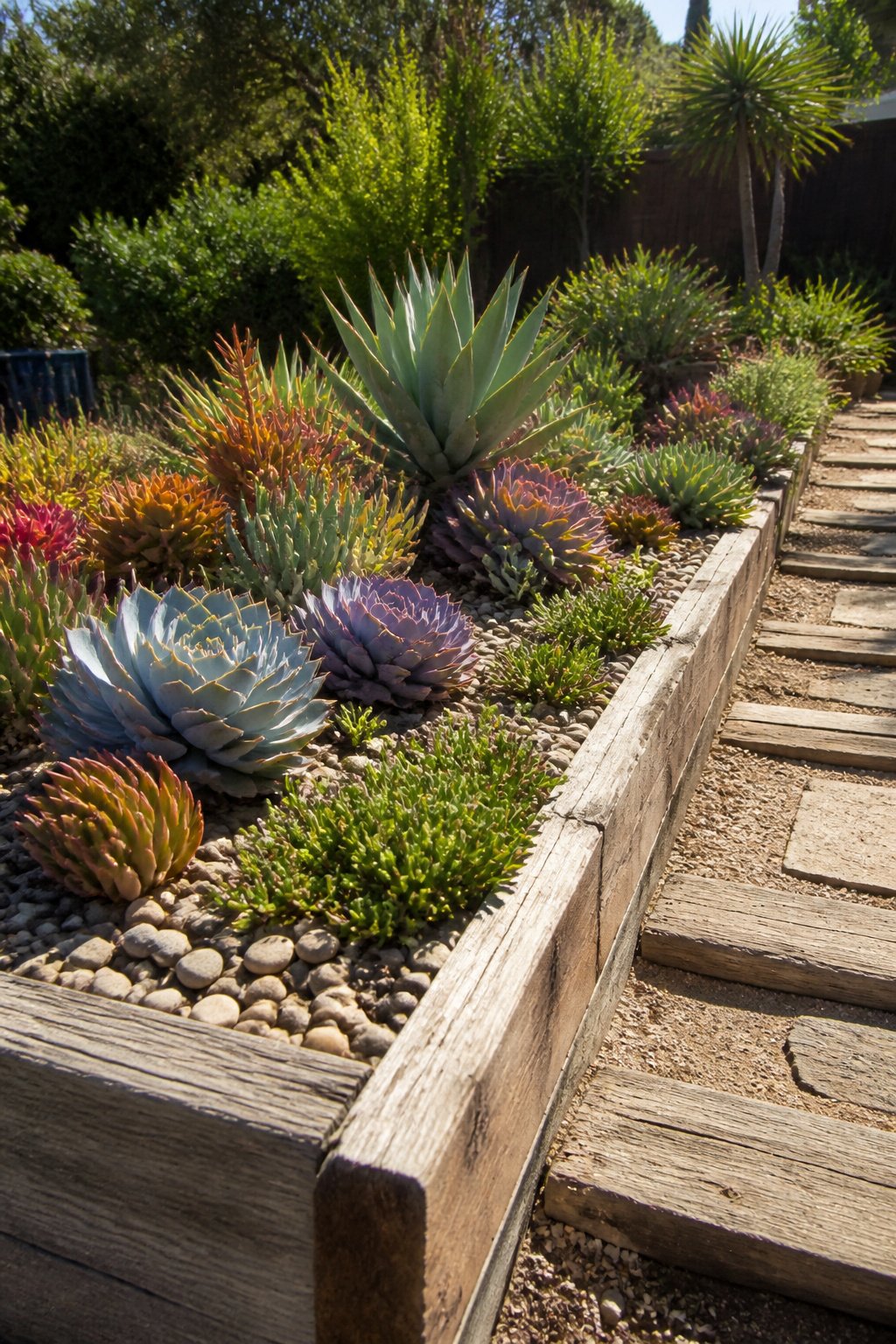
Some summers the hose stays coiled for weeks and the soil bakes hard. Succulents handle that neglect without complaint. Their thick, fleshy leaves store water like a built-in reservoir, so a deep soak every couple of weeks beats a daily sprinkle.
Sedum was the first one I planted along a strip of driveway where nothing else would take. It spreads low and carpets the ground with tiny star-shaped flowers in late summer. No mowing, no deadheading, no fertilizer schedule to forget.
Drainage matters more than soil quality. These are shallow-rooting plants that rot fast in clay that holds puddles. A raised bed or even a gravel-topped mound solves that cheaply.
Mixing varieties keeps the bed from looking like a parking strip. Echeveria rosettes, upright agave spikes, and creeping sedum together give three textures for roughly the same effort as one. Full sun is non-negotiable; half-day shade and they stretch out leggy and weak.
The real payoff is the water bill. Once established, succulents cut irrigation to almost nothing compared with turf or annual beds. For a gardener on a $500–800 year, that saved water is money you can spend on something that actually needs it.
9. Grow Self-Cleaning Roses
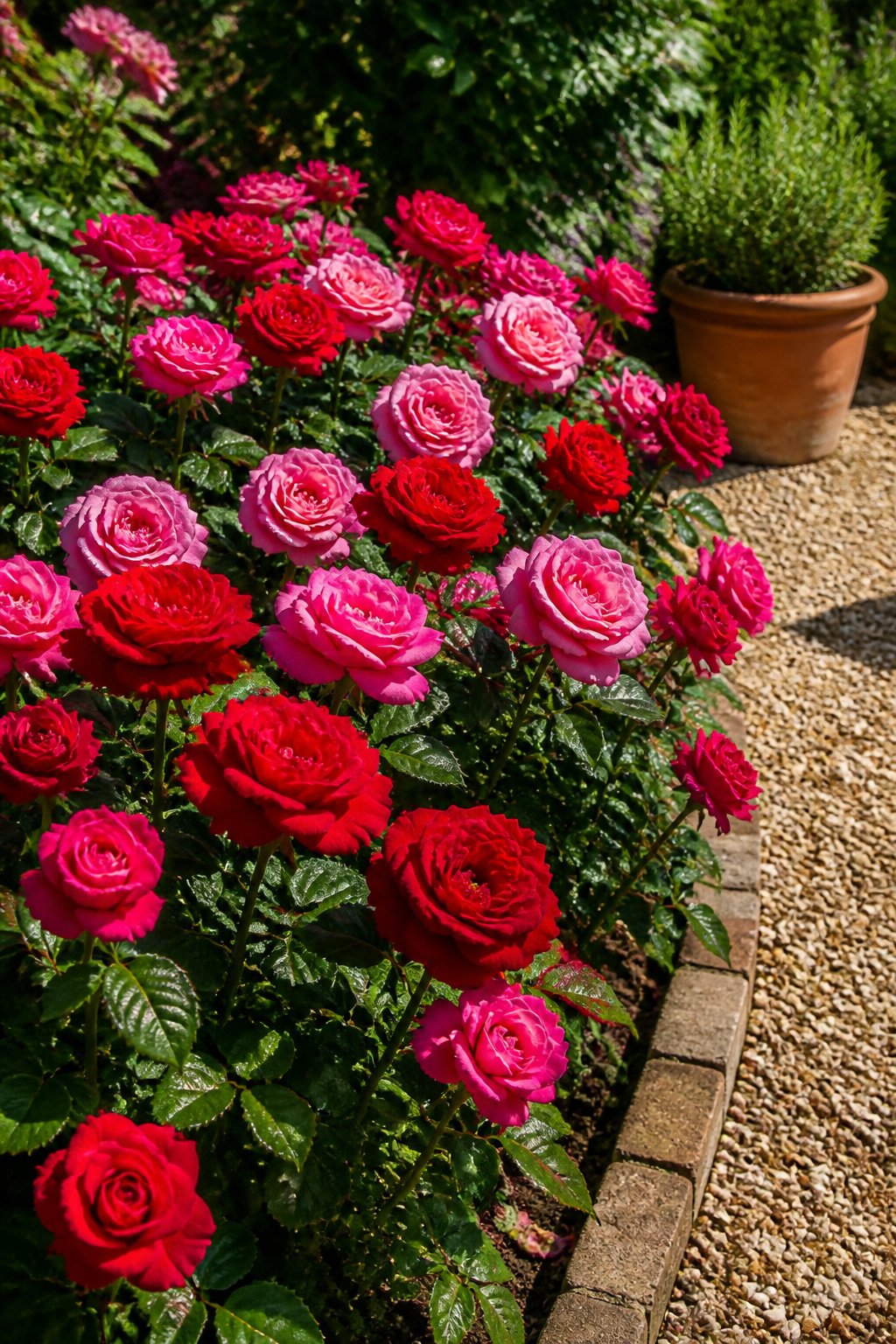
Roses used to mean hours of deadheading and black-spot patrol until I found the ones that refuse to cooperate with that routine. Knock Out roses are self-cleaning, so spent blooms drop on their own and new ones keep coming without you snipping anything. That one change cuts the summer workload in half.
Pruning stays minimal too. A hard cut in early spring, some organic rose food, and occasional foliar feeding through the season is the whole program. The heat resistance matters in the zones where August turns other roses crispy.
Proven Winners’ Oso Easy Double Red works the same way, no deadheading needed, though it runs larger at 3 to 4 feet tall and wide. Powdery mildew and black spot resistance keeps the foliage presentable without sprays. Either shrub fits a sunny border where you want color from May to frost and do not want a calendar full of maintenance dates.
10. Raise Plants Suited for Your Growing Zone
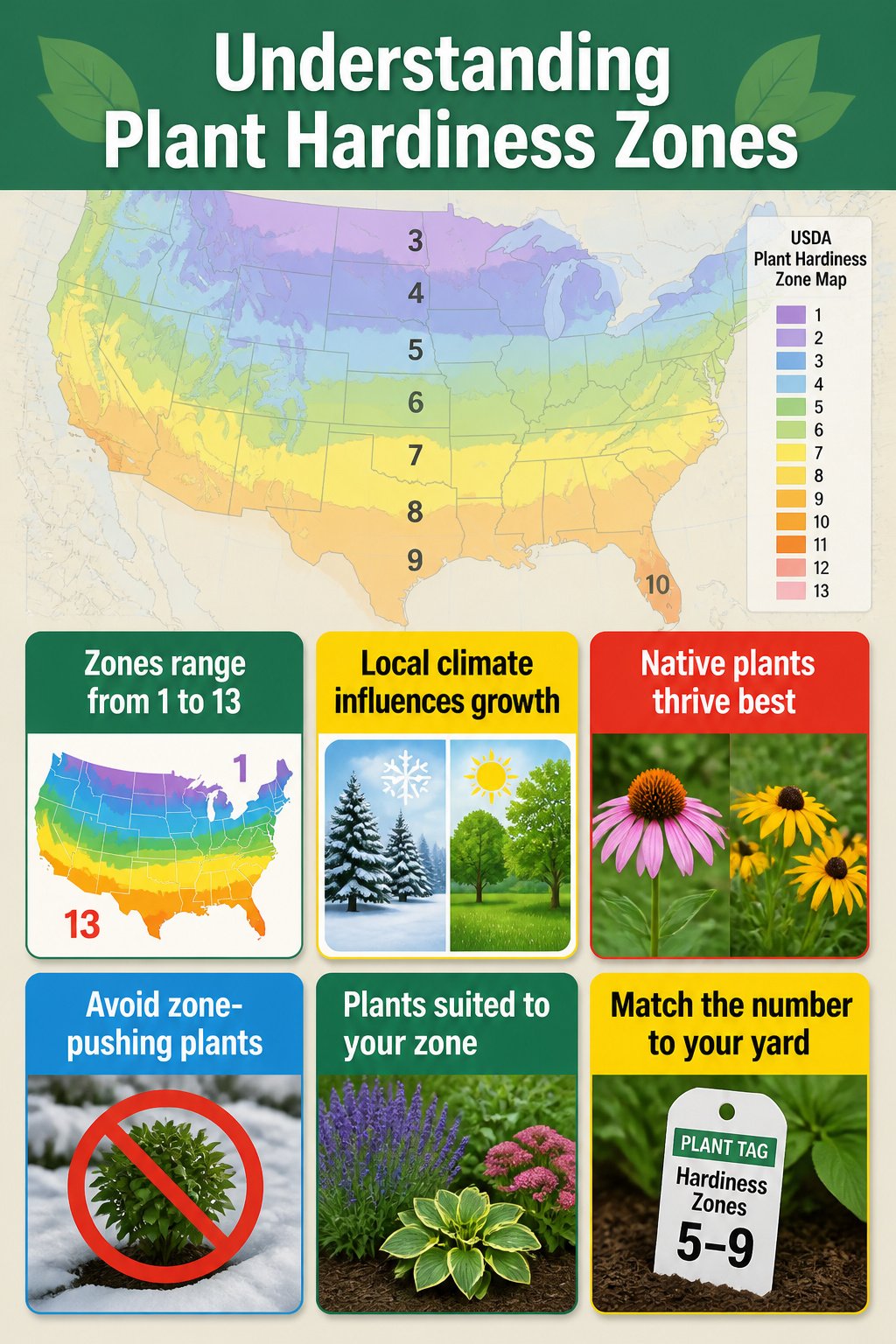
The USDA Plant Hardiness Zone Map splits the country into numbered bands based on the average lowest winter temperature each region can expect. A plant tagged for zones 5–9 but planted in zone 4 will need wrapping, mulching, or replacing after the first hard freeze. Matching the number on the tag to the number for your yard is the first filter for what actually belongs in a low-maintenance plan.
I used to lose perennials every March until I stopped buying for the flower and started buying for the zone. The difference was immediate: fewer dead plants to dig out, fewer gaps to fill on a Saturday, less money spent on replacements that were never going to make it. Plants suited to your zone handle your winters and summers without extra water, fertilizer, or chemical rescue.
Native species are the clearest match because they evolved in those conditions, but even non-native choices work if the zone rating is honest. The key is refusing to stretch the range. A zone-pushing plant becomes a gardening project, and projects are the opposite of low maintenance.
11. Build Paths or Patios With Gravel
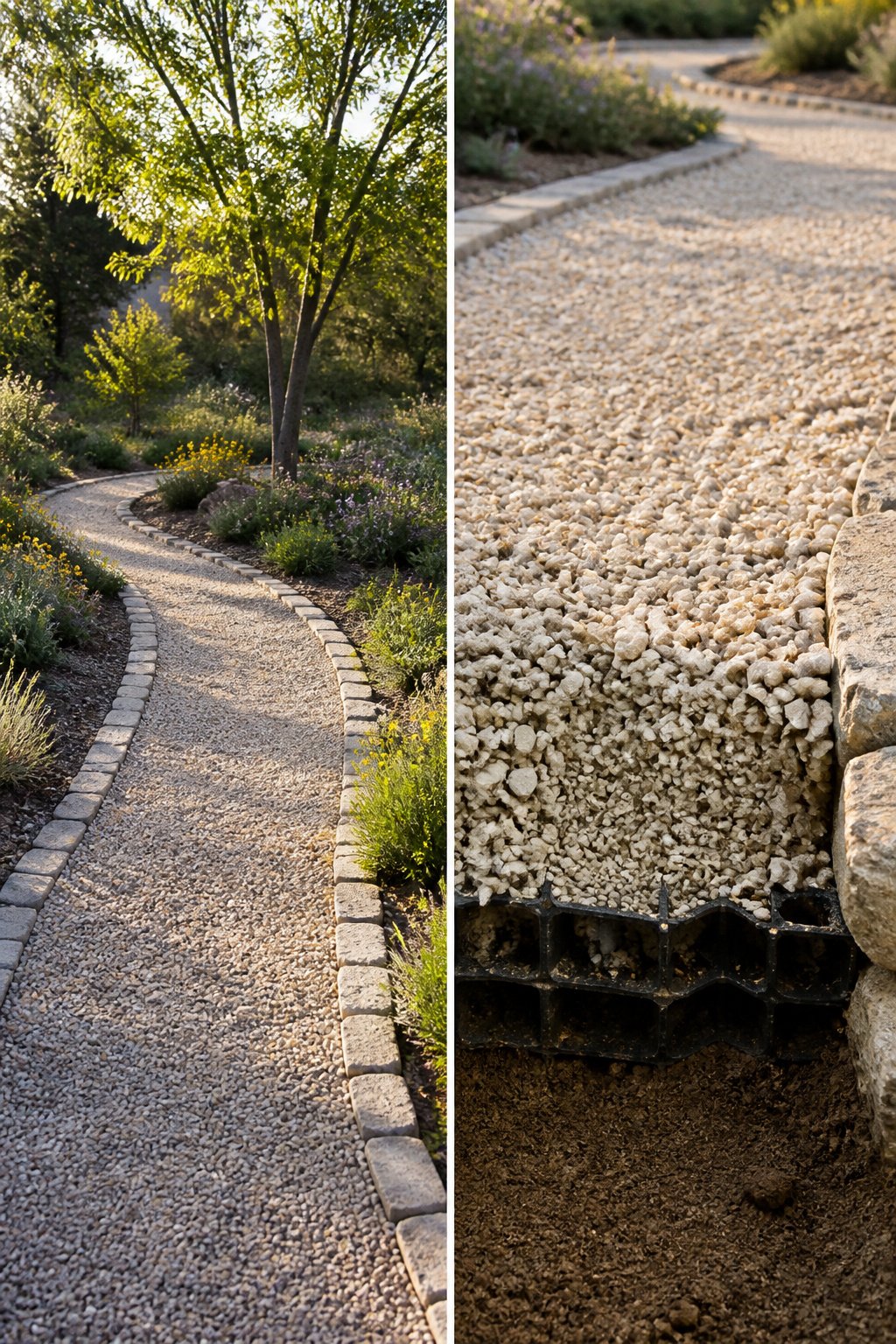
Gravel paths and patios let water drain straight through instead of pooling, which matters more than I expected after watching a neighbor’s paved walkway turn into a small creek every spring storm. The upfront work is laying weed barrier fabric underneath, pinned down so nothing shifts. Water still passes through to the soil below, especially important near any tree roots that need that moisture. Decorative stone comes in enough colors that the gravel itself becomes part of the design, not just a surface to walk on. Slopes and areas with poor soil actually favor this approach, since the drainage solves two problems at once and you are not fighting to keep grass alive where it never wanted to grow.
12. Replace Grass With Ground Covers
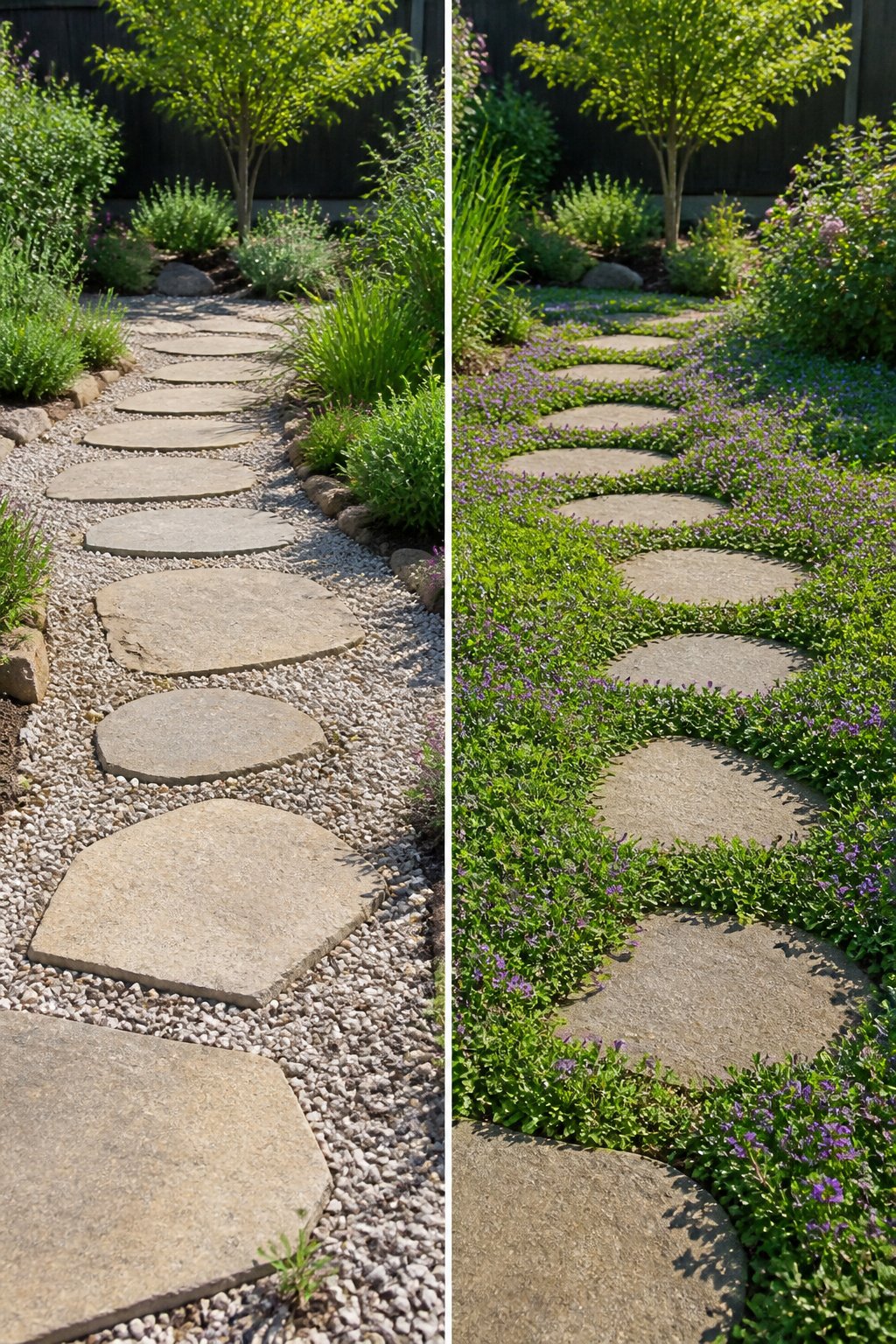
Creeping thyme, clover, and sedum each cut out the weekly mowing cycle entirely, and the watering and feeding schedules shrink with them. I swapped a patch of struggling turf for creeping thyme two summers back after watching it bake brown no matter what I did. The thyme formed a dense green mat that summer, then purple blooms the next, and the only maintenance since has been pulling the occasional weed that pokes through early in the season.
Clover fixes nitrogen in the soil on its own, so it stays green without the fertilizer schedule grass demands. It is soft underfoot, which matters more than I expected for the path between my patio and the raised beds. Sedum spreads thick enough to suppress weeds once it establishes, and it handles dry stretches that would crisp a traditional lawn.
Ground covers eliminate mowing entirely and cut watering to almost nothing once established. The tradeoff is patience: the first season looks sparse, and weeds will find the gaps. A temporary light mulch or hand-weeding for those first few months solves it, but this is not an instant fix. For the small yard working on limited time, the payoff starts in year two and keeps compounding.
13. Plant Easy-Care Perennials
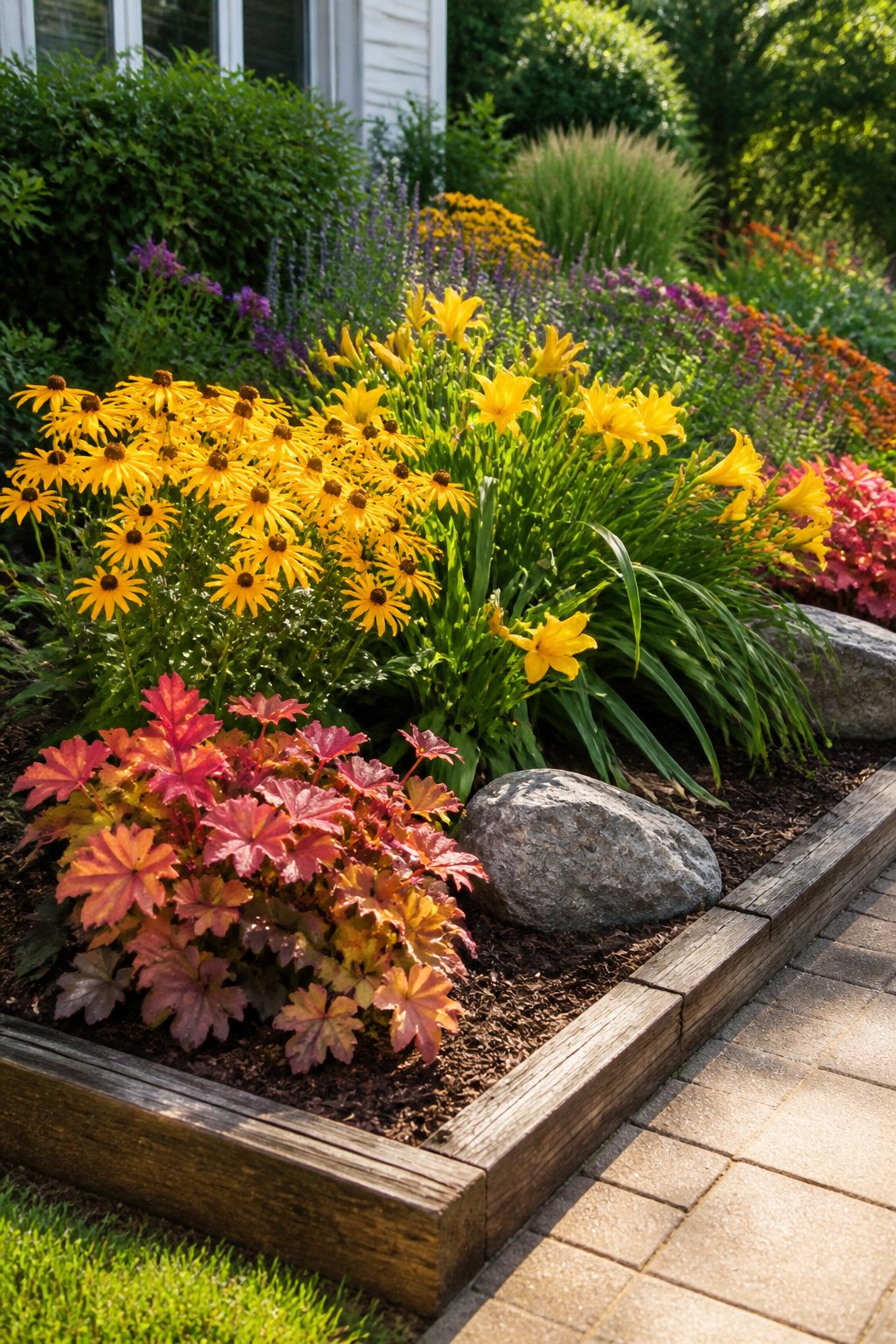
Coneflowers, hostas, and daylilies came back in my beds for three years before I touched them once. That is the appeal of perennials that behave themselves: no replanting, no staking, no deadheading, just color returning on its own schedule. I have learned to skip varieties that demand division every other spring or flop without support. Coral bells give structure from foliage alone, shifting from lime to burgundy without a flower required. Catmint works harder than it looks, blooming through summer heat and surviving dry spells I forget to water. For early color when little else is up, hellebores push pink and white blooms above evergreen leaves while the soil still chills. Black-eyed Susans and salvia fill the gap between, feeding bees and tolerating average dirt without complaint. The only caution the sources agree on: check care requirements before you buy, because even low-care perennials vary in what they need to establish.
14. Choose Low-Maintenance Shade Trees
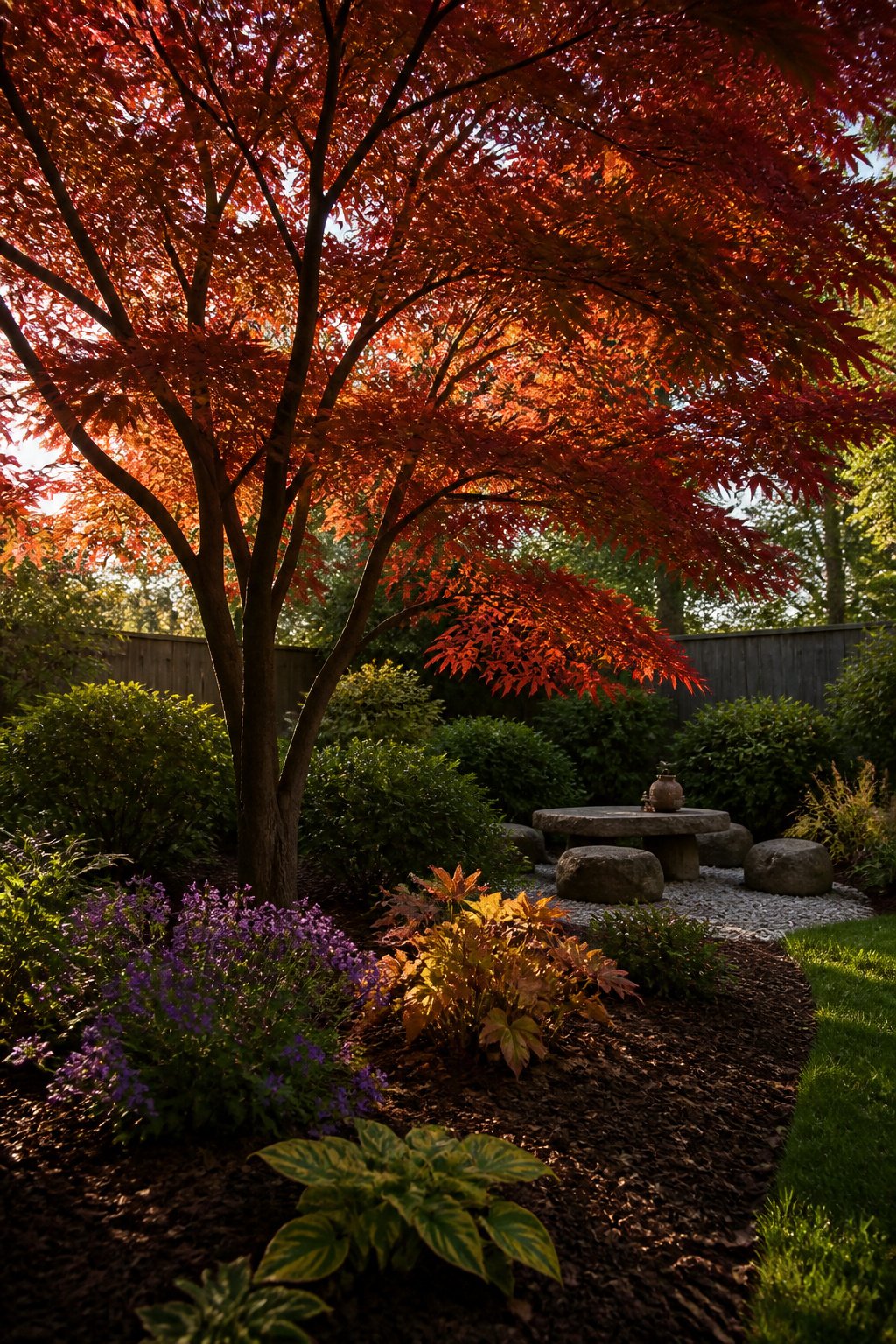
Low-maintenance shade trees earn their place by what they do not do. I look for species that skip the messy extras: no spent blooms carpeting the lawn, no hickory hulls to rake, no invasive seedlings sprouting in the flower beds. Evergreens and standard shade trees that hold their leaves or drop them cleanly once a year cut the cleanup calendar in half.
The long payoff matters more than the first season’s growth. A well-chosen tree cools the house in July, blocks winter wind, and needs nothing from me but mulch kept a few inches back from the trunk. That gap prevents crown rot and vole damage, small details that determine whether a tree stays low-maintenance or becomes a weekend project.
Japanese maples, serviceberries, and crape myrtles have worked for gardeners I have followed because they establish once and then largely manage themselves. Serviceberry adds edible fruit without demanding spray schedules; crape myrtle shrugs off heat and poor soil. The key is matching the tree to the space it will fill in ten years, not the space that looks empty this spring.
15. Mulch Fallen Leaves With a Mower
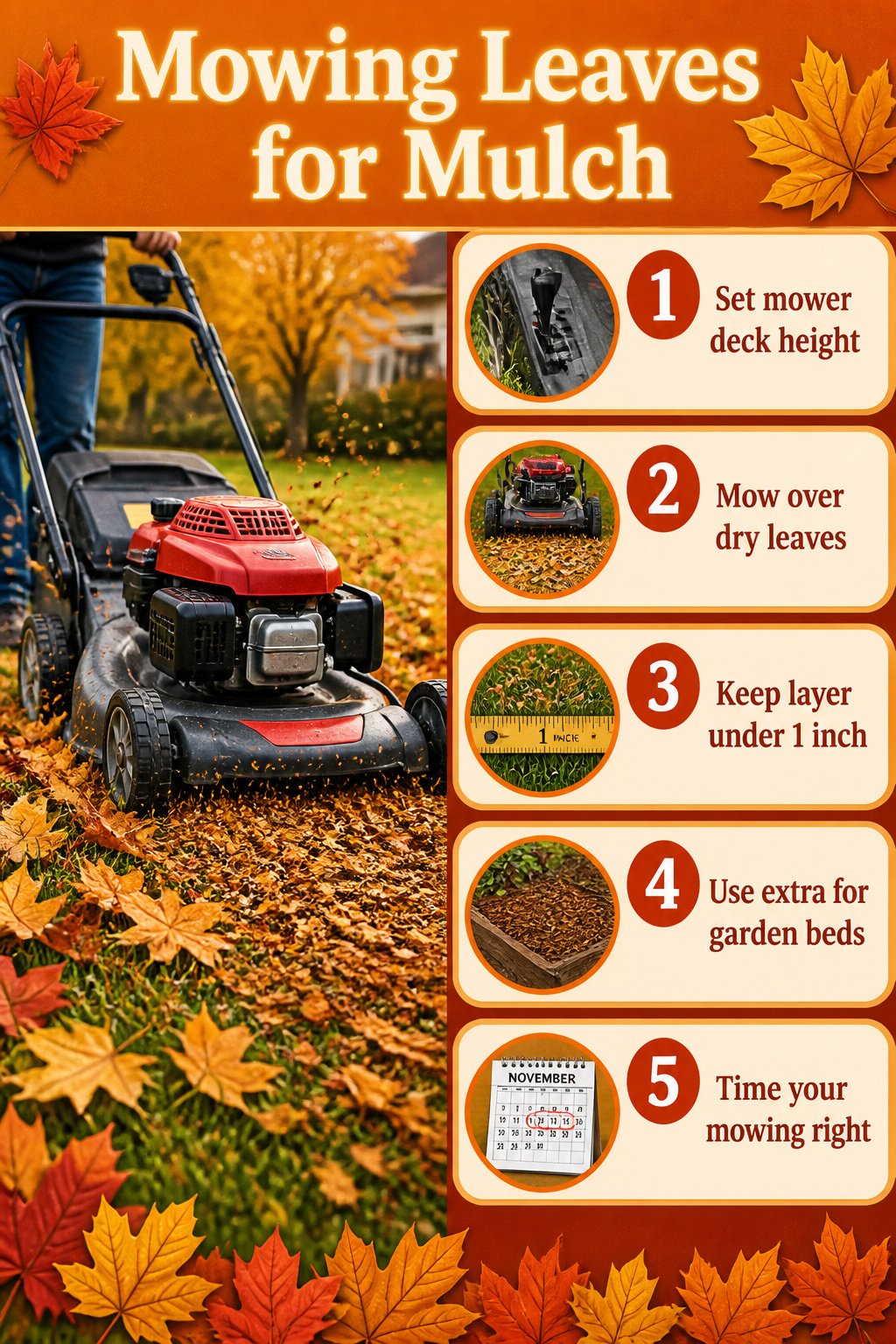
A mulching lawn mower turns autumn leaves into free fertilizer instead of bagged yard waste. Set the deck to your normal cutting height and run over dry leaves until the pieces are roughly dime-sized. Keep the layer no thicker than 1 inch to avoid matting and thatch problems; any excess gets raked into garden beds where it breaks down over winter. The timing matters. Mid- to late fall, after most leaves have dropped but before heavy rains set in, gives the bits time to sift down to soil level. I used to rake for hours until a neighbor pointed out her lawn looked greener where she’d been "lazy" the previous year. The shredded leaves feed soil microbes, hold moisture, and suppress weeds without buying a single bag of mulch.
16. Lay Fabric Barriers to Cut Down on Weeding
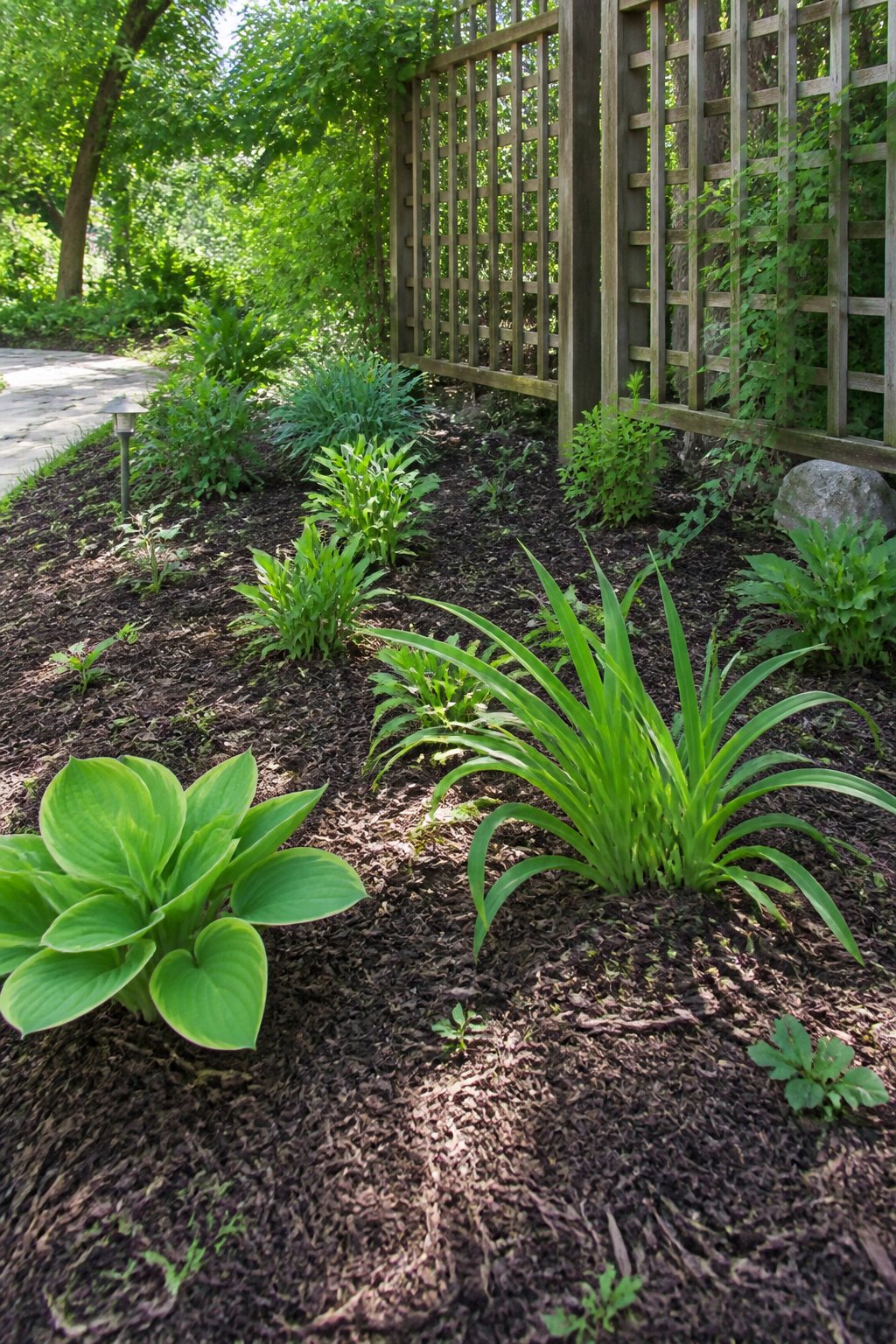
Landscape fabric under mulch or gravel buys a few seasons of peace, not a lifetime. I learned that the hard way after installing it along a side path and assuming the job was done. Water needs to pass through, especially near trees, so permeable fabric is the only kind worth using. Pin it in place, cover it with your mulch or stone, and the weeds mostly stay put for a while. Organic mulches break down and enrich the soil as they go; inorganic ones like stone or rubber last longer but do not feed anything. The fabric itself degrades eventually, and when it does you either add another layer on top or pull it up and start over. I have done both, and replacing it is the cleaner fix.
17. Add Maintenance-Free Rock Mulch
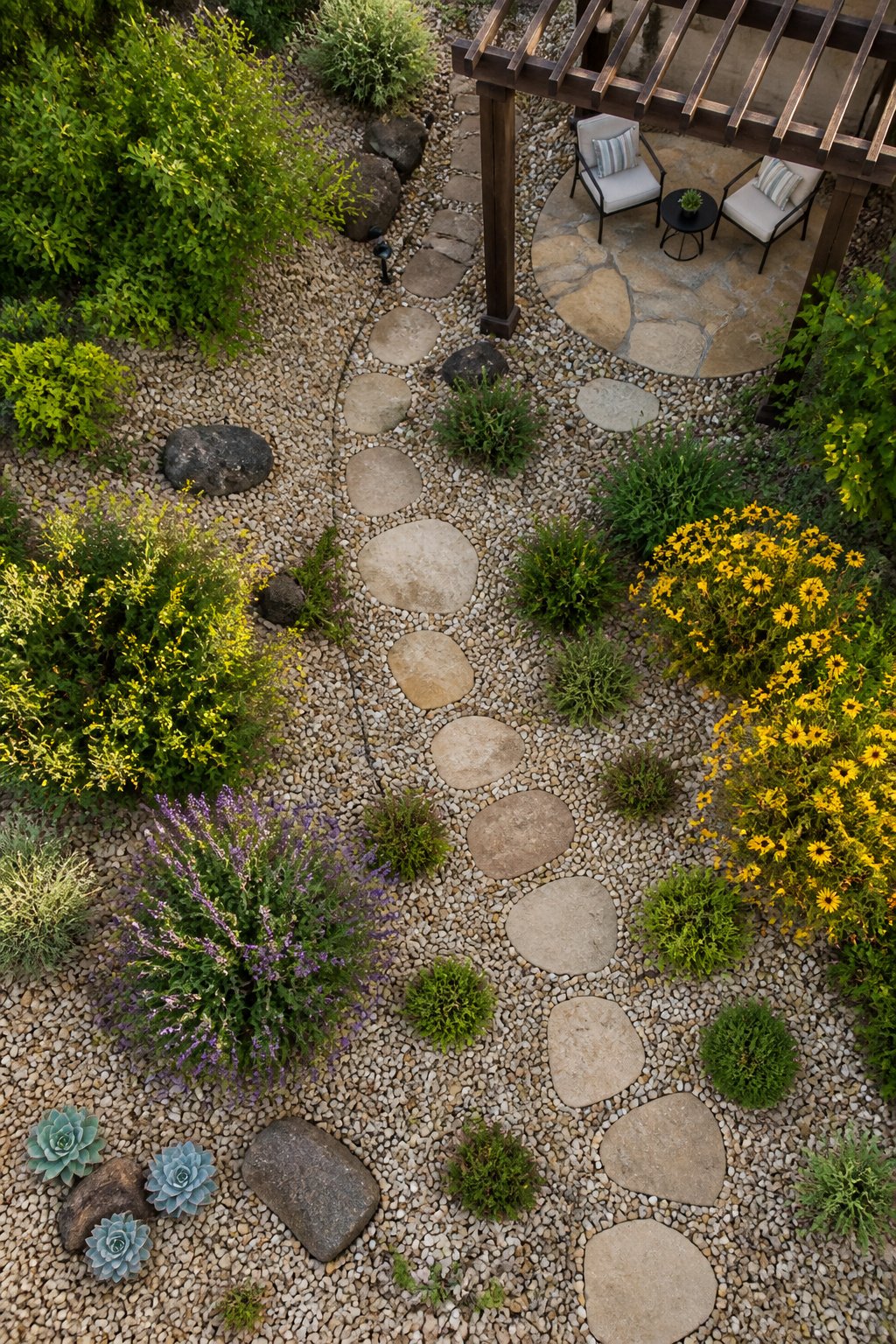
Organic mulch looks softer against soil, but it breaks down. Every spring and fall, wood chips or pine straw need a refresh, and that chore adds up. Inorganic mulch, stone and rock especially, skips that cycle entirely.
Pea gravel, river rocks, or crusher fines for paths each sit where you put them for years. A 2- to 4-inch layer does the work, with the thinner end for smaller particled rock. The tradeoff is real. Stone won’t enrich soil the way decomposing bark does, and it does not soften a bed the way shredded hardwood does. Where it wins is permanence: no annual topping off, no rot, no migration of faded fragments.
Weeds still push through, though fewer than bare dirt. Pulling them immediately matters more with rock than with organic mulch, because once weeds set seed, the problem compounds. Stone also reflects heat. In a hot climate, that reflection can stress plants that prefer cool roots; paired with succulents or cacti, it becomes an advantage.
The upfront labor is higher, hauling and spreading rock is heavier work than dumping bags of bark. Spread that cost across five or ten years of skipped refreshes, and the math shifts. For a bed of agaves, a strip along the foundation, or any zone where the look of clean mineral ground suits the plant choice, rock mulch is the lower-maintenance bet.
18. Use Watering Tools to Your Advantage
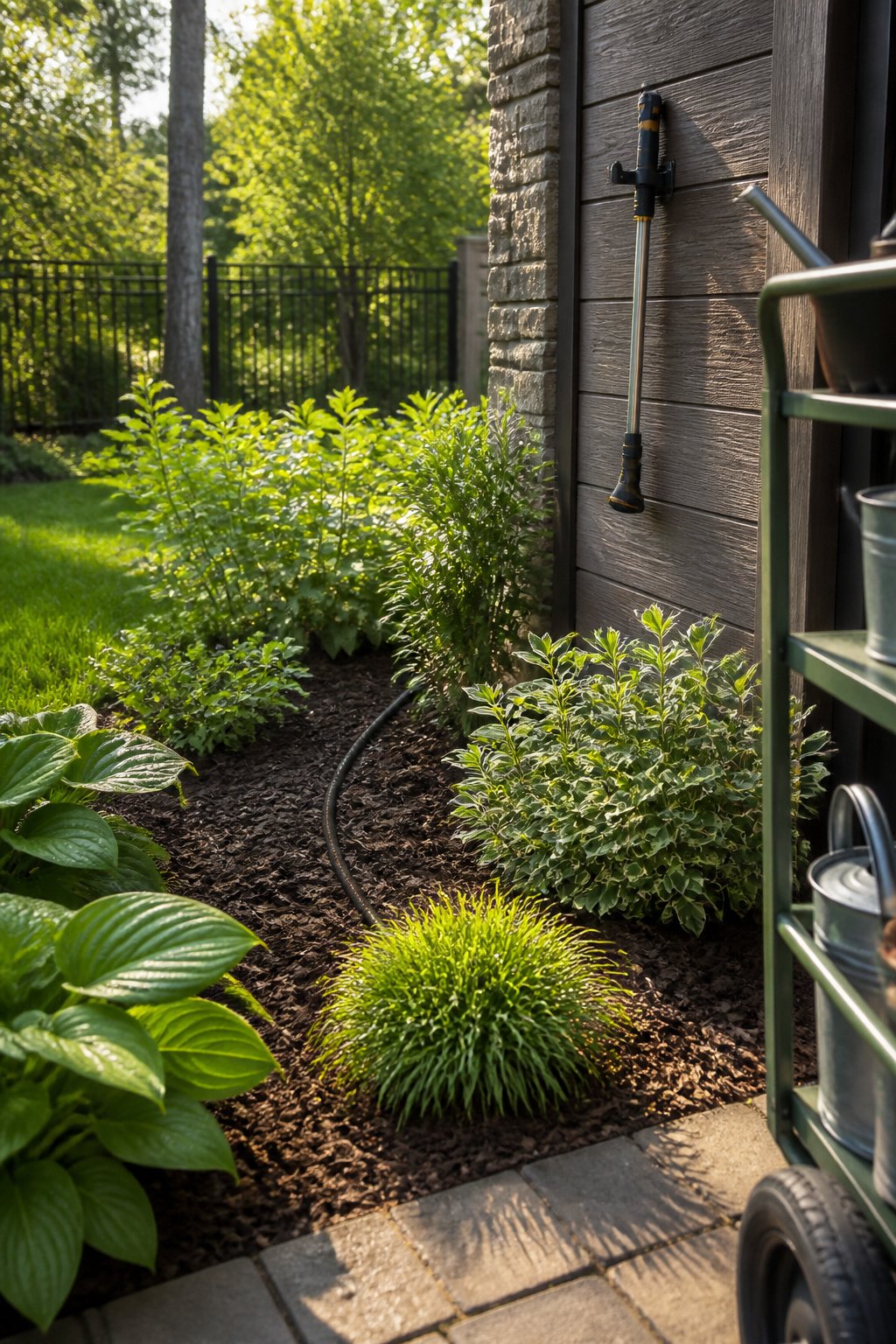
A soaker hose laid under a thin layer of mulch puts water exactly where roots live, with almost none lost to evaporation. I set mine on a hose timer and stopped the daily walk-around with a watering can; the timer runs it at dawn when the soil drinks before the sun takes its share.
For beds that need a quicker pass, a watering wand with a breaker head soaks the base of each plant in seconds without broadcasting spray onto paths or pavement. The waste drops sharply, and the time spent on the task falls with it. Quick-connect fittings between the main hose and the soaker or wand speed up the swap even more; no more threading and cross-threading in a hurry.
The breaker head and the timer together cut my watering time by more than half, and the plants look better for the steady, targeted delivery. Shallow watering, done by hand in a rush, leaves roots near the surface where summer bakes them dry. Deep, slow application trains them downward, and the tools do the discipline for you.
For containers that dry out fastest, plant stakes drawing from a reservoir or a buried olla jar release moisture through clay walls at the rate roots actually take it up. You refill them every few days, not twice daily, and the plants get consistency your own schedule may not allow.
19. Encourage Natural Pest Control
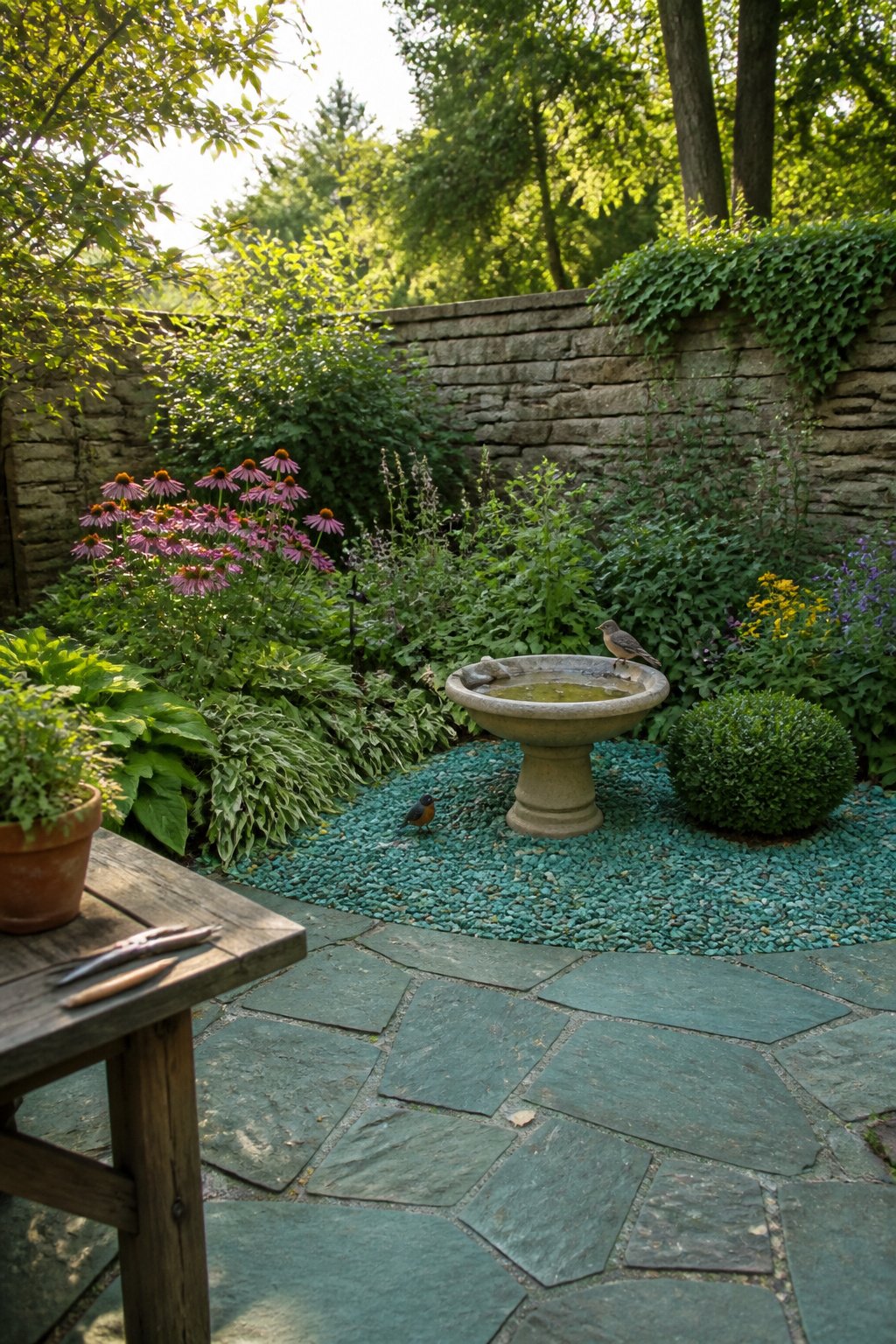
A water source and a place to hide will do more to cut your pesticide bill than any spray schedule. A simple bird bath, kept shallow and refilled when evaporation drops the level, draws bluebirds, cardinals, and woodpeckers through the yard. Dense shrubbery left in its natural shape, rather than sheared into tight boxes, gives them cover and spares you the pruning. Barn owls take the invitation further, picking off rodents and flying insects at night. Lady beetles handle aphids and scale if the habitat keeps them around, which means skipping the broad-spectrum chemicals that kill indiscriminately. Native plantings support this web directly; species adapted to your region already feed the insects that feed the birds, and they survive local weather without the coddling that non-natives demand. The tradeoff is patience: a balanced yard looks a little messier than a sprayed one, and the birds take a season or two to find you and stay. I have learned to watch the first lady beetle cluster on a rosebush as the signal that the system is working, not as a cue to reach for the bottle.
20. Collect or Redirect Rainwater
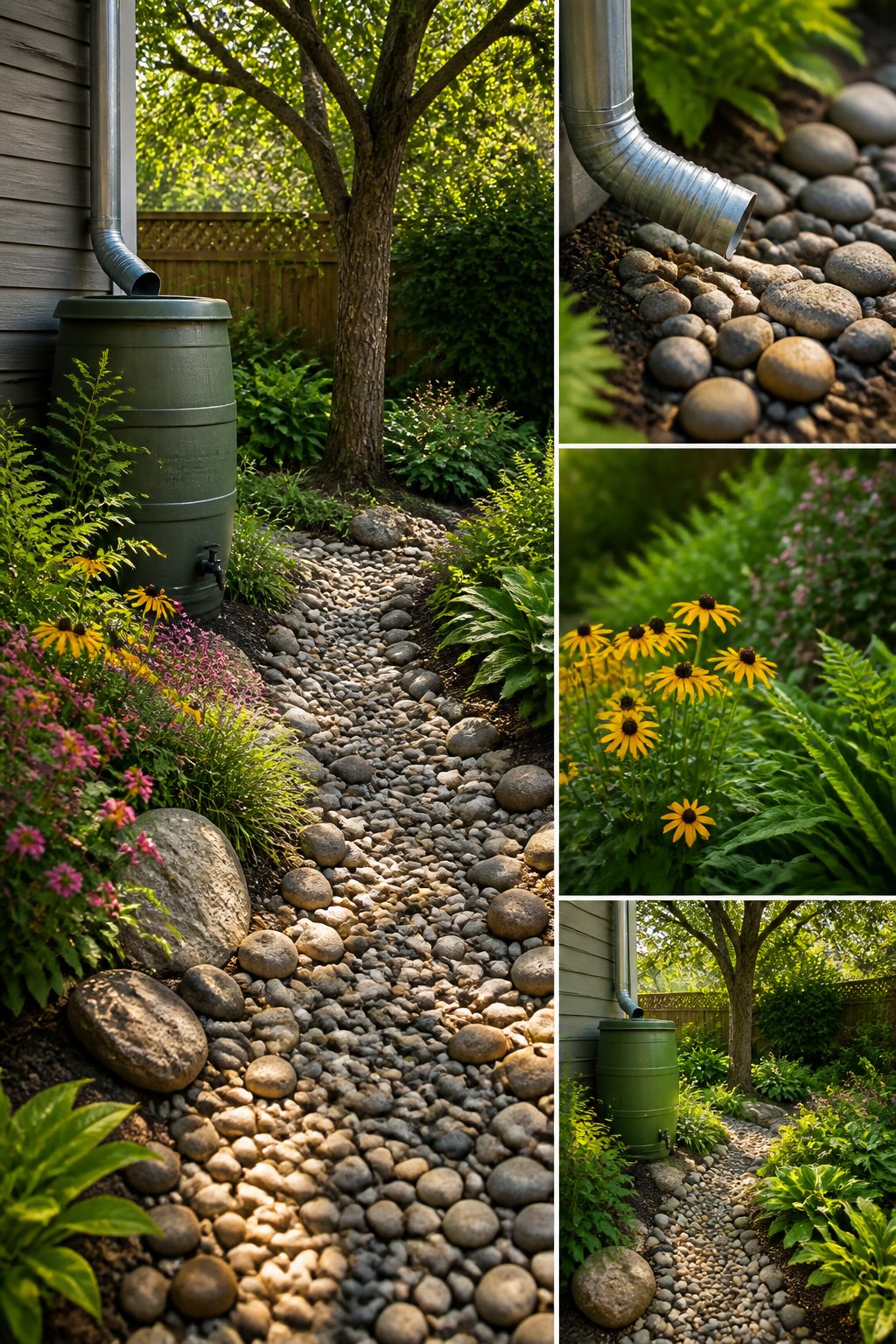
A rain barrel under your downspout catches free water for dry spells, though it needs cleaning out now and then and has to be emptied before hard frost. That upkeep nudges it slightly out of true low-maintenance territory. Redirecting rain without storing it asks less of you long-term.
Swales, berms, or a dry riverbed can move water from where it pools to where plants actually need it. Dig a gentle slope from beneath the downspout toward a tree or bed, line it with rock or gravel, and gravity does the rest. A 15-foot run from downspout to tree roots replaces a season of hand-watering with fifteen minutes of shovel work once. For a neater look, a French drain buries that same path and keeps the yard tidy above ground, though it takes more effort to install.
Either way, the goal is letting rainfall do your irrigating for you. Collection stores it; redirection just steers it. In a small yard with one thirsty tree, the dry riverbed wins on simplicity.
21. Let Chickens or Other Livestock Help
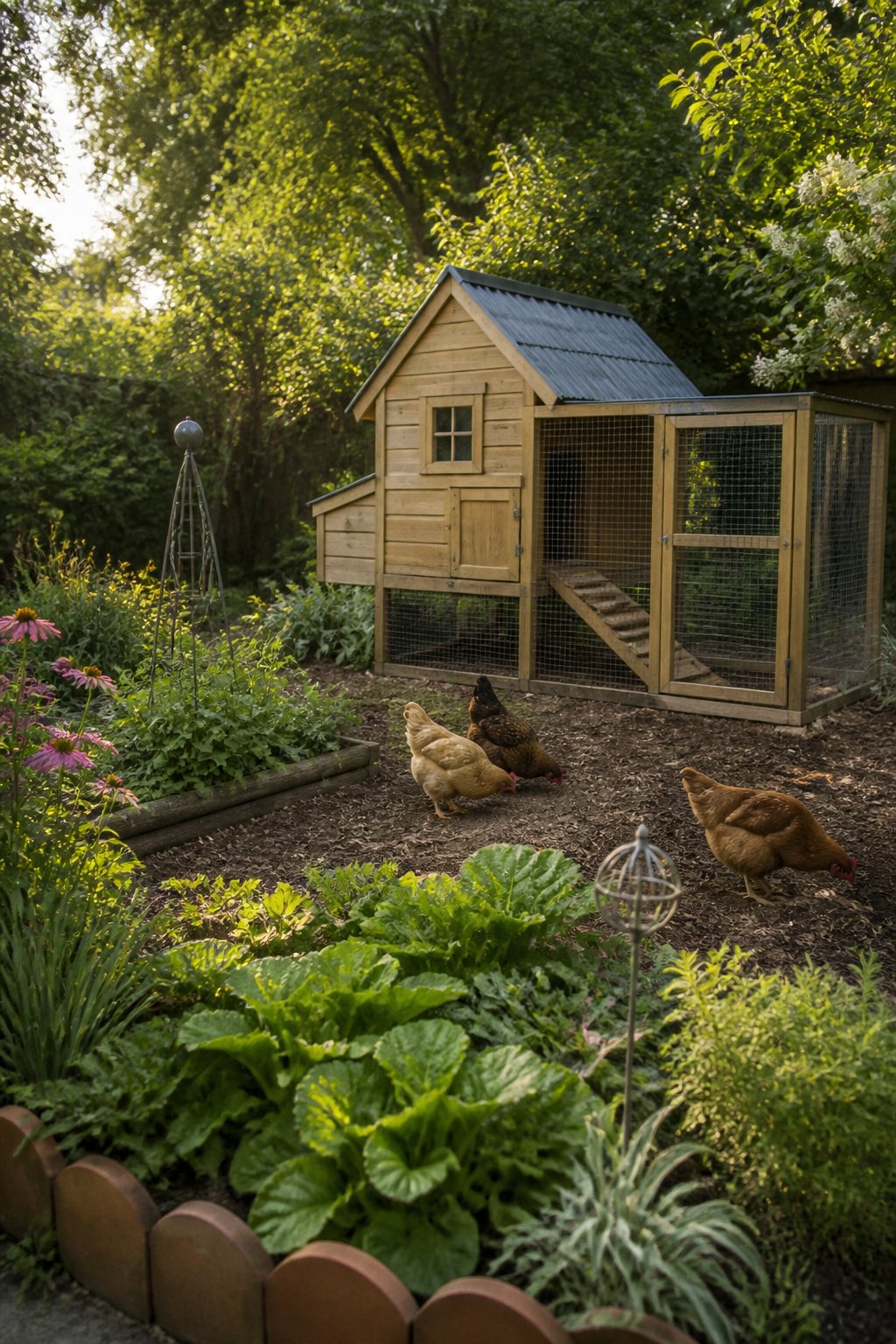
A small flock of chickens turns garden maintenance into something closer to watching a cleanup crew with personality. Mine scratch through beds after harvest, tearing into grubworms and grasshoppers while loosening the top inch of soil enough that I rarely bother with a hand rake. Their manure goes straight to the compost, and the eggs are a side benefit I did not fully account for when I started.
This is not a casual addition, though. Check zoning first: many municipalities ban poultry outright or require setbacks and permits. Chickens also need daily water, secure housing for nights, and someone to lock them in when you travel. The Omlet Eglu Go UP is a portable plastic coop that lets you rotate their grazing zone, which matters because chickens will strip a patch bare if left too long.
Geese eat grass and some weeds while leaving large-leaf plants alone, and they act as alarm systems for the flock. Pygmy goats graze aggressively on grass and weeds but require solid fencing; they will demolish shrubs and herbs without it. For most small yards, chickens are the practical entry point. The others scale up in space, noise, and neighbor negotiations faster than the labor they save.
22. Plan Ahead and Keep Track
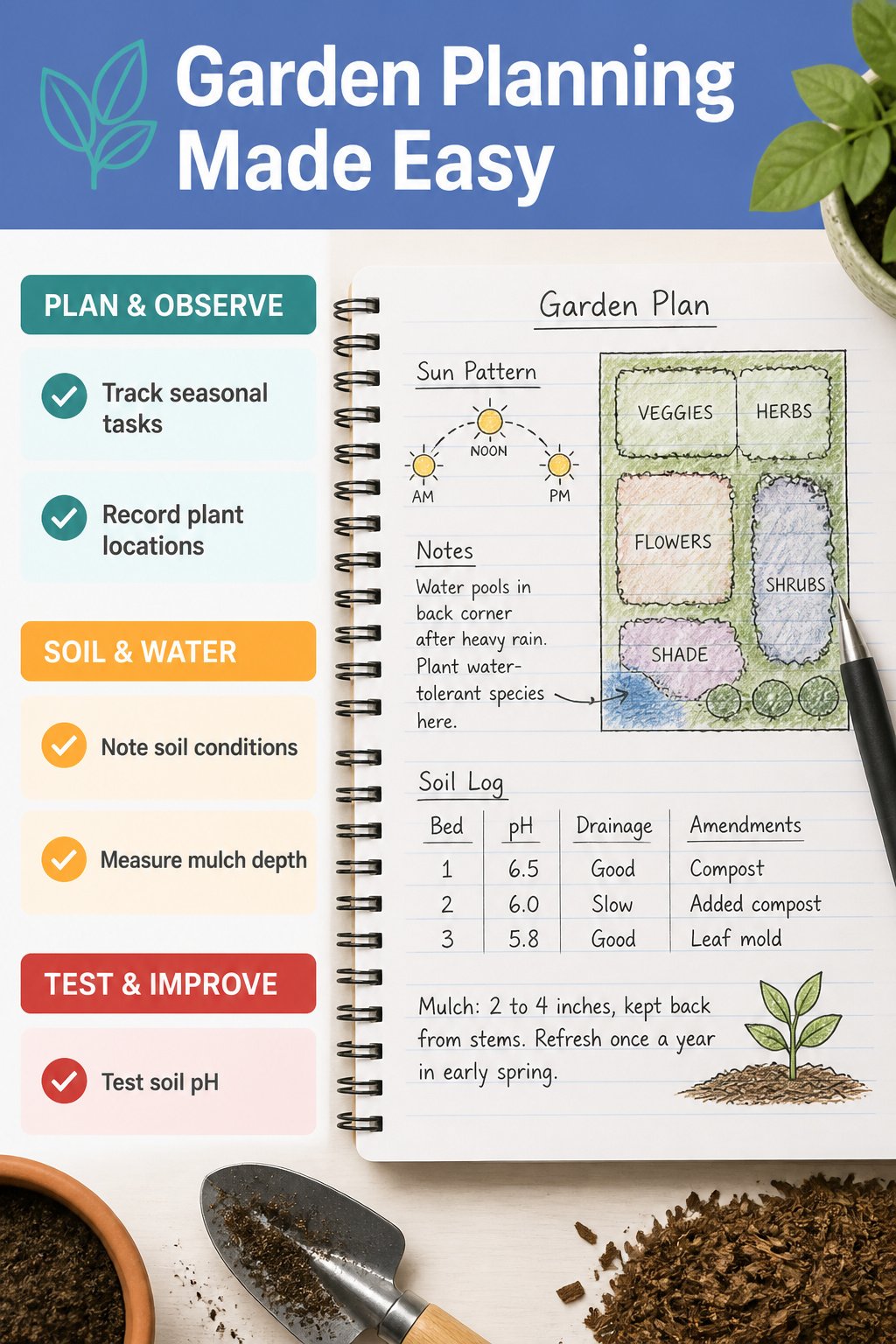
The year I started tracking what I actually did in the garden, the busywork dropped by half. Before that, I was constantly reacting: a plant looked droopy, so I watered everything. Weeds showed up in one bed, so I weeded all six on impulse. A simple seasonal plan turns those scattered hours into one focused afternoon. I sketch my beds in a notebook each February, mark sun patterns as they shift, and note where water pools after heavy rain. That last detail came from a mistake: a corner I thought was "kind of damp" killed three lavender plants before I admitted it needed water-tolerant species instead.
Mulch depth is another place where guessing costs time. Two to four inches of organic mulch, kept back from stems, suppresses weeds and holds moisture so you are not out there twice a week with a hose. I refresh mine once a year, usually in early spring before the weeds wake up. The notebook tells me when I last did it, so I do not second-guess myself standing in the aisle at the garden center. Soil tests go in there too: pH, drainage fixes, which amendments actually moved the needle. Without the record, I would be retesting the same patch every season and wondering why I had déjà vu.
23. Use Ground Covers Like Clover or Creeping Thyme
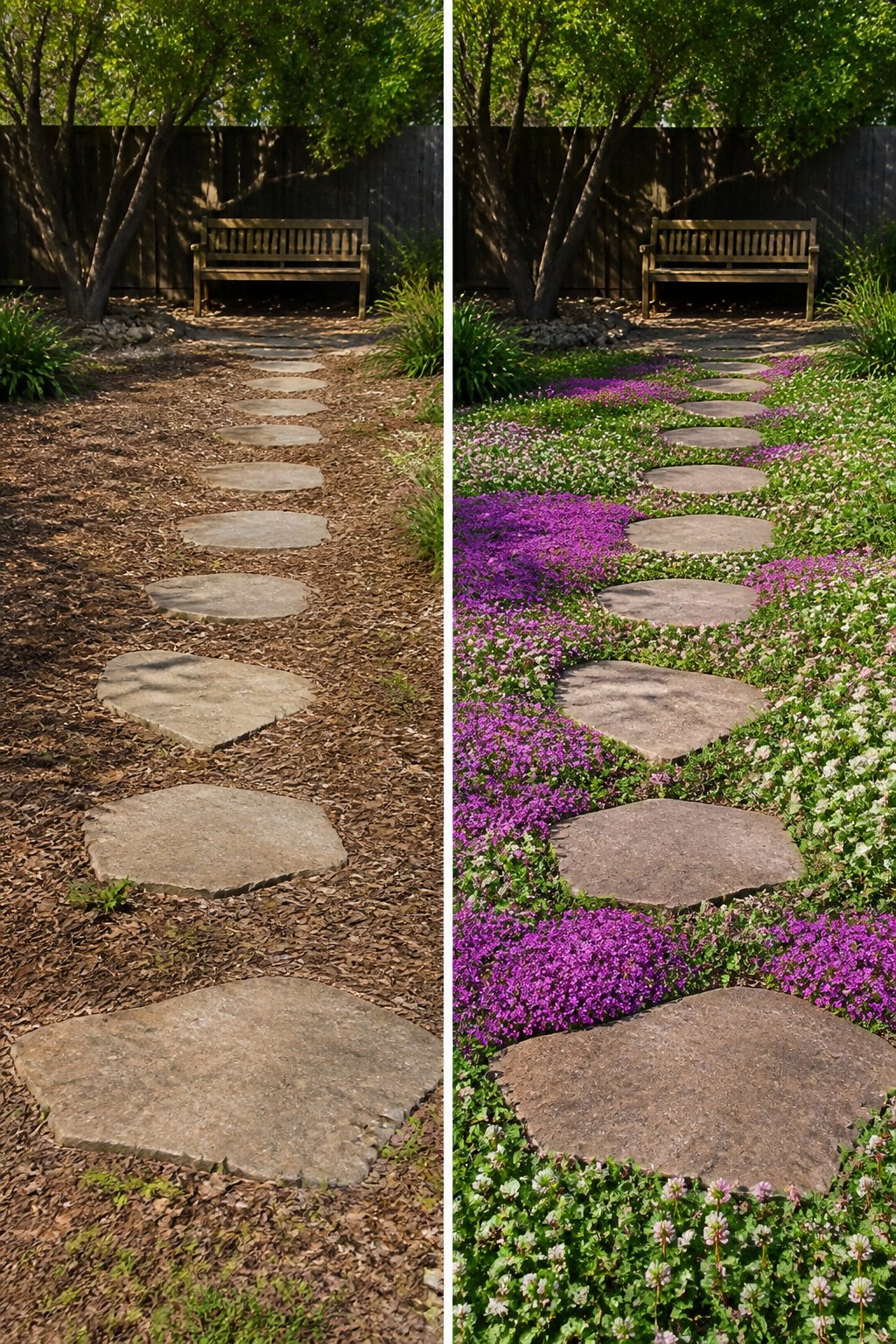
Clover has a way of winning you over once you stop fighting it. I used to yank every three-leaf sprout from my grass until a neighbor pointed out that her mixed clover lawn stayed green through August without a single round of fertilizer. The thing that changed my mind was learning how clover pulls nitrogen straight from the air and locks it into the soil, feeding itself and whatever grows nearby. Bees and other pollinators find it too, which matters more than I expected in a small yard.
For spots where you actually walk, creeping thyme handles foot traffic better than clover and smells like something from a kitchen drawer when you brush past it. It spreads low enough to skip mowing entirely, and in summer it throws up a dense mat of purple bloom that works between stepping stones or along a path edge. The fragrance is the payoff you notice daily; the lack of maintenance is what you notice months later when you realize you have not touched it.
Either plant beats traditional turf on slopes or bare patches where grass simply refuses to grow. Mixing them is not necessary, though some homeowners do. Clover for soil health and pollinators, creeping thyme for paths and scent; choose based on where you walk and what you want the ground to actually do for you.
24. Incorporate Hardscaping Elements Like Patios and Paths
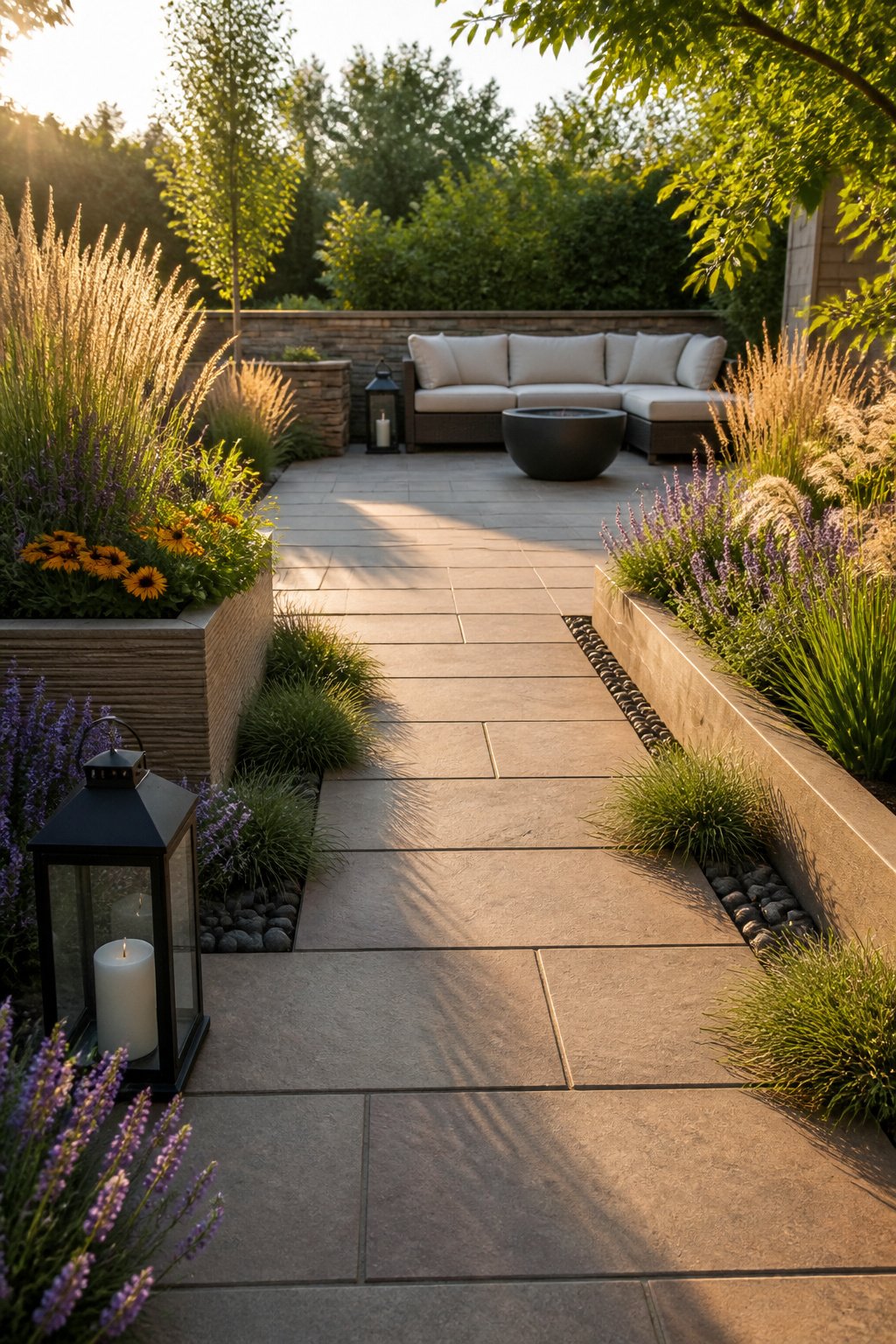
Gravel has its place, but it is not the only hardscaping move that cuts maintenance. Concrete, pavers, and natural stone each replace living ground with a surface that never needs mowing, watering, or weeding beyond the occasional sweep.
Concrete runs the cheapest upfront and gives a clean, modern look. A poured slab can crack in freeze-thaw cycles, though, and repairing it means cutting out a section or living with the line. Pavers cost more to install but let you lift and reset individual pieces if the ground shifts. The joints between them will need attention every few years; polymeric sand or a tight edging keeps them from drifting.
Natural stone, flagstone in particular, sits at the high end and reads more rustic or cottage. It lasts decades, but the irregular thickness makes installation slower and the finished surface less level under furniture. For a sleek modern home, large-format pavers or poured concrete usually fit better. A cottage or traditional exterior tends to favor stone or pea gravel.
Retaining walls, built-in seating, and exterior kitchens fall under the same hardscaping umbrella. Each reduces lawn area while adding usable outdoor space. The right material choice matters less than choosing one that matches your home’s architecture and color palette; a mismatch will read as an afterthought no matter how durable the surface is.
25. Use Mulch for Moisture Retention and Weed Control
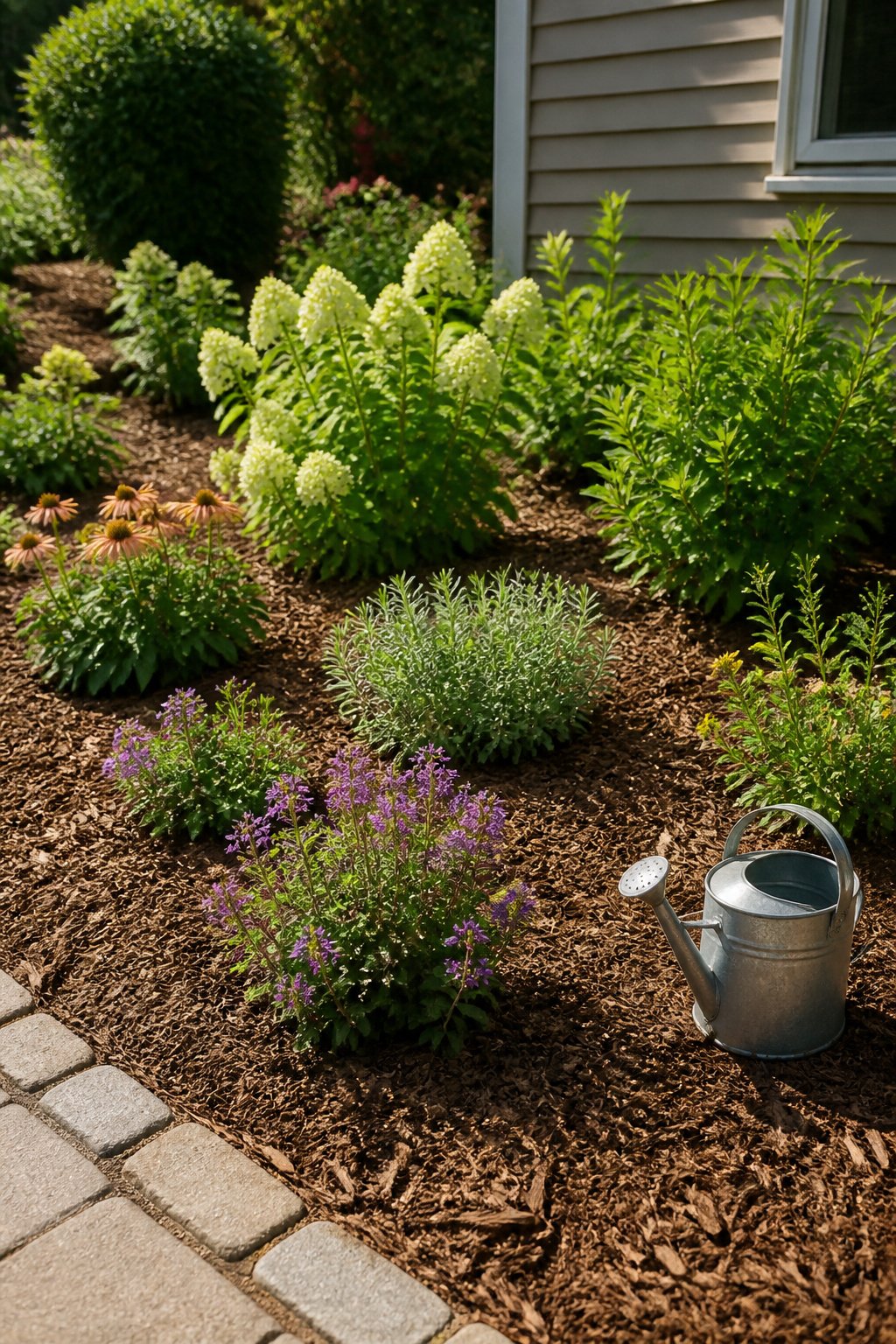
Bare soil in a bed is an open invitation for weeds and a fast track for summer water bills. A layer of organic mulch fixes both at once. Wood chips, shredded bark, or pine straw spread 2 to 4 inches deep block the light weeds need to sprout, and that same layer slows evaporation enough that you can skip every third watering. The soil underneath stays cooler too, which matters more than I expected once July hits.
Bagged mulch runs $2 to $13 per bag, so a small patio bed might cost under twenty dollars to cover. Bulk runs cheaper per square foot if you have access to a truck, though for balcony and small-yard gardeners the bagged route avoids the leftover pile that becomes its own weekend project. Reapply once a year to keep the depth steady; organic mulch breaks down, which is the point, feeding the soil as it thins. Keep it pulled back a couple inches from plant stems so the base can breathe.
Drought-Tolerant Plant Choices
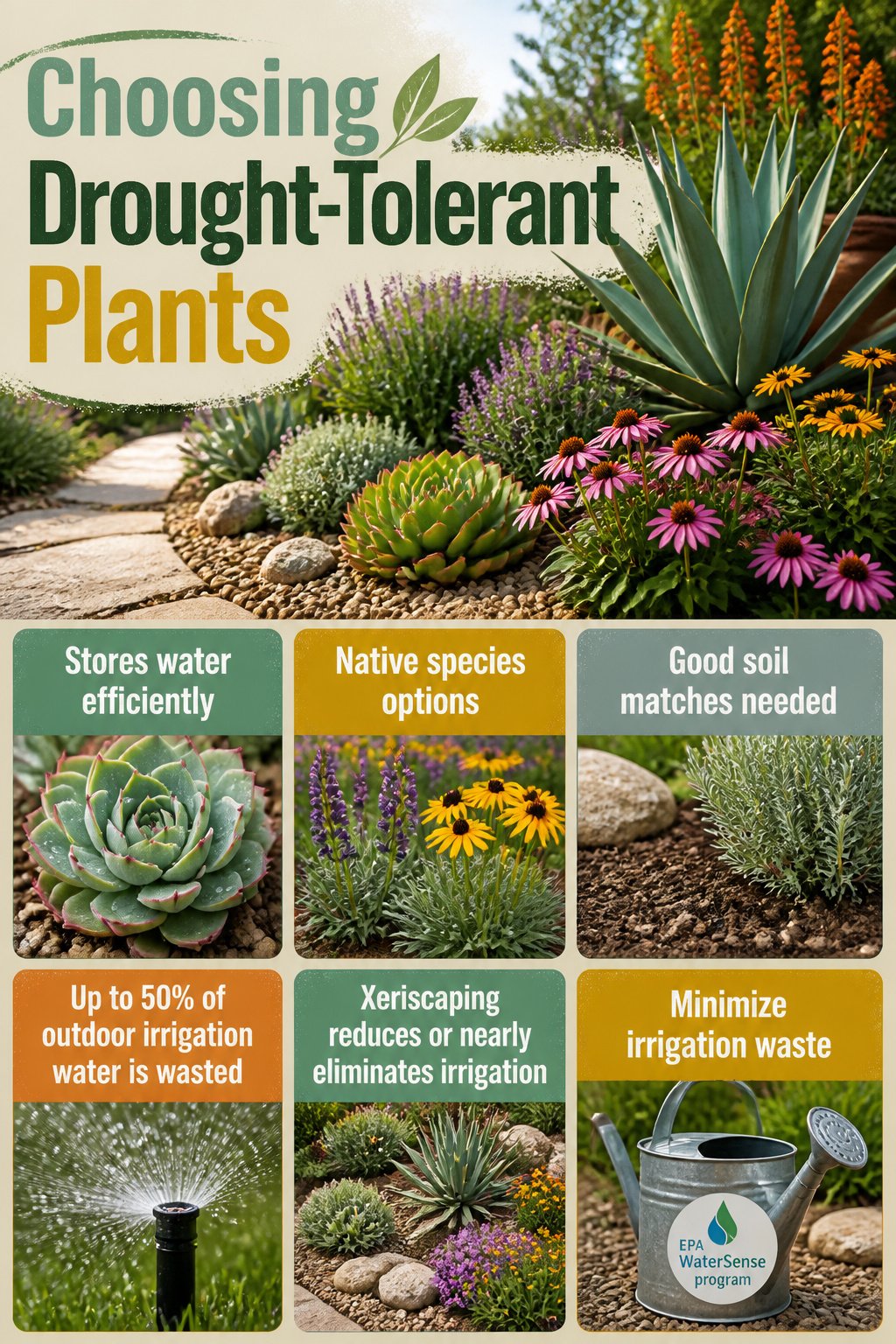
Drought-tolerant plants have adapted to drier climates and will naturally use less water and maintenance than other plants. The key is matching them to their ideal soil, sunlight, and water conditions so they strengthen rather than struggle.
At the nursery, I look for a few reliable indicators. Thick, fleshy leaves or a waxy coating usually mean a plant stores water or slows evaporation. Native species are the safer bet for my region; they are already adapted to local rainfall patterns and generally skip the pesticide routine entirely. Succulents like hens-and-chicks, agave, or echeveria take this further with leaves built to store water, and they tolerate the dry spells that kill off thirstier border plants.
Up to 50% of outdoor irrigation water is wasted through evaporation, wind, and runoff according to the EPA’s WaterSense program. Drought-tolerant choices, once established, cut that demand dramatically. Xeriscaping pushes this principle further by combining these plants with mulch, rock, and soil amendments to reduce or nearly eliminate irrigation entirely. It is not limited to cacti and rocks; flowering drought-tolerant plants fit right in, and the result reads as garden, not desert.
What Xeriscaping Means
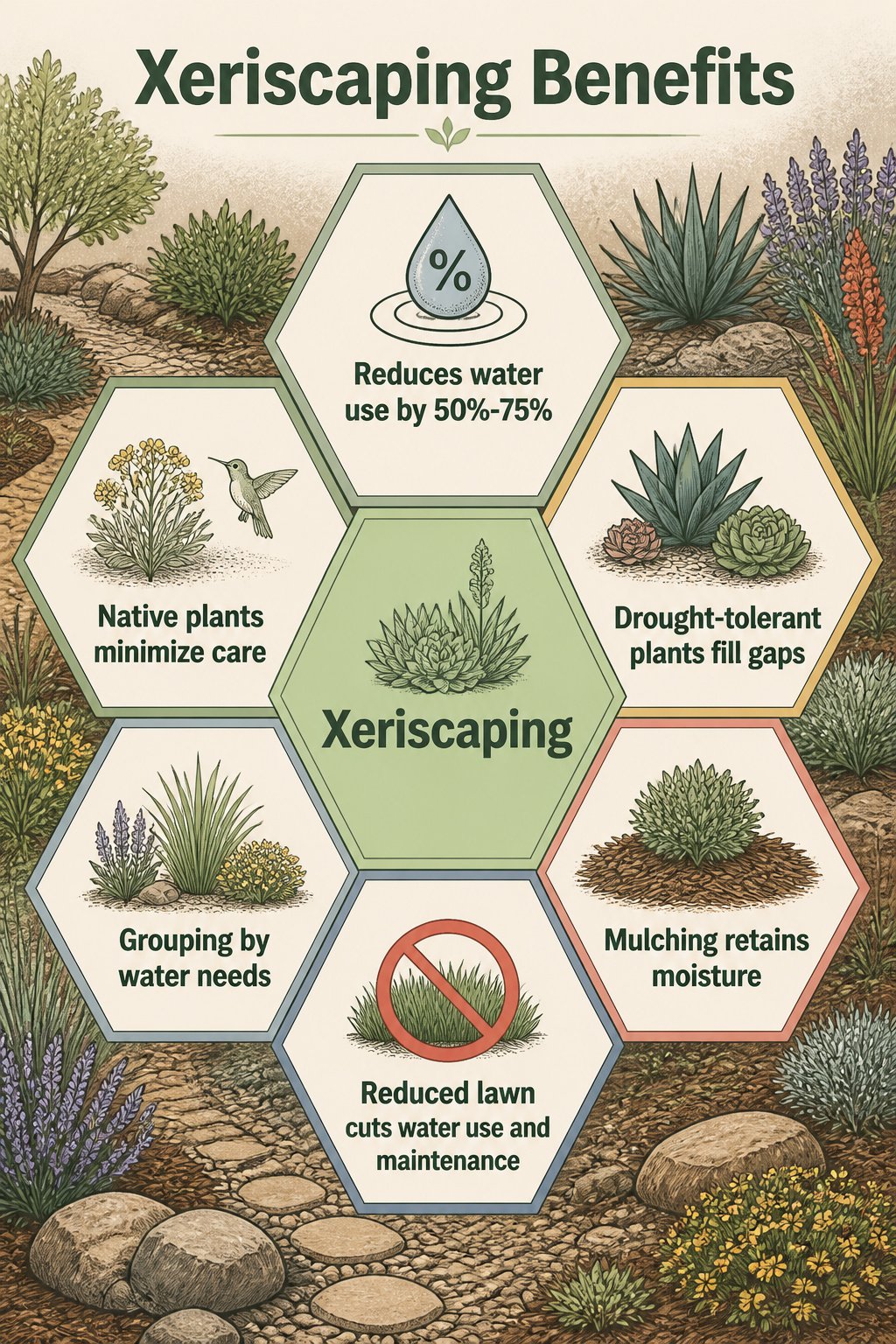
Xeriscaping cuts outdoor water use by 50% to 75%, which is why it sits at the center of most low-maintenance landscaping ideas. The word itself comes from the Greek xeros for dry, but the practice is less about desert aesthetics and more about matching your yard to the water that actually falls on it.
The method rests on four principles. Native plants come first: species already adapted to your region’s rainfall, soil, and pests need no coddling with fertilizers or sprays. Drought-tolerant plants, including succulents like hens-and-chicks and agave, fill gaps where natives won’t thrive. Grouping plants by water need keeps you from overwatering one patch while another parches. Mulch, applied 2 to 4 inches deep, holds soil moisture and suppresses the weeds that would otherwise steal it. Reduced lawn ties it together; turf grass is a water guzzler that browns in drought and demands constant irrigation to stay green.
I came to xeriscaping sideways, after watching a summer water bill climb and realizing most of that spray was vanishing into wind and runoff. The EPA’s WaterSense program estimates half of outdoor irrigation is wasted exactly that way. Replacing thirsty turf with native shrubs, ornamental grasses, and mulch broke that cycle without giving up color or structure.
Container Gardening for Small Spaces
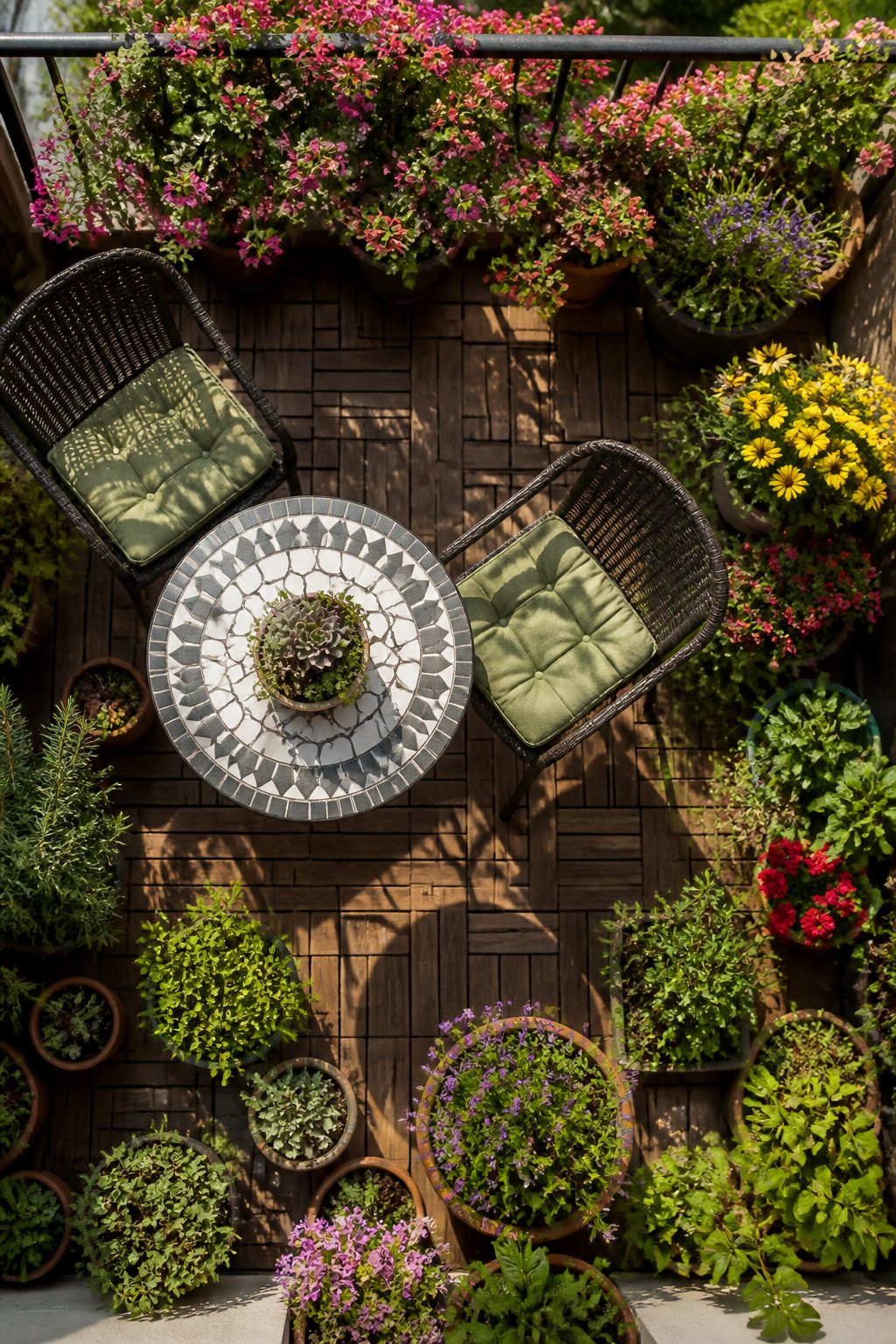
Container gardening fits the kind of small-space life where a patio might get morning sun in April and full blast by July. The pots move. That is the whole point. I started with a few terracotta planters on a concrete slab, and the flexibility saved me more than once when afternoon heat started crisping leaves that had been perfectly happy at 10 a.m.
Herbs, succulents, and flowering annuals all work in pots, and the soil control means you are not fighting whatever compacted mess came with the property. Watering, feeding, and pruning stay simpler when the plant is contained. Durable materials like ceramic or metal hold up to weather without demanding attention, though terracotta will dry out faster and need checking more often.
The tradeoff is commitment of a different kind. Containers need water more frequently than in-ground plantings, and they offer no insulation to roots when temperatures swing hard. A sudden frost means carrying pots inside or accepting losses. I have done both. For renters or anyone working a balcony with more shade than the listing suggested, the ability to rearrange without digging is usually worth that vigilance.
Budget Breakdown for a $500–800 Year
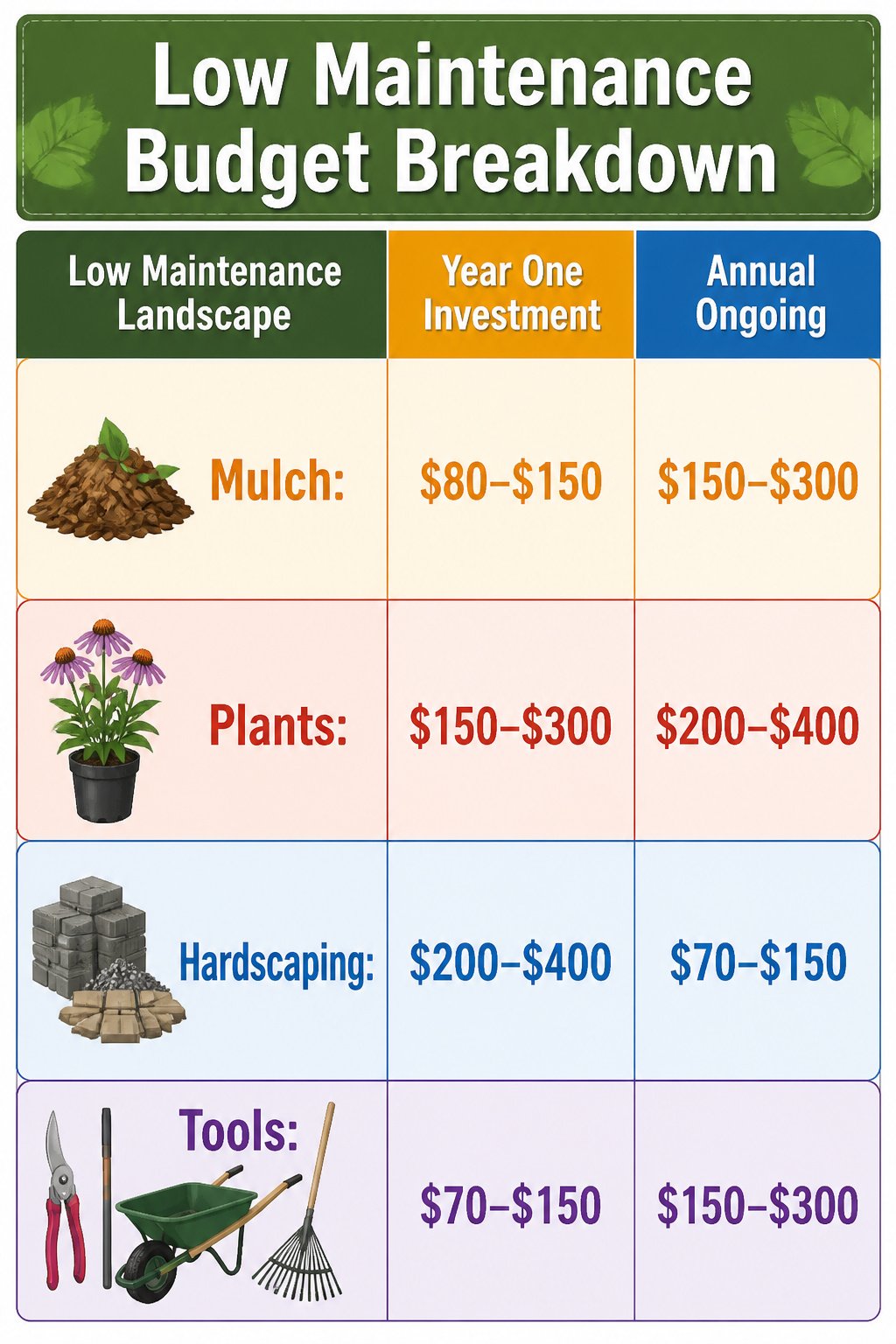
A $500–$800 annual budget for low maintenance landscaping breaks down into four buckets: mulch, plants, hardscaping materials, and tools. The hardscaping eats the biggest share on year one, but it also carries the longest return.
Here is how the spending tends to split:
| Category | Typical Range | What It Covers | When to Prioritize |
|---|---|---|---|
| Mulch | $80–$150 | 2–4 inches of organic wood chips or bark around beds | Every spring; suppresses weeds and holds moisture |
| Plants | $150–$300 | Native species, economical groundcovers, climate-appropriate perennials | Early season; group by water and sun needs |
| Hardscaping materials | $200–$400 | Pavers, gravel, decomposed granite, or composite decking for paths and patios | Year one if starting fresh; reduces grass area permanently |
| Tools | $70–$150 | Basic shears, a sturdy wheelbarrow, a steel rake | Replace only what breaks; clean shears between uses |
The hardscaping number is the one that stings upfront. A gravel path or a small patio built with local stone runs $5–$15 per square foot depending on the feature, but the grass it replaces stops needing water, mowing, and fertilizer the same season it goes in. That is the trade: pay more now on structure, spend less forever after on upkeep.
I would put the first year’s tool money into one good pair of bypass shears and a wheelbarrow that does not wobble. Everything else borrows fine from a neighbor.
What Not to Do
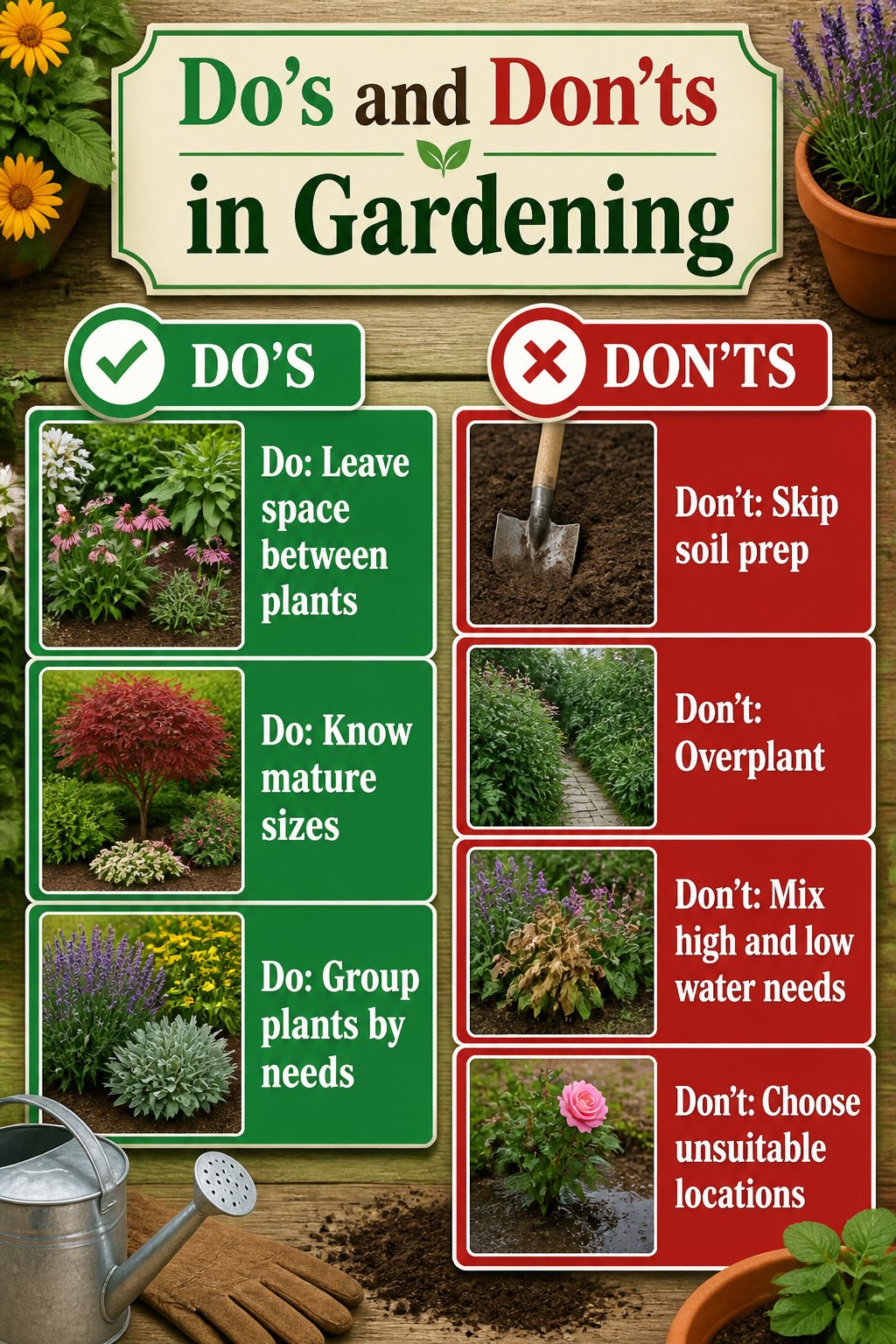
A few habits turn a low-maintenance plan into a weekend-eating mess. I have watched each of these undo a friend’s good intentions.
- Overplanting leaves you deadheading, dividing, and cutting back plants that looked innocent at the nursery. Give everything the elbow room it will need at maturity, not the size it is in the pot.
- Ignoring mature sizes means shrubs swallow walkways and trees lift patios. That cute three-foot Japanese maple becomes a twenty-footer with surface roots.
- Mixing high and low water needs in the same bed guarantees one group always looks stressed. The drought-tolerant plants get root rot, or the thirsty ones crisp while you try to ration.
- Skipping soil prep forces plants to struggle in compacted ground. Loosen about twelve inches down and work compost through before anything goes in; roots need air and drainage to fend for themselves later.
- Planting for the spot you wish you had instead of the one you do. That rose wants six hours of sun minimum, and a sedum in a low puddle will rot before summer ends.
Frequently Asked Questions
What are some low maintenance landscaping ideas?
Replace lawn with hardscaping like patios or gravel paths, switch to native plants and drought-tolerant succulents, install drip irrigation on a timer, use ground covers such as creeping thyme or clover instead of grass, and add rock mulch or permeable fabric barriers to cut weeding. Each of these reduces or eliminates mowing, watering, and chemical treatments once established.
How do I create a low maintenance yard?
Start by shrinking the lawn area through hardscaping and ground covers, then automate watering with drip lines and timers. Choose plants matched to your USDA zone and local conditions, space trees and shrubs to allow air circulation, and use mulch or gravel to suppress weeds. The goal is designing a system that works with your climate rather than fighting it.
What plants are best for low maintenance landscaping?
Native species like purple coneflower and black-eyed Susan need no fertilizer or extra water once established. Succulents such as sedum and echeveria store water in their leaves and thrive on neglect. Evergreen shrubs including boxwood and dwarf holly hold color year-round with minimal pruning. Self-cleaning roses like Knock Out and Oso Easy Double Red skip deadheading entirely.
How much mulch do I need?
Apply a 2 to 4-inch layer of organic mulch around plants, or use 2 to 4 inches of rock mulch for paths and beds. For leaf mulch, keep shredded leaves under 1 inch thick on lawns to avoid matting; excess can go into garden beds. Weed barrier fabric underneath gravel or stone adds a few seasons of extra weed suppression.
What is xeriscaping?
Xeriscaping is a landscaping approach that reduces or eliminates irrigation by combining drought-tolerant plants, drip irrigation, smart plant grouping, and hardscaping. The article covers this through native plant selection, succulents, automated watering, and replacing turf with gravel or ground covers that need little to no supplemental water once established.