
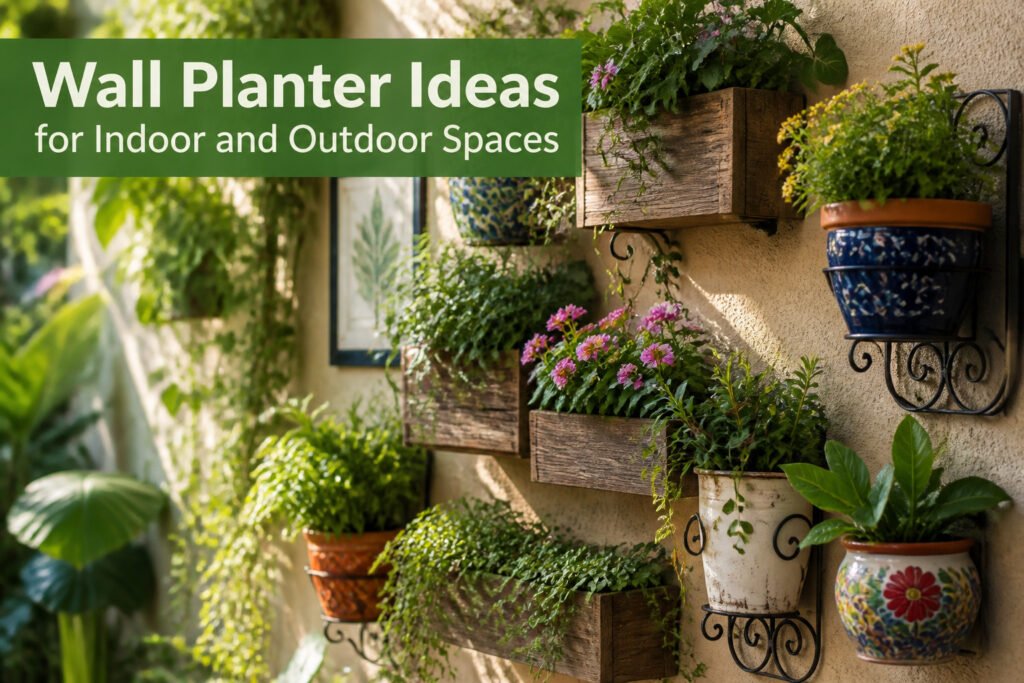
Wall planter ideas range from a single stem in a mounted vase to a full felt pocket garden, and the deciding factor is usually what your wall can actually carry. A planter loaded with damp soil and mature plants quickly exceeds what standard anchors will hold, which is why fiberglass and iron handle both indoor and outdoor shifts while ceramic cracks the first winter you leave it out.
1. Wall Planters for Indoor and Outdoor Use
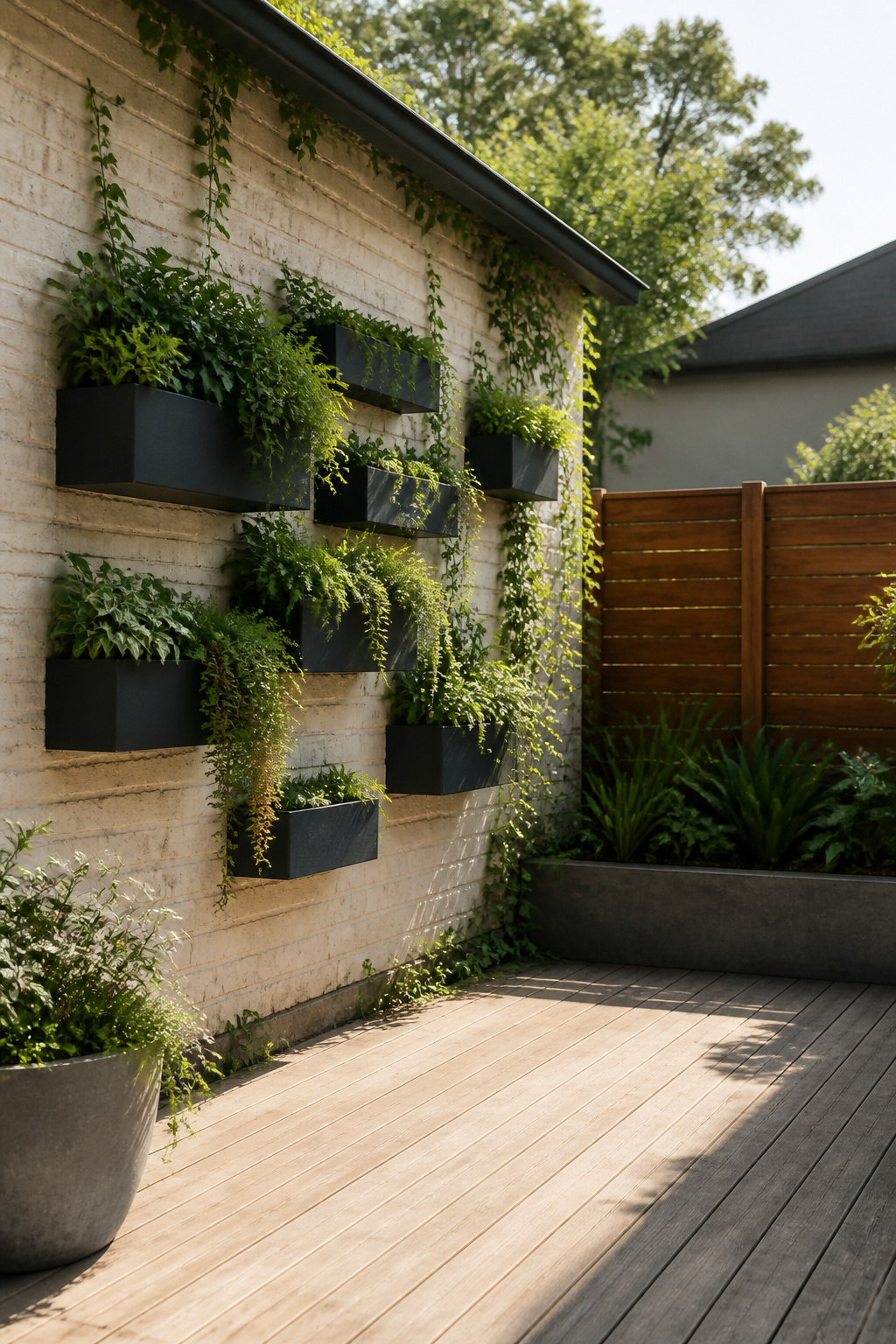
Some wall planters move between indoors and outdoors without a second thought, and others will crack the first winter you leave them out. Fiberglass and iron are the ones that handle both conditions, while ceramic and terra cotta soak up moisture and split when it freezes. I learned that distinction the hard way after watching a ceramic pot I liked flake apart on the patio.
Weight is the other limit most people hit first. A planter loaded with damp soil gets heavy fast, and the support structure has to carry that load plus whatever the wall anchor can actually hold. Fences and brick handle more than siding, which stains easily from drainage anyway. If you are hanging something substantial, check that the bracket and the wall can take the combined weight before you fill it.
Drainage holes matter everywhere, but they matter twice as much outdoors where rain does the watering for you. Indoors, that same planter on a living room wall still needs an exit for excess water, or the roots sit wet and rot. The same planter works in both spots if the material tolerates the shift and the bracket is rated for the job.
2. Succulent Wall Planters
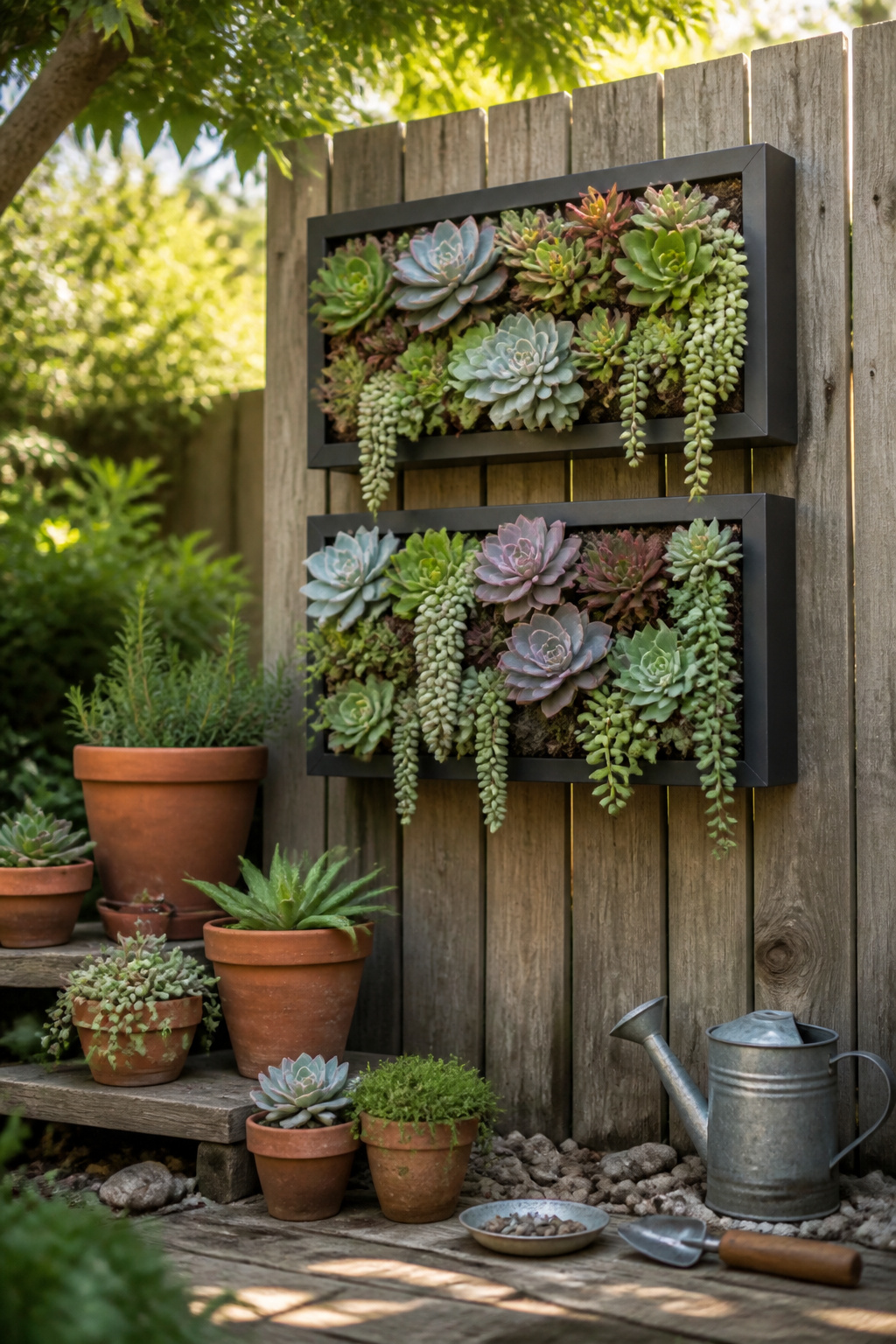
Succulents make wall planter ideas practical because their roots stay shallow and their water needs stay low. Echeverias, sedums, and hens and chicks all settle into tight pockets without complaining, and they will take the bright light that hits a vertical surface without baking out the way leafy herbs would.
The trick is leaving them room to breathe. Pack them too tight and the center rots where air cannot reach. I stagger rows so each rosette sits offset from its neighbors, the same way those matte-black box installations do, letting string-of-pearls or trailing sedum drop between levels to break up the grid. Two square frames mounted six inches apart on a fence board works the same geometry: the gap matters as much as the planting.
Aged terracotta underneath extends the palette downward, but the frames themselves are the lower-maintenance entry into living wall art. Slow to need water, slow to change, and honestly better once they have settled in for a season and filled out their own shape.
3. Herb Wall Planters
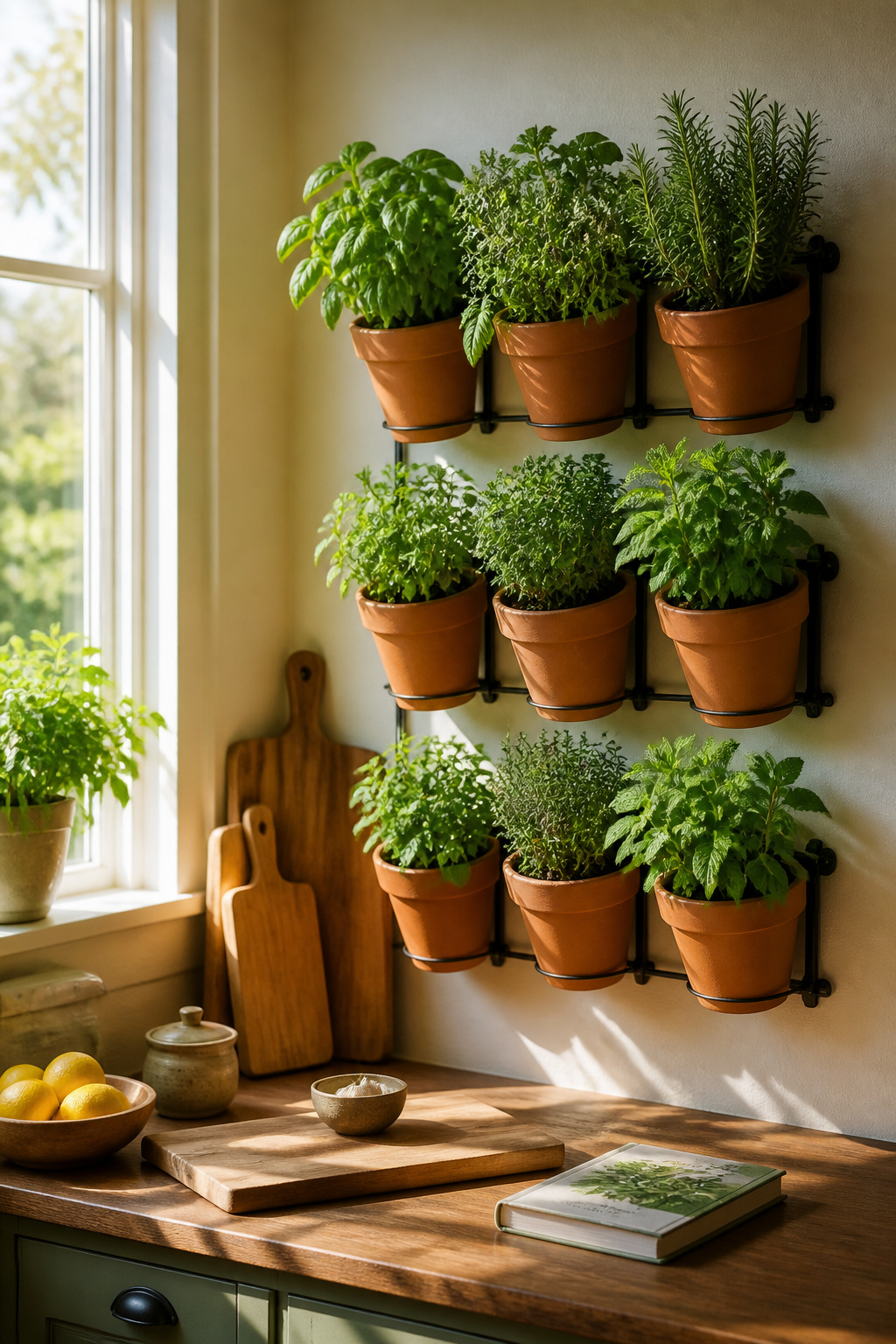
Basil, rosemary, thyme, and mint are the herbs that actually earn their spot in a wall planter. They stay compact enough for shallow soil, and the shallow roots don’t seem to mind. The catch is light. Full-sun herbs need six or more hours of direct sun to taste like themselves; half-day shade gives you leggy basil that bolts early and rosemary that smells like disappointment.
I learned the kitchen-door part the hard way. My first herb wall lived on the far end of the patio, technically sunny, technically convenient if I remembered to walk over. I didn’t. Half the thyme dried out from neglect before I ever harvested it. Now I mount herb planters within arm’s reach of where I actually cook. Proximity beats perfect placement every time; you will water what you see, and you will cut what you water.
4. Vertical Gardens Using Trellises
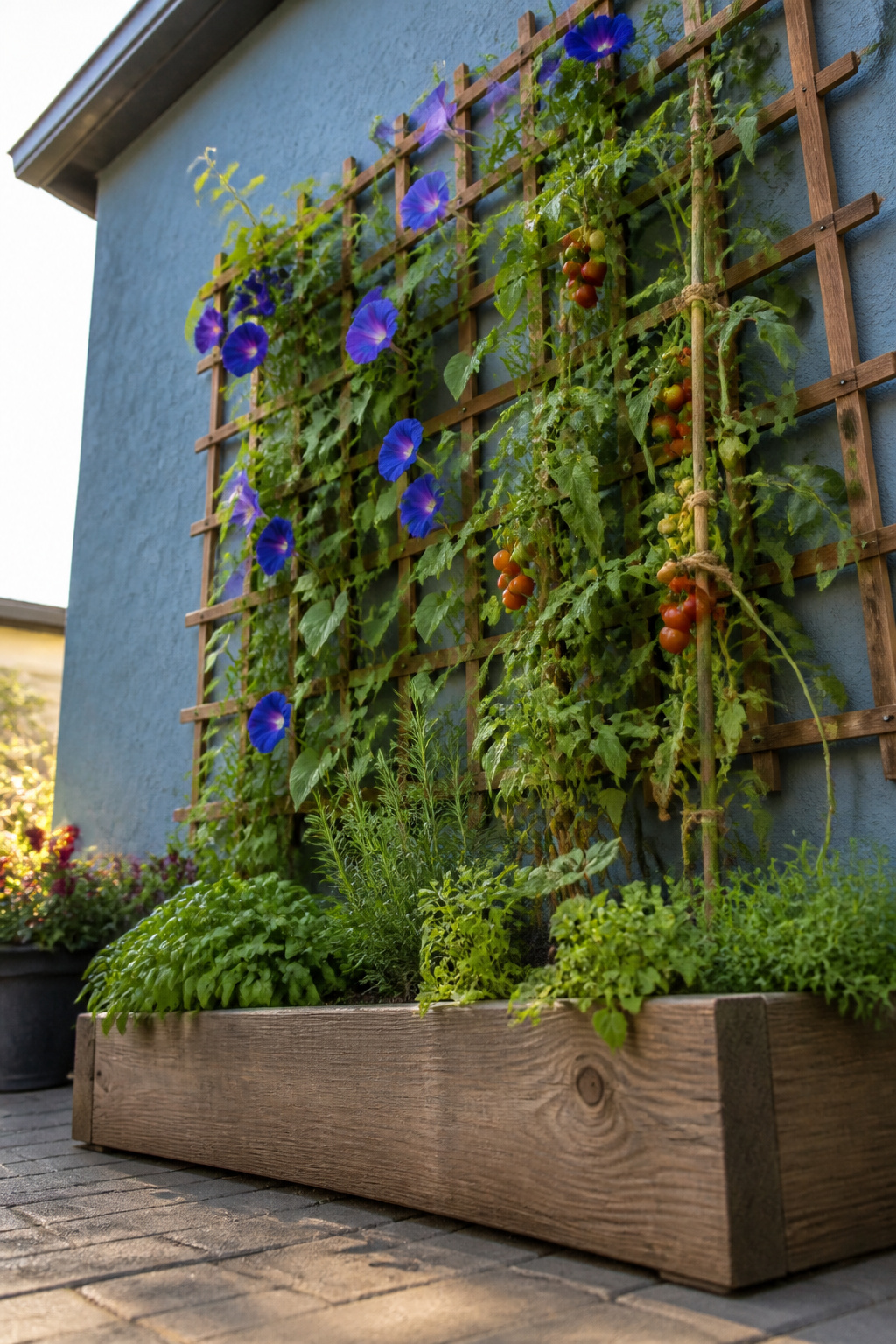
A bare wall with a trellis mounted to it turns into vertical growing space that climbing plants will cover in a season or two. The trick is fastening the trellis so it carries the full load once vines mature and wet soil adds weight. I learned this after under-anchoring a wood lattice on siding; by August the morning glories had pulled the whole frame away from the wall, roots and all.
Use proper wall anchors rated for the combined weight of the frame, potting mix, and saturated plants. Masonry calls for expansion anchors, wallboard for toggle bolts, and exterior wood for lag bolts into studs. The sources note that a planter gets heavier when you add soil and plants, so the mounting system has to handle that final load, not the empty frame.
Plants sort themselves into two groups. Twining vines like morning glories or pole beans wrap their own stems around thin supports and climb without help. Others, such as tomatoes or climbing roses, need tying to the trellis every foot or so because they do not grip on their own. The second group puts more strain on the structure since all their weight hangs from your ties rather than being distributed along the stem. I now run vertical twine lines for tomatoes rather than trusting them to a flat lattice they cannot grasp.
5. DIY Wooden Ladder Planters
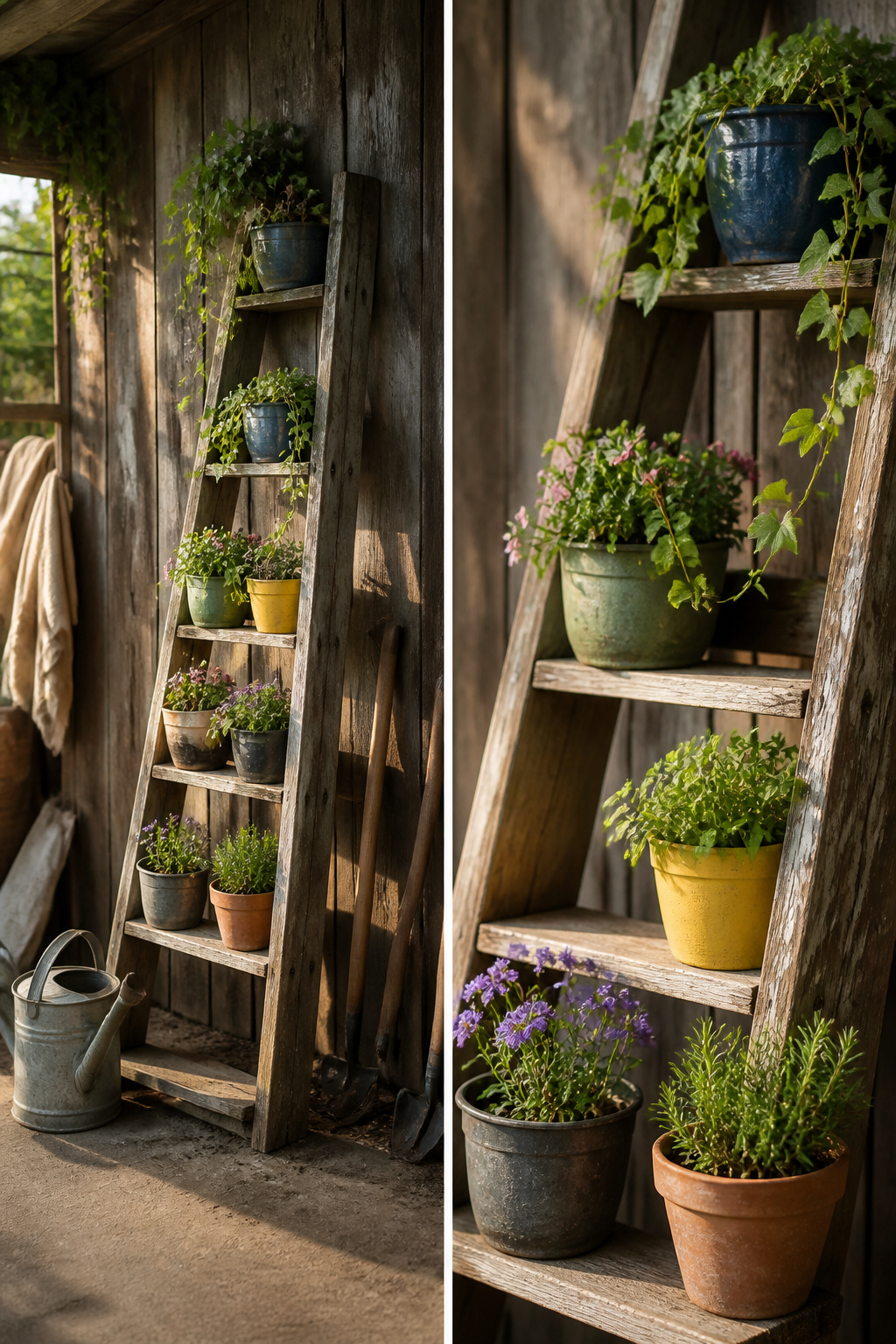
An old wooden ladder leans against a wall and becomes a vertical garden without a single screw into drywall. The rungs act as shelves, and the angle keeps pots tipped toward the light while gravity handles drainage. I like the ones with wider rungs, maybe four to six inches, because a four-inch nursery pot sits precariously on anything narrower.
Go two inches larger than the current pot when you choose a container for the ladder. That rule of thumb leaves room for roots without drowning the plant in soil that stays wet too long. A six-inch pot upgrades to an eight-inch, and the plant puts energy into foliage instead of root growth.
To keep pots from tipping, I wedge them with cork coasters or rubber jar grips on the rung below. A shallow tray underneath catches runoff, but the real protection is using lightweight plastic nursery pots with drainage holes. Lift them out to water, let them drain in the sink, then return them dry. No water-resistant padding or plywood backing needed if the ladder never hosts soggy pots in the first place.
6. Macramé Wall Plant Hangers
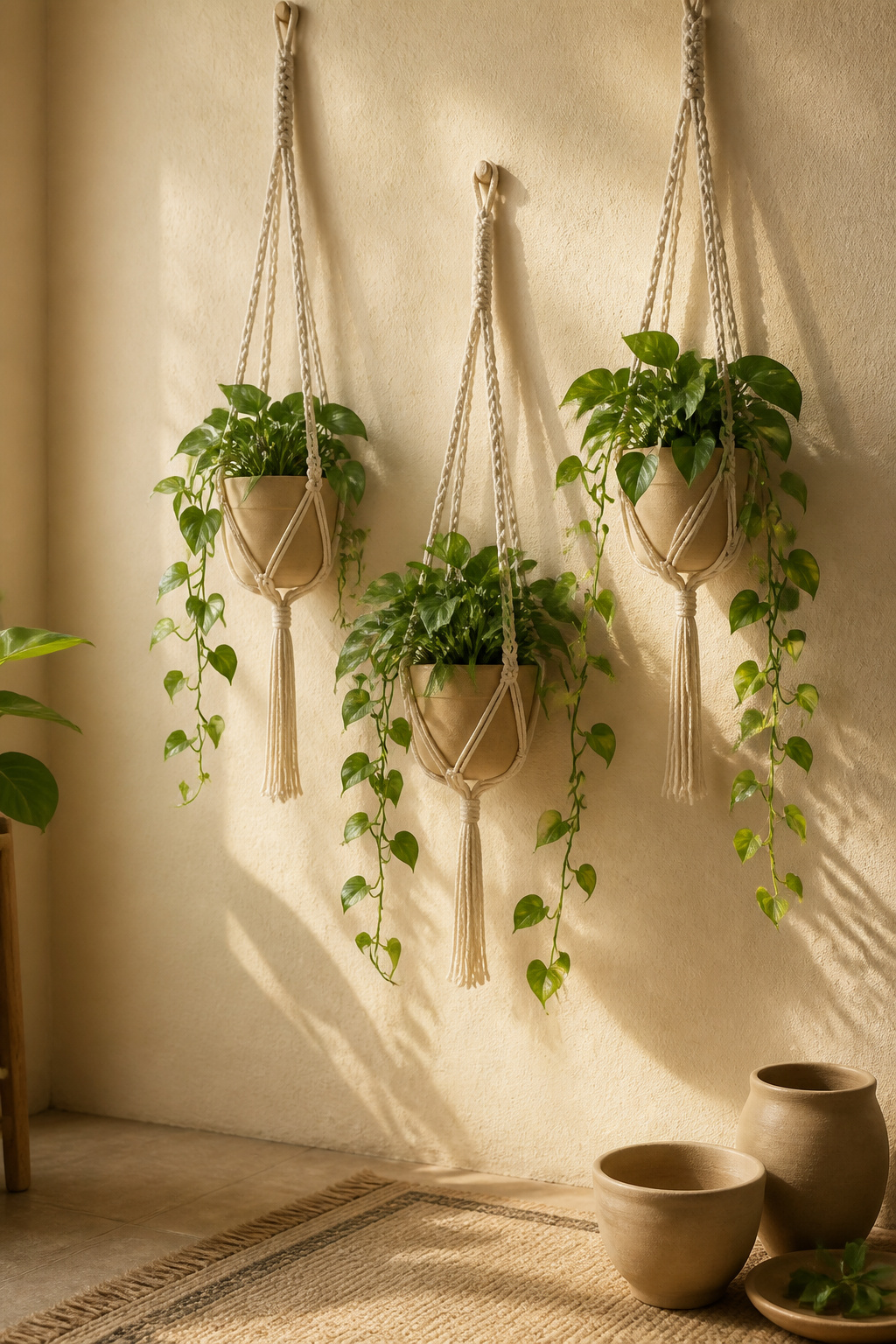
Knotted cotton hangers came back hard a few seasons ago, and the timing makes sense: pothos and philodendron are about the most forgiving plants a new gardener can buy, and both look better with their stems trailing down than poking up. The hangers put that motion at eye level without drilling anything into a rental wall.
Weight limits shift with cord thickness, so a hanger built from 3 mm cotton might hold a 4-inch plastic pot fine while a 6-inch ceramic one snaps the knot in a month. Soil plus water adds more load than most people guess. Fabric against paint or plaster also means water drip protection becomes the real headache. A saucer inside the hanger helps, but condensation still wicks down the cords during humid weeks. I hang mine with a small gap, maybe an inch off the wall, so air moves behind the pot and the cotton dries instead of leaving a shadow stain.
7. Felt Pocket Gardens
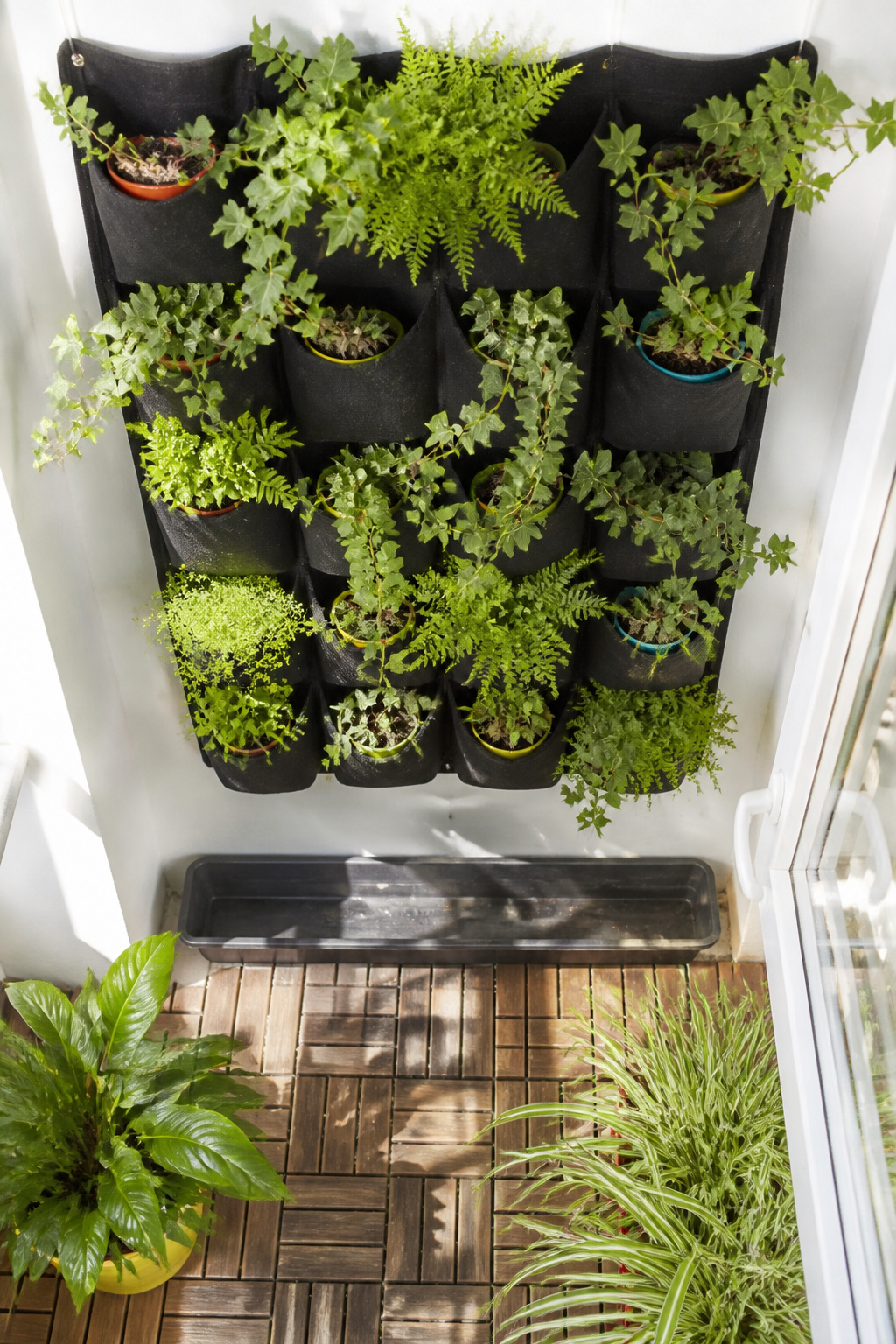
A 5×5 grid of open felt pockets hangs like a soft quilt against the wall, each cell ready for its own small tenant. The black material is lightweight enough for a balcony or courtyard surface where deep drilling is not an option, and the whole panel stays rearrangeable as the season shifts.
Moisture moves between the pockets through the felt itself, which wicks water sideways to neighbors that might have dried out faster. That same capillary action means drainage needs attention: the material holds water rather than shedding it, so plants that tolerate slight dampness, like begonias, coleus, or trailing lobelia, settle in more happily than succulents that want to dry between drinks. Rosemary can work if the pocket sits toward the top where the wick carries less.
For renters or anyone nervous about the wall behind, the low weight helps, but water-resistant padding or a plywood backer still belongs between felt and paint. Removing plants in lightweight plastic nursery pots, watering them at the sink, and letting them drain before sliding them back protects both the wall and the roots. The pockets also suit air plants, small ivy, or pothos in their own little containers, which lets you swap out a struggler without disturbing the rest of the living patchwork.
8. Propagation Tubes
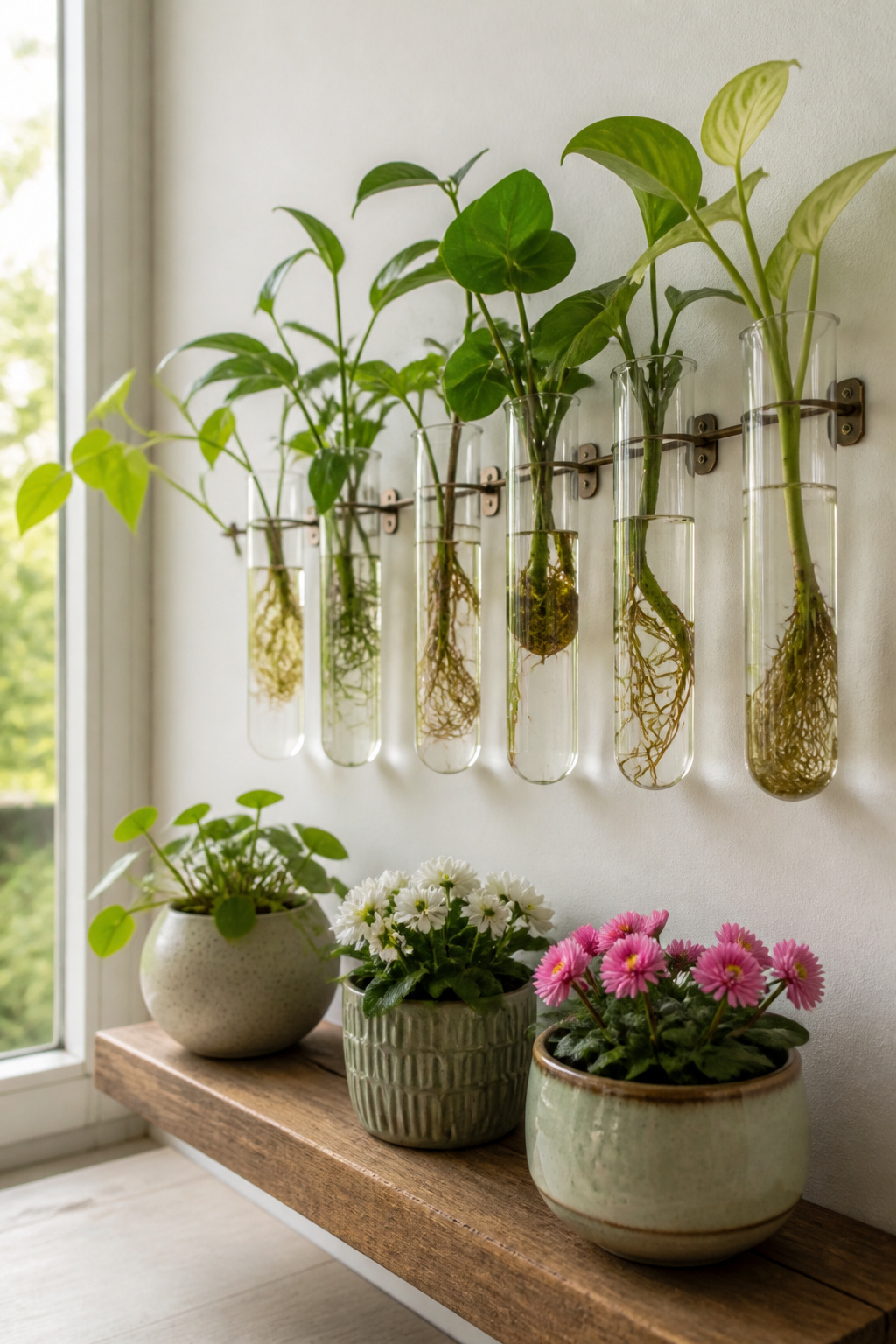
Glass or acrylic tubes mounted in rows turn a small, well-lit wall into a living display that keeps generating new plants from cuttings. The setup is spare: a scrap-wood holder or slim metal bracket keeps each tube steady, and the roots grow visible in water. This works best where light is already strong, since cuttings need brightness to root and a dark wall will stall them before they start.
Not every plant cooperates in water. Pothos, philodendron, and most trailing houseplants root readily with their stems submerged; succulents and many herbs rot instead and want soil or a dry start. A propagation wall is functional only if you match the plant to the method. The tubes can double as bud vases for seasonal stems when you are not starting cuttings, so the display does not sit empty between rounds.
Indoors, the risk is dripping and water spots. Tubes need checking every few days, and a small tray or towel underneath saves the wall surface. Outdoors, sun exposure matters as much as indoors: part sun or brighter keeps the cuttings from stretching thin and pale.
9. Shelves for Plant Displays
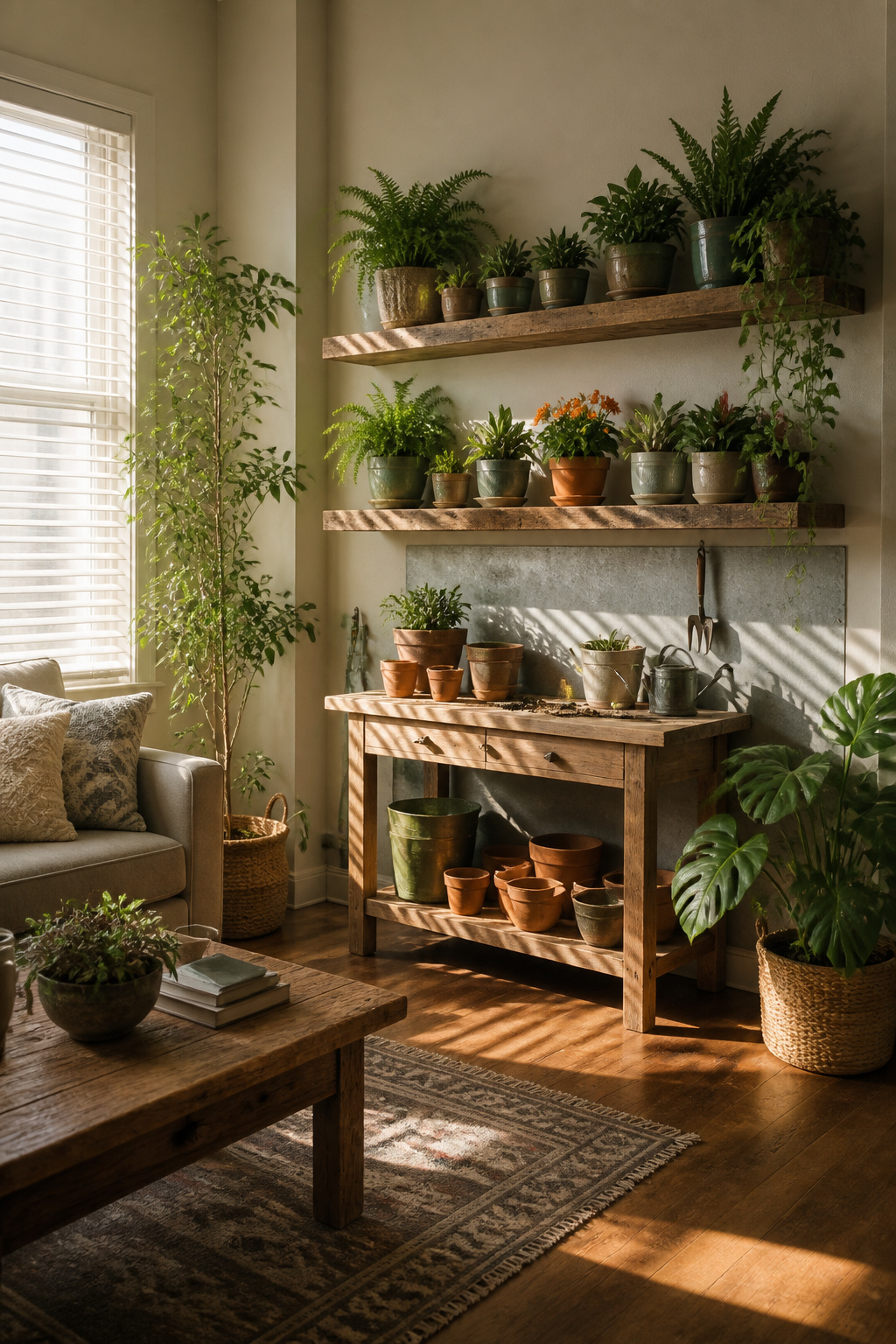
The simplest wall planter alternative is a shelf, either floating or bracketed, with pots sitting on top rather than mounted into the wall. Leave 12 inches between shelves so lower plants still catch light, and check that brackets are rated for the wet weight; soil plus water can push a small ceramic pot past fifteen pounds fast.
I learned the drainage lesson the hard way after water seeped through a terracotta saucer and left a stain that took paint with it. Now I line the wall behind every shelf with water-resistant backing, thin plywood or a rubber mat cut to size, so overflow never reaches the drywall. For renters, this matters even more: a few dollars in backing beats losing a security deposit to water damage.
Indoors, stick with nursery pots you can lift out to water in the sink, let them drain fully, then return them to the shelf. Outdoors, the same rule applies, though sun exposure needs its own math. Full-sun plants want six hours of direct light minimum; part-sun wants half that. A shelf on a north-facing wall will starve a tomato and fry a fern on a south wall, so match the plant to the spot before you drill the first hole.
10. Wall-Mounted Vases for Single Stems
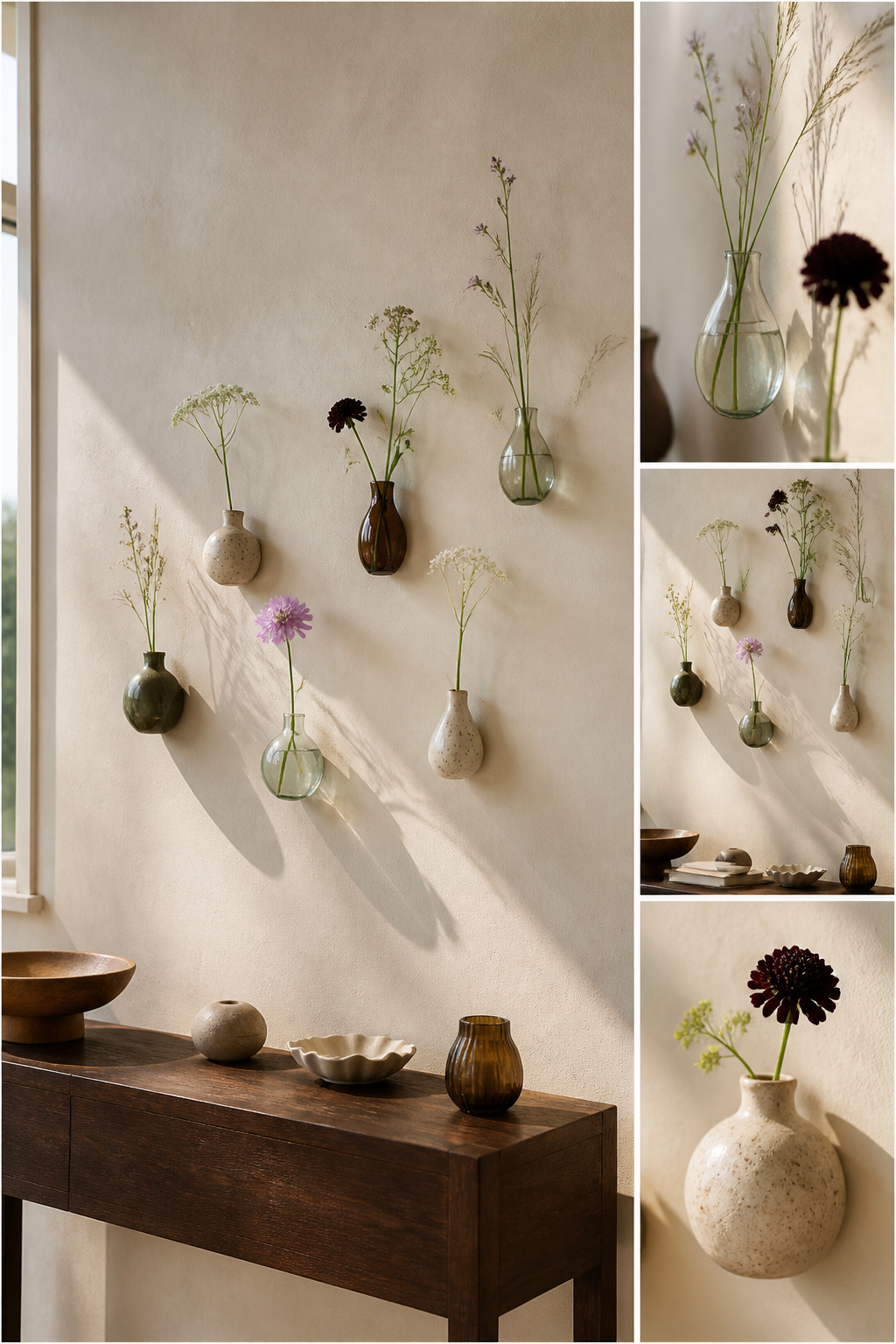
A single ceramic or glass vase mounted on the wall holds one cutting, nothing more. That restraint is the whole point. Group three or five of them in a loose grid, and the eye moves between stems the way it would scan a small gallery. Water gets changed every three or four days, which is the real maintenance here; there is no soil, no roots, no forgetting to water. Just a stem that will eventually brown at the cut and need replacing.
The spacing matters more than the vases themselves. Two inches too close and the stems tangle visually; six inches apart and each one reads as its own moment. I have hung them at slightly different heights, never a straight line, because the irregularity keeps the arrangement from looking like a hardware store display. Glass catches window light and throws small shadows. Opaque ceramic reads as shape and color first, the stem almost a surprise.
These work best with branches forced in late winter or a single grocery-store stem you want to last longer than it would in a crowded table vase. The commitment is low, the wall space required is minimal, and when one goes empty the others still hold the composition.
Self-Watering Options That Actually Work
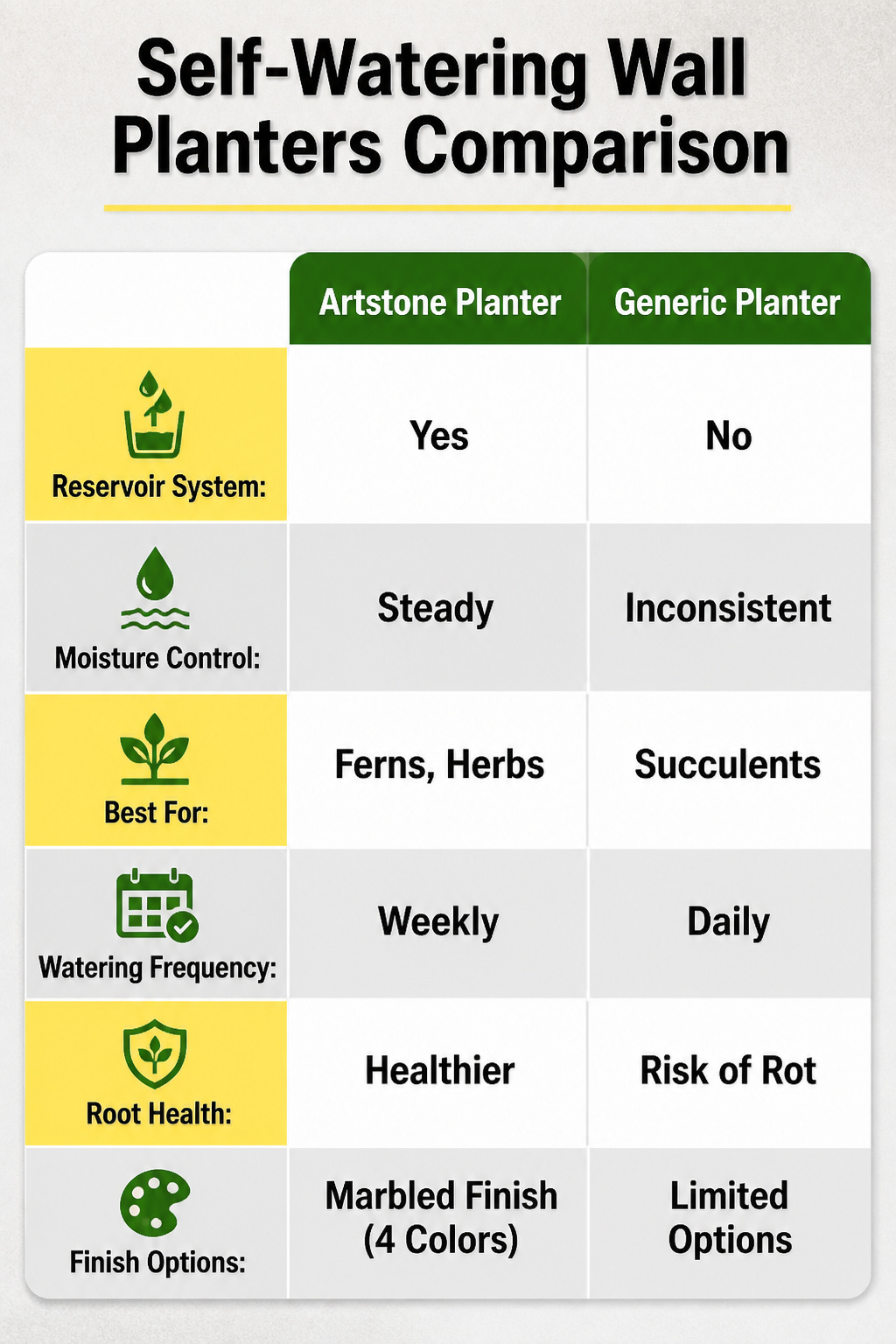
Self-watering wall planters remove the daily guesswork from vertical gardening, and the Artstone line from Root and Vessel is the one I keep pointing people toward. Each planter hides a reservoir at the bottom that meters moisture upward through the soil, so roots drink at their own pace instead of sitting in runoff or drying out between waterings. The marbled finish comes in four colors and sizes, which matters more than it sounds when you are mounting these at eye level in a living room or on a balcony railing.
The reservoir system suits plants that want steady, even moisture: ferns, pothos, and most leafy herbs fall into this group. Plants that need dry spells between waterings, like succulents or lavender, will struggle here. Their roots rot fast in constant dampness, and no drainage hole arrangement fixes that when the reservoir is doing its job. I learned that the hard way with a sedum I assumed would adapt. It did not.
For busy schedules or short trips, the reduced watering frequency is genuine. You are still checking soil surface dryness, but the gap between fill-ups stretches from daily to roughly weekly in moderate indoor conditions. The payoff is healthier root systems from consistent moisture, not dramatic rescue moments.
Materials and Drainage
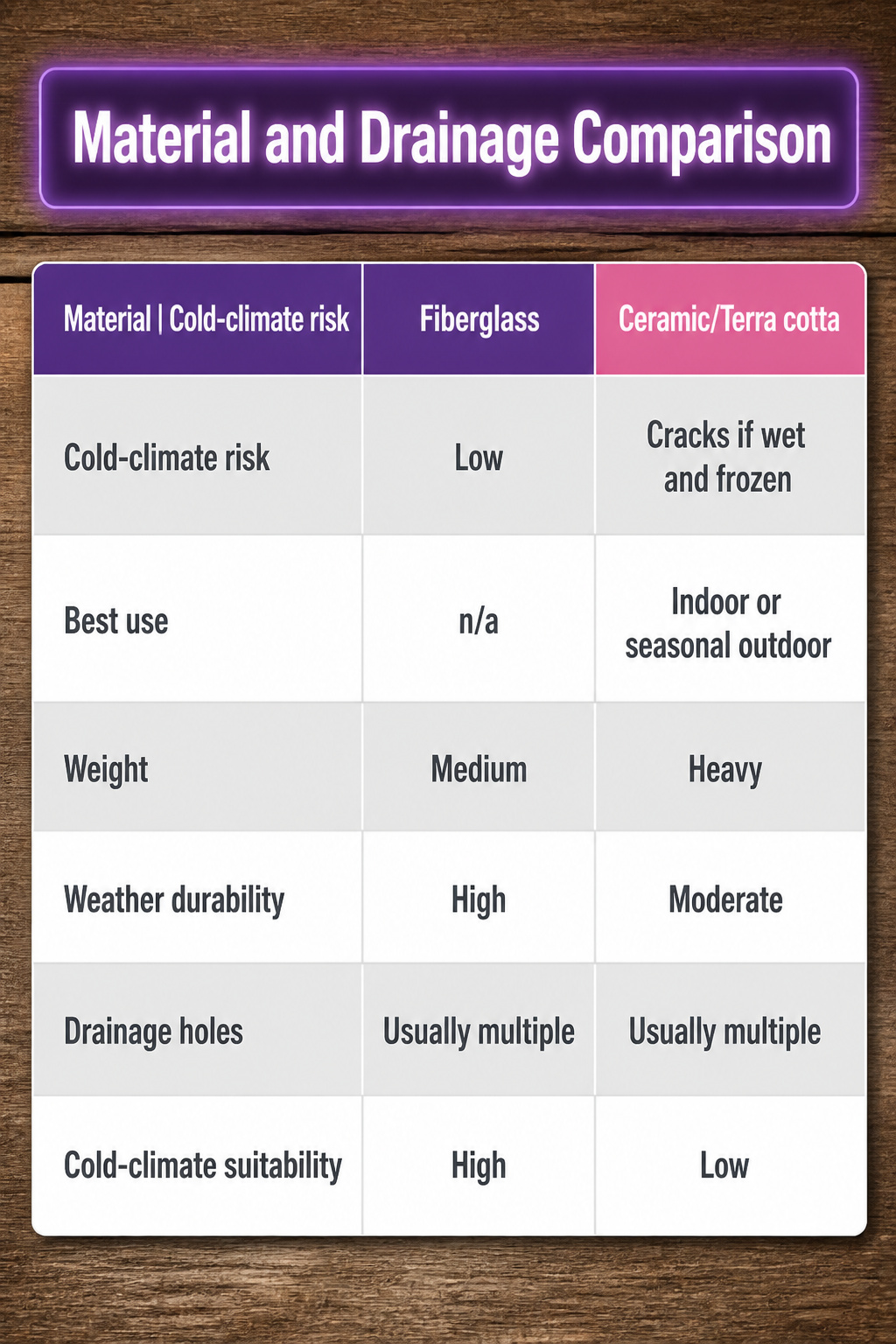
Fiberglass, iron, heavy plastic, felt, wood, and ceramic each carry weight and weather differently, but the material matters less than how many drainage holes you get. Excess water has to exit, or roots stay wet and rot sets in, and the wall behind takes damage that grows worse before you notice it. Terra cotta and ceramic left outside in cold climates can crack when moisture freezes inside them, so those stay safer indoors or get swapped out before frost.
| Material | Cold-climate risk | Best use |
|---|---|---|
| Fiberglass | Low | n/a |
| Iron | Low | n/a |
| Heavy plastic | Low | Lightweight removal for watering |
| Felt | Low | n/a |
| Wood | Low | n/a |
| Ceramic/Terra cotta | Cracks if wet and frozen | Indoor or seasonal outdoor |
If the planter itself has no holes, keep plants in their nursery pots inside the wall mount. Water them somewhere else, let them finish dripping, then return them to the wall. That gap between pot and wall is your cheapest insurance against the repair a soaked stud costs later.
Light Matching for Wall Planters
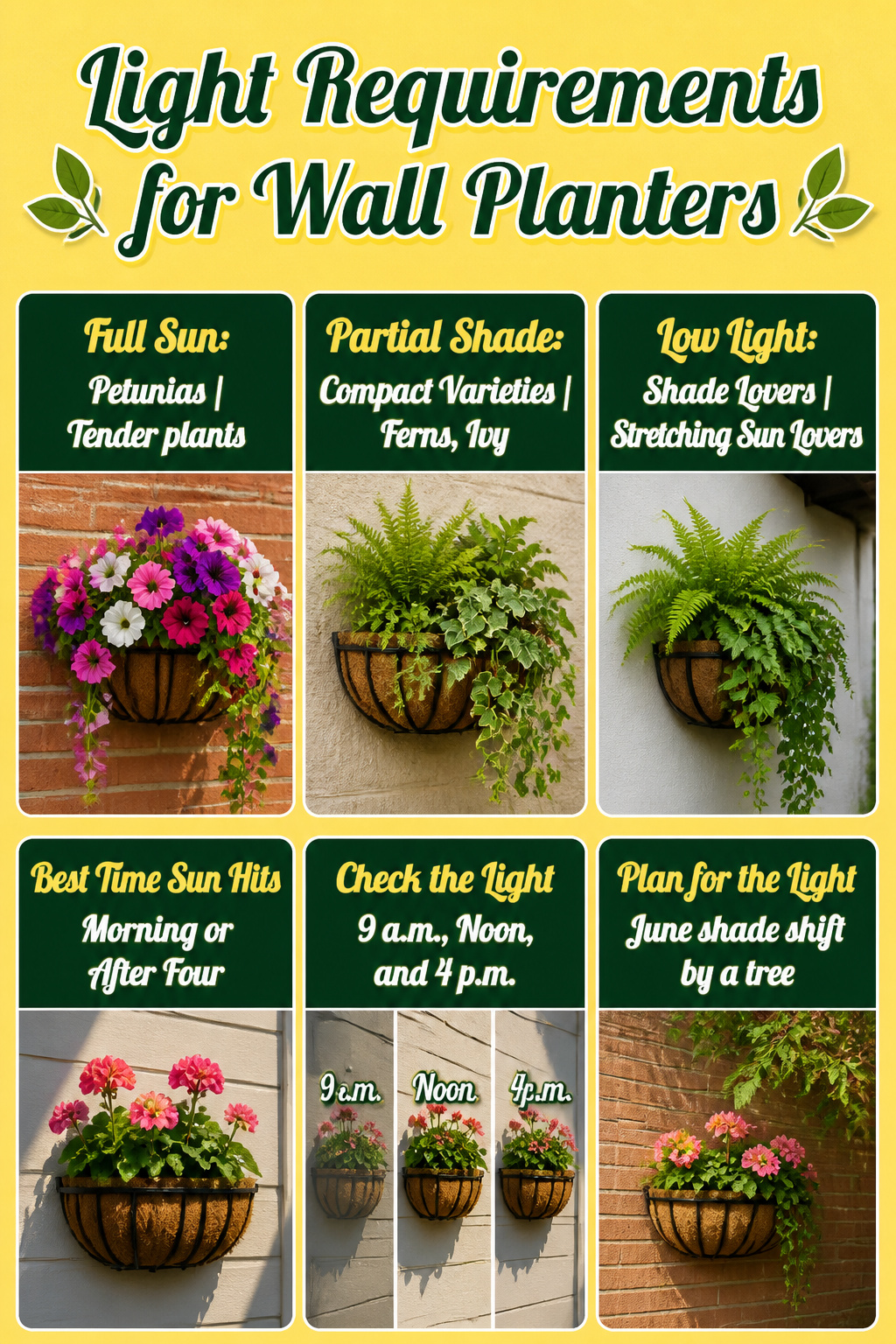
South-facing brick soaks up afternoon heat and will crisp anything tender, so full-sun wall planters want plants that can take the bake. Petunias trail well and fill out fast from small starts, and scented geraniums give you something to brush past on the way to the door. I learned the hard way that a north-facing fence under eaves stays dim even in July; that is where ferns and ivy earn their keep, since they will tolerate the low light that starves petunias.
Partial shade, the in-between that trips people up, is usually a wall that gets direct sun only until mid-morning or after four. East-facing is the forgiving one; west-facing dries out faster than you expect. For those spots, compact varieties matter more than exact species, because wall planters are smaller than they look and a root ball that spreads too wide chokes its neighbor. Shade lovers such as English ivy will survive a few hours of direct sun if the soil stays damp, but sun lovers pushed into shade stretch and sulk without enough light to set buds.
Before you buy, stand at the wall at 9 a.m., noon, and 4 p.m. and note what actually hits it. A tree two doors down leafs out by June and can shift a "full sun" tag to partial shade by midsummer. Plan for the light you will have, not the light you have in April.
Protecting Walls From Water Damage
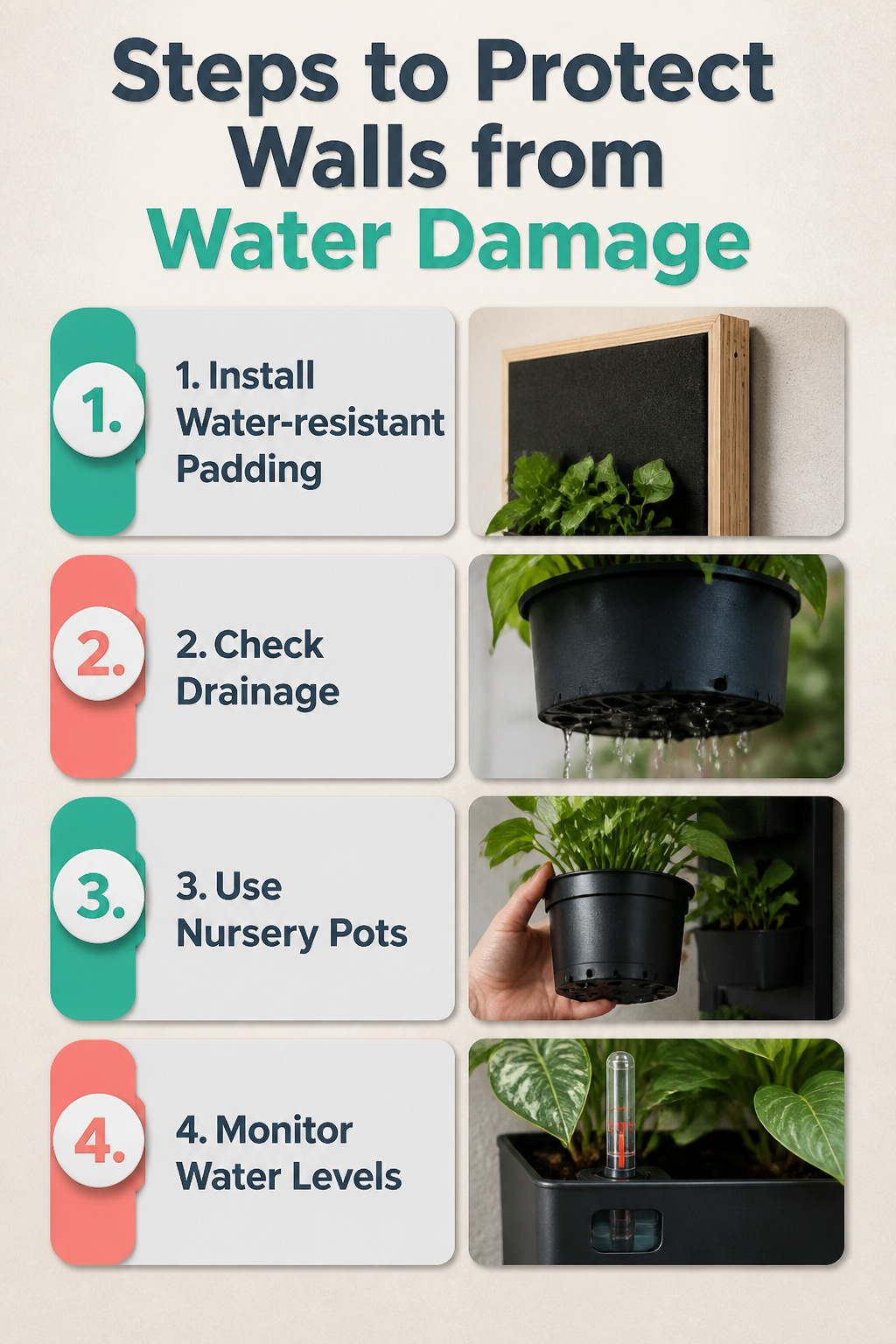
Water finds every gap you forget to seal. For indoor plant walls, the real enemy is not the watering itself but the overflow that pools behind the frame before you notice it.
Water-resistant padding or a plywood backing buys you the first line of defense, catching what drips past the pots instead of letting it soak into drywall. I learned this the hard way after spotting a soft spot on a bathroom wall that had been fine for months until it suddenly was not. The fix was not elegant: pull the planters, cut away the damaged section, and rebuild with a sealed barrier behind everything.
For setups without built-in irrigation, lightweight plastic nursery pots with drainage holes let you water elsewhere, let the excess run off, then return them to the wall dry underneath. Self-watering planters with a bottom reservoir remove even that risk, maintaining steady moisture without the puddling that ruins paint and plaster. Either approach works; the reservoir simply removes the human error of overfilling.
Frequently Asked Questions
What are the best plants for a wall planter?
Succulents, herbs, trailing plants like ivy and pothos, and shade-loving ferns all work well. Succulents such as echeverias, sedums, and hens and chicks handle shallow soil and low water needs. Herbs like basil, rosemary, thyme, and mint stay compact enough for small containers. Trailing plants including English ivy, pothos, and philodendron fill vertical space gracefully, while ferns brighten shaded corners where sun lovers would struggle.
How do you build a plant wall without damaging the wall?
Add water-resistant padding or plywood behind the planters to catch drips before they reach drywall or paint. Use lightweight plastic nursery pots with drainage holes that you can lift out, water elsewhere, let drain fully, then return dry to the wall. Self-watering planters with bottom reservoirs also remove the risk of puddling that ruins plaster over time.
How do you care for wall planters?
Match plants to the actual light the wall receives by checking at 9 a.m., noon, and 4 p.m., since nearby trees or buildings shift exposure through the season. Water according to each plant’s needs, using self-watering reservoirs for steady moisture with ferns and leafy herbs, or letting succulents dry between drinks. Always provide drainage exits so roots do not sit wet and rot, and protect the wall behind with backing or removable nursery pots that never go back soggy.