
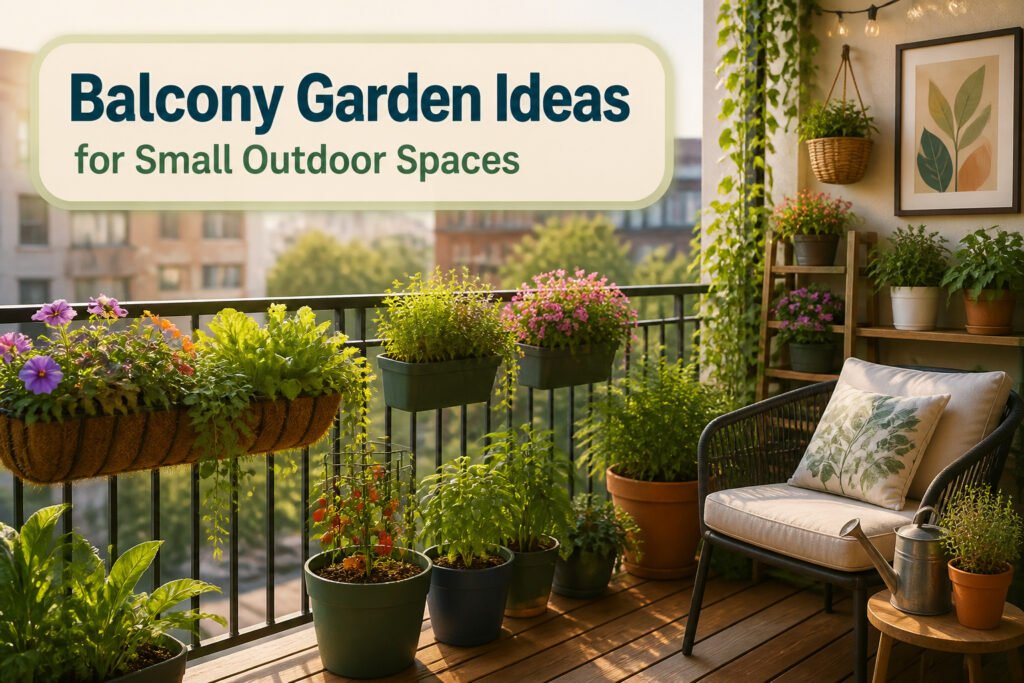
Balcony garden ideas range from a single railing box to a full seasonal rotation, and the right one depends on how many hours of direct sun your floor actually gets. Four hours or less suits lettuce and ferns; six or more opens the door to tomatoes and peppers in 5-gallon pots. The real test is not the plants but the wind: a 30-by-5-inch cedar planter three floors up will teach you fast which fasteners you skipped.
1. Railing Planters
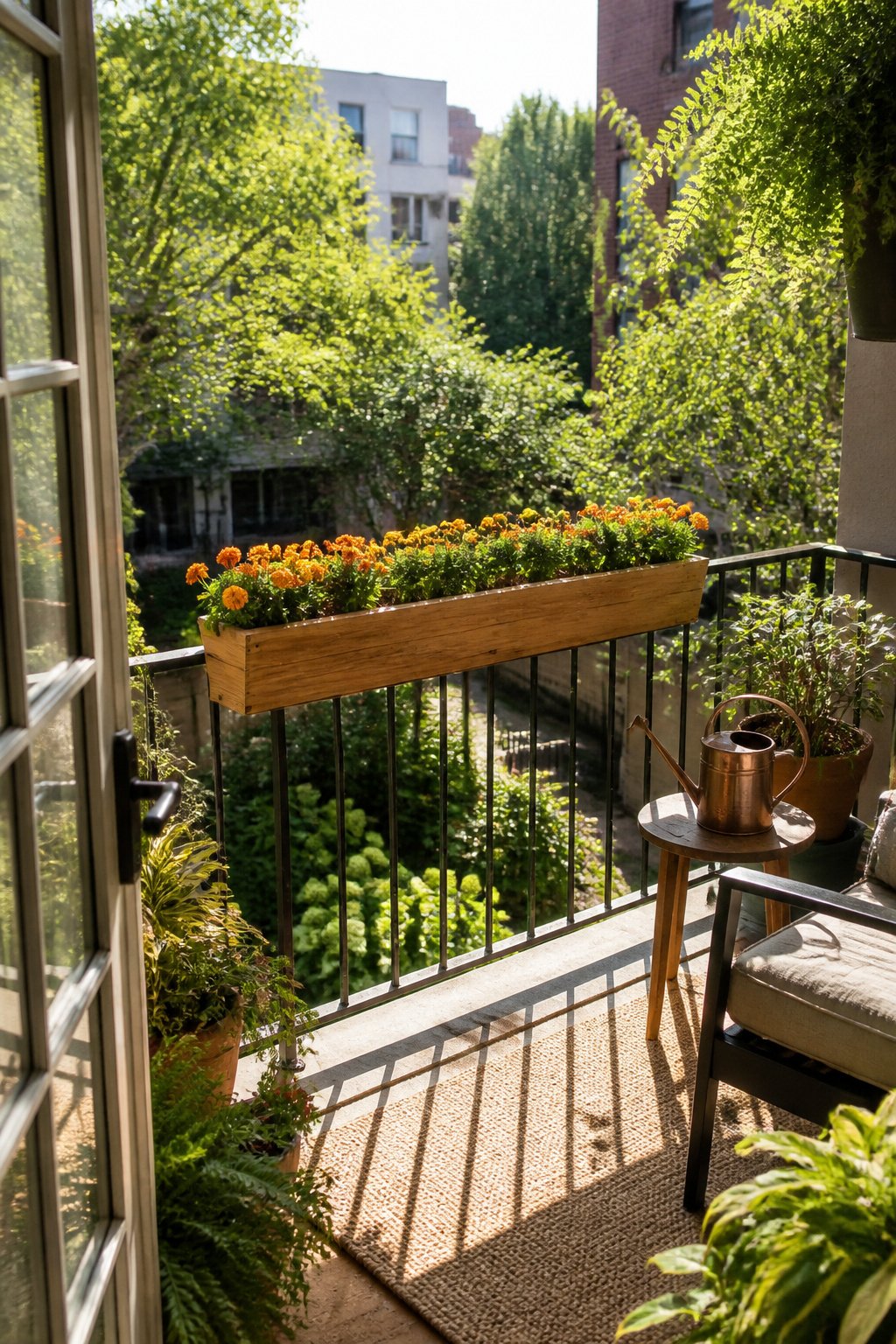
The railings on my balcony were the last place I thought to plant anything until I realized they were already the sunniest spot and the only vertical space I had not claimed. A slim cedar box, 30 by 5 by 5 inches, changed that. It sits on the railing edge itself, no brackets to install, and holds a row of French Petite Marigolds or a miniature herb garden without stealing a square inch of floor.
Wind is the real test up there. Three floors up, the railing is the most exposed edge of the whole balcony, and a gust will test every fastener you skipped. Adjustable brackets that clamp your specific railing width and lock tight are worth the extra step. Weight matters too: wet potting mix runs heavy, and a railing box already sits at the farthest point from the building wall. I keep the soil light, never garden soil, and check the box first on watering rounds because shallow soil dries fastest in open air.
2. Container Herb Garden
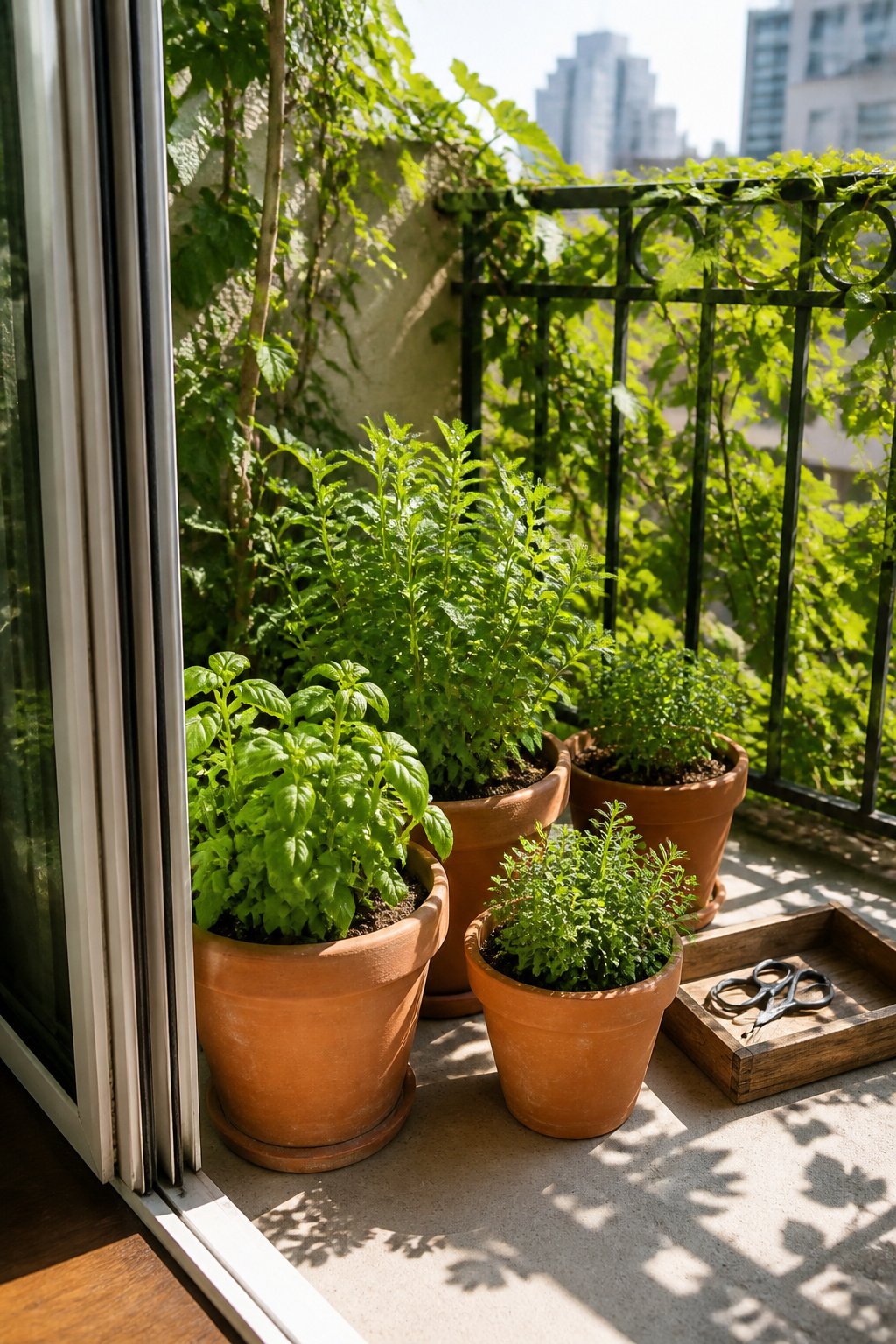
The herbs that live outside my balcony door get used ten times more than anything on the windowsill, because the three-foot walk beats the excuse not to bother. Basil and mint are the workhorses, and both want 6 to 10 inches of soil depth to produce well; basil in particular fills out noticeably more at the deeper end of that range. Mint always gets its own pot, no exceptions, unless you want it colonizing the rosemary.
Those six to ten inches of potting mix dry out fast in summer sun and wind. In hot weather, daily watering is the baseline, and balcony containers in the hotter zones sometimes need it twice. The finger test still works: when the top inch is dry, soak until water runs from the drainage holes. I cluster the pots together when I can; it cuts the drying breeze and buys a little humidity at the leaf level. Mediterranean herbs like thyme and oregano can share a wide bowl because they prefer the same dry-down cycle, while basil and parsley stay in solo pots where I control the moisture without negotiation.
3. Vertical Wall Gardens
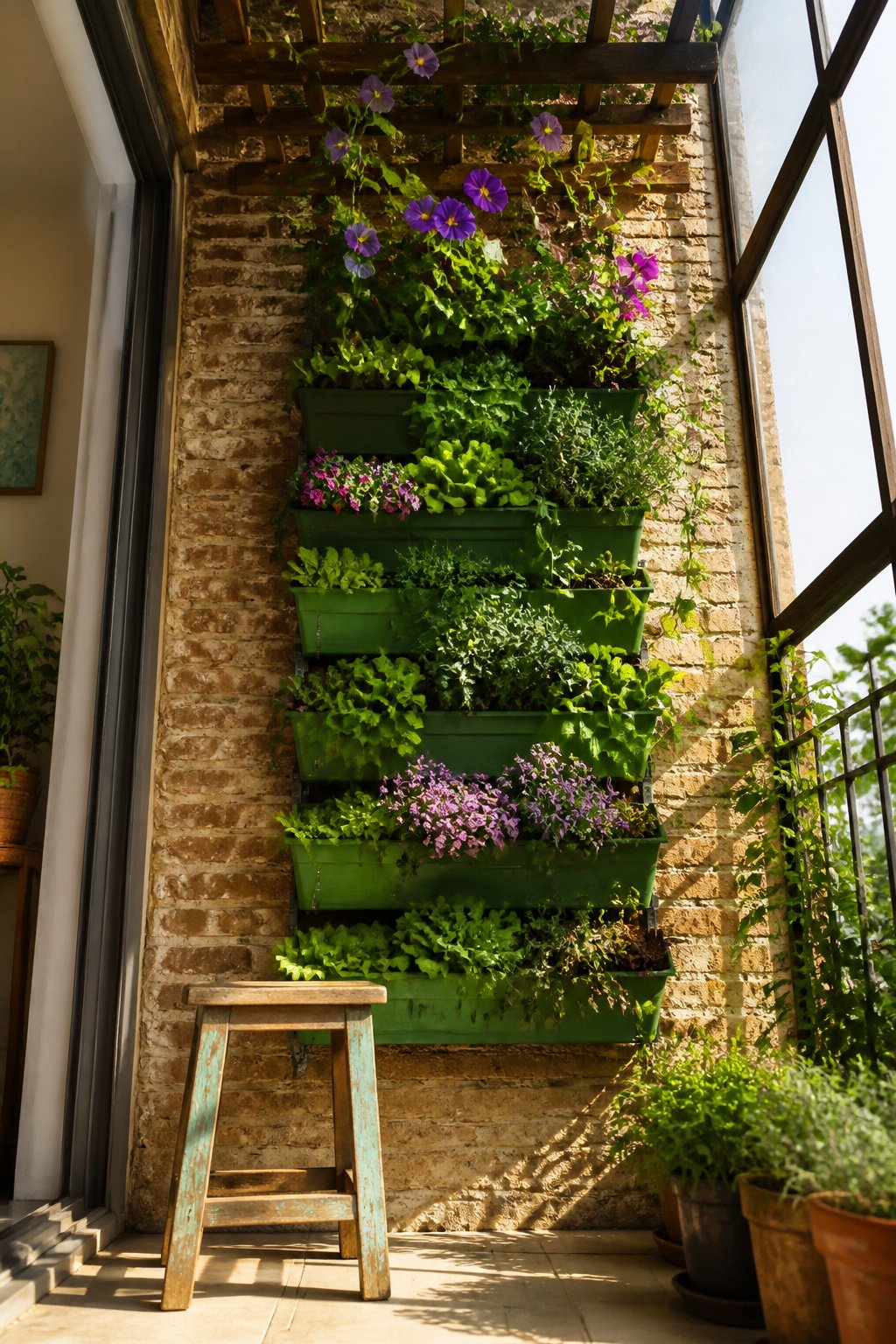
Wall-mounted planters and trellises turn the one surface most balconies have plenty of into growing space without touching the floor. The catch is weight. Standard potting soil gets heavy fast when wet, and most walls weren’t built to hold saturated bags of dirt. Lightweight soil cut with extra perlite is the move here, and shallow-rooted plants like herbs, leafy greens, strawberries, or ferns handle the limited root depth better than anything with a taproot.
Morning glories are the exception that proves the rule. Their roots stay relatively compact, and a single season can send vines ten feet up a trellis or railing with almost no encouragement. I lean toward growing them in a pot at the base of the wall rather than a pocket, though, so the roots have a little more room to forgive missed waterings.
Whether you DIY a vertical structure or purchase a commercially-made system, you’ll get the best results if you use lightweight soil and shallow-rooted plants.
The shallow pockets in most wall systems dry out fast, especially the top rows catching full sun. A drip line on a cheap timer fixes the crispy-top problem most new vertical gardeners hit, but even hand-watering daily beats losing the whole planting to one hot afternoon.
4. Hanging Baskets
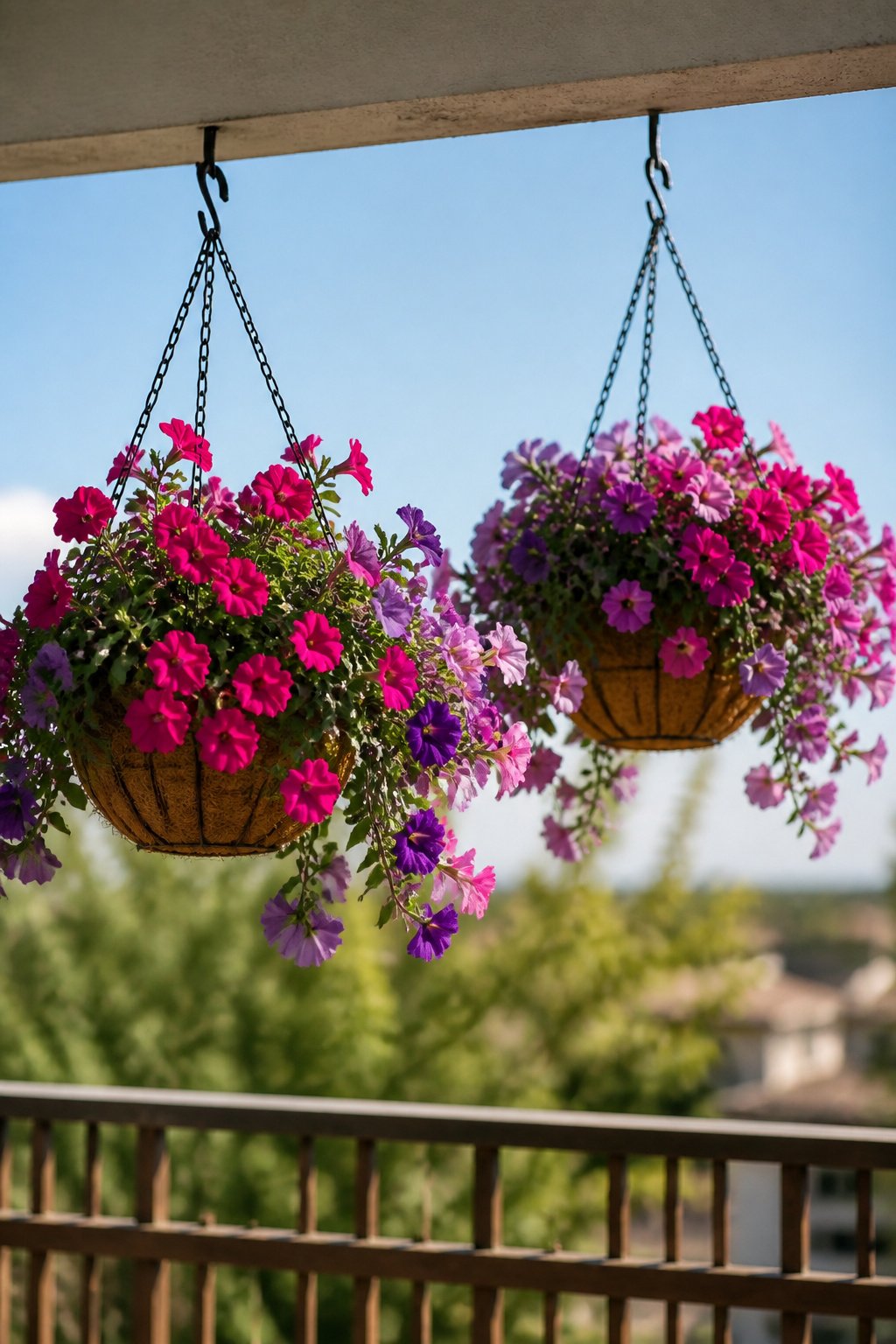
Overhead space on a balcony usually stays empty, which is a missed layer. A ceiling hook rated for the load adds planting room without touching the floor. A watered 12-inch basket runs 15 to 25 pounds, so check the hardware.
Trailing cherry tomatoes, strawberries kept above ground pests, cascading petunias, or trailing rosemary and oregano where you brush past and release scent all work well. Line coco-fiber baskets with a saucer or plastic liner punched with a few holes. Unlined coir dries out daily in summer wind, and balcony containers in the hotter zones may need checking twice daily during peak heat. Rotate baskets a quarter turn each week so growth stays even instead of lopsided.
No ceiling to work with? Wall hooks, shepherd’s crooks, or the railing itself hold the weight. With a sturdy overhead point, a second or third basket hung below the first catches drips and makes a tiered chain. Leave room between them for the plants to fill out.
5. Compact Vegetable Gardens
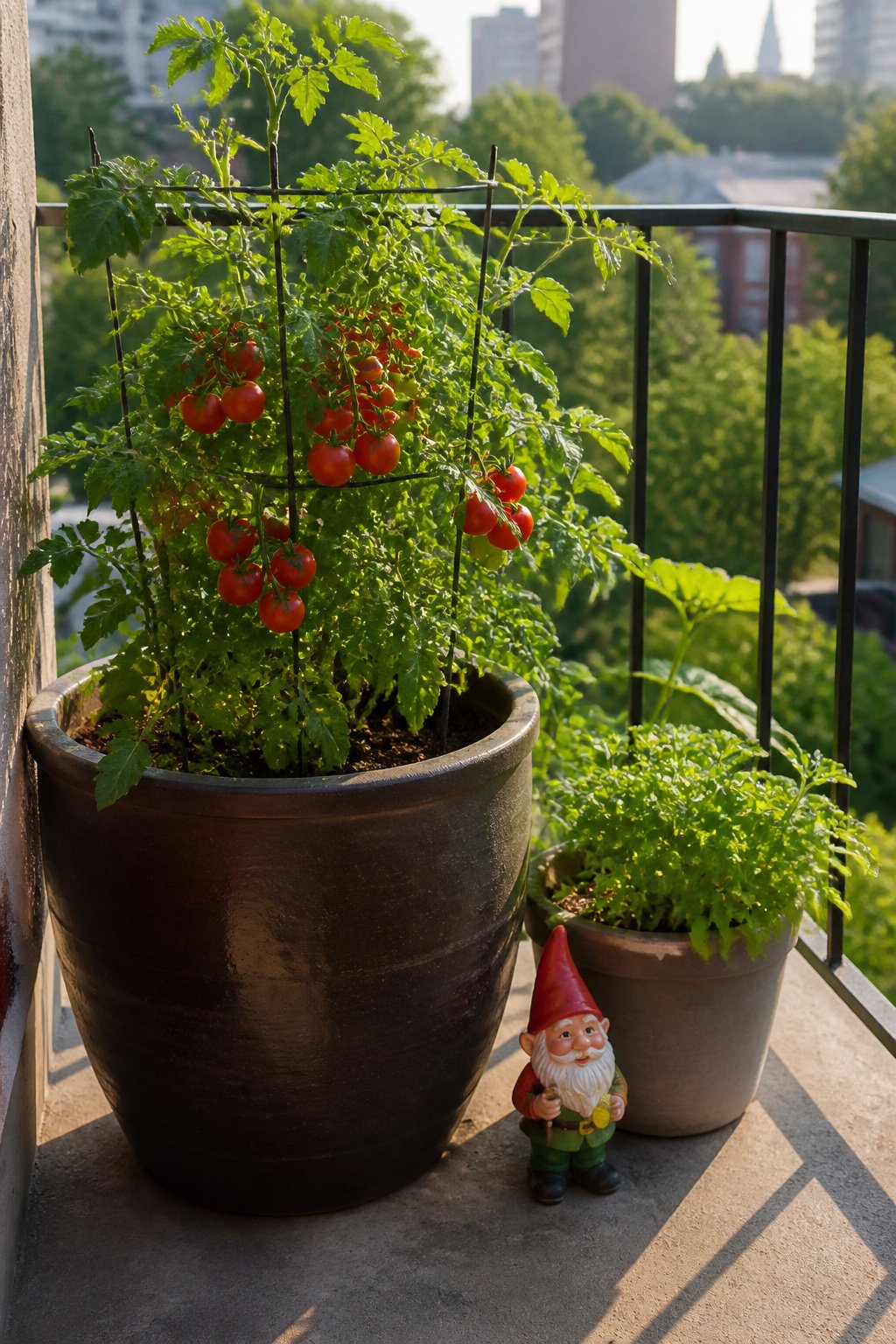
A single cherry tomato in a 5-gallon pot, 12 to 18 inches deep, will produce like a garden-bed plant if it gets the sun. Fruiting vegetables need that volume; anything smaller and the roots run out of room before the fruit sets. I learned the hard way that a 3-gallon pepper plant gives you three peppers and an apology.
Six to eight hours of direct sun is the threshold for tomatoes and peppers. My first balcony faced east with four good hours, and the peppers stalled out midsummer, all leaf and no pod. Leafy greens are more forgiving; lettuce and spinach manage on 3 to 4 hours and actually prefer afternoon shade once July hits. That north-facing balcony you worried about? It is a salad balcony, not a tomato one, and that is a real plan if you match the crop to the light.
Two habits keep big pots productive. Water whenever the top inch of soil dries, which means daily in peak summer for containers that size. Feed every one to two weeks with diluted balanced fertilizer, because frequent watering washes nutrients straight out the drainage holes. A jalapeño loves the reflected heat off concrete; expect first pods about 65 to 75 days after transplant if you give it the light.
6. Living Privacy Screens
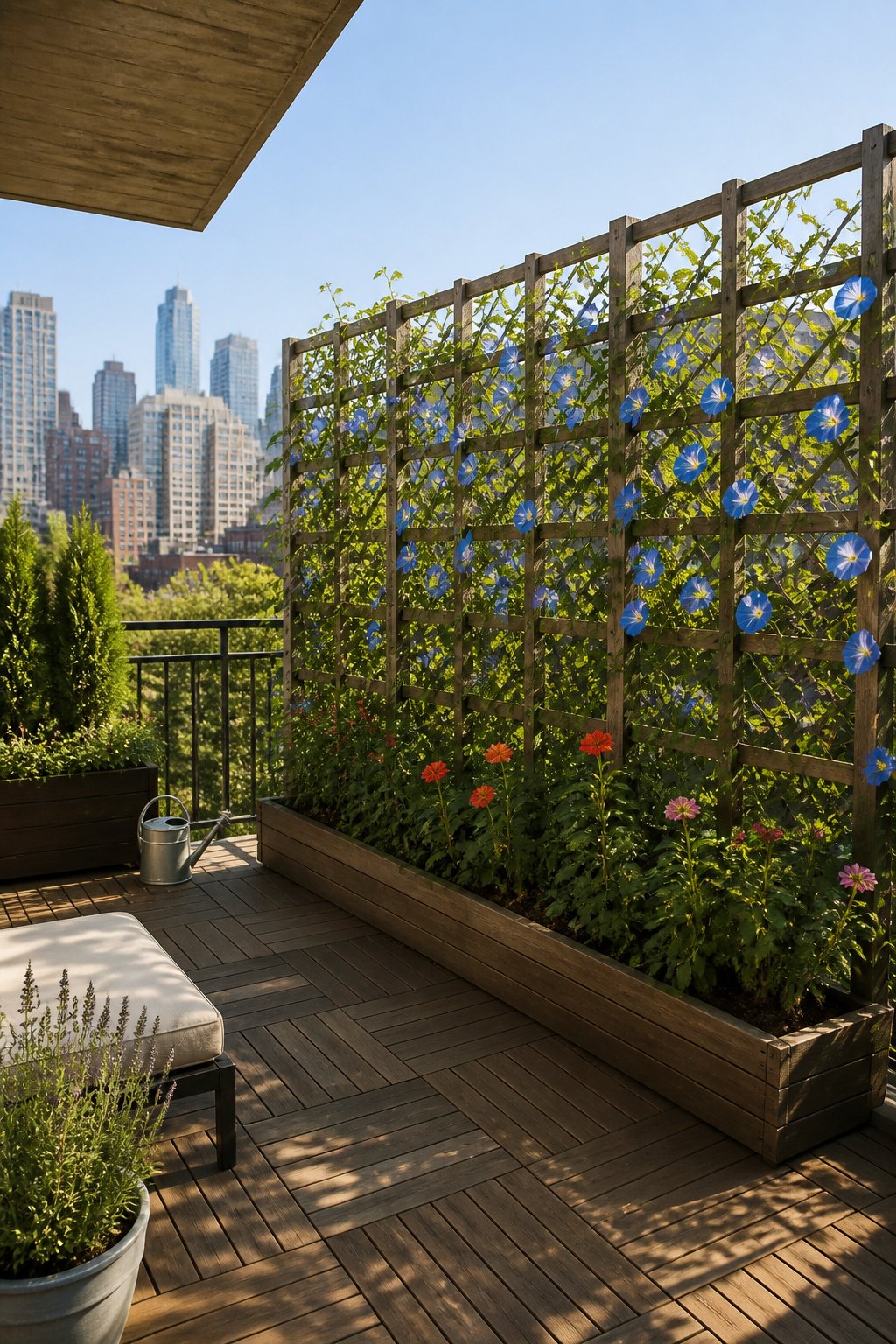
Close neighbors are the most common balcony complaint I hear, and the cheapest fix is a fast annual vine on a trellis. Heavenly Blue morning glories are the classic for a reason: nick the hard seed coat, soak seeds overnight, and give them a railing trellis or vertical strings. The vines run 10 feet or more in a season, flowering from midsummer to frost, and sown after your last frost they read as a green wall in six to eight weeks.
For structure without a vine’s commitment, long planter boxes of tall flowers do the same job. California Giant zinnias reach 3 to 4 feet in a deep box, screen a seated sightline, and hand you cut flowers all summer. Layer a tall box behind a mid-height herb pot row and the balcony reads enclosed without feeling boxed in.
Two cautions matter on a balcony. Anchor any trellis against wind as if a storm is guaranteed, because one is, and that same trellis doubles as a wind buffer that shields smaller plants clustered behind it. Keep morning glory seeds away from kids and pets; they are toxic if eaten.
7. Tiered Planters
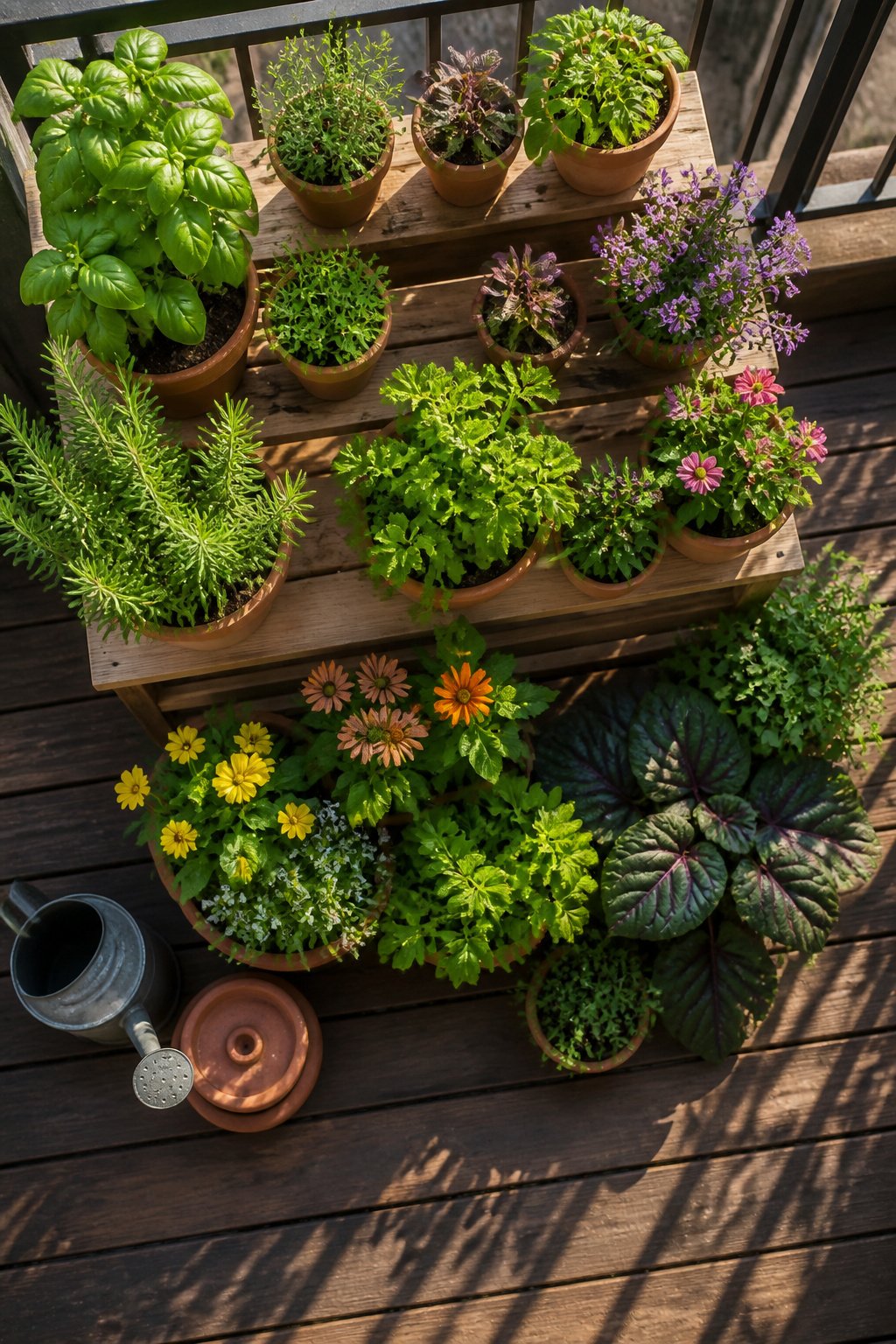
A tiered planter turns one square of balcony floor into three or four growing levels, which matters when that floor is maybe six by ten feet and still needs to fit a chair. The Japanese balcony-garden tradition arranges plants like a display rather than storage: sun-lovers on the upper tiers, shade-tolerant herbs and greens below, nothing hidden behind something taller. I like that ladder-style stands show every plant at once, but the same logic works with an old bookshelf or a pallet stood on end.
Keep the heavy bottom tier against the building wall. Waterlogged soil in a large pot weighs more than you think, and a gust hitting the railing side will test whatever you built. I have seen a stand go over because the owner loaded the bottom with lightweight flowers and put a tomato pot up top; the physics of that choice caught up by July. Herbs, leafy greens, and a few compact flowers all share a tiered footprint comfortably, though you will need to accept that trailing plants belong on the edge and upright things need the center. Repeating one pot color, even just repotting nursery plastic into matching terracotta, makes the whole assembly look intentional rather than accumulated. Leave enough floor clear for that chair; a garden you cannot sit inside becomes a chore you avoid.
8. Seasonal Rotation
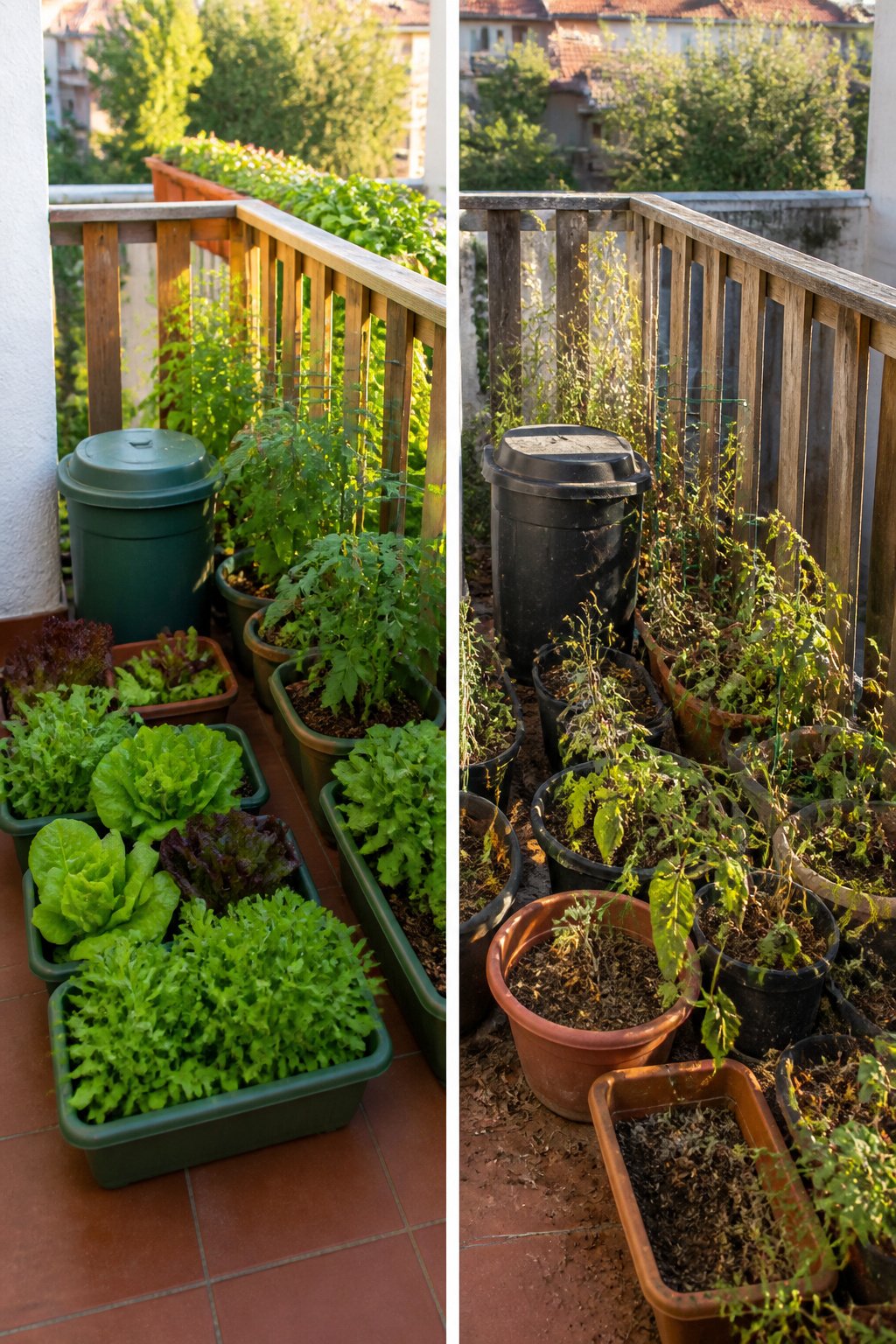
A balcony in March and a balcony in July might as well be two different gardens. Containers warm faster than ground soil, so lettuce, spinach, and arugula go in early while the building still blocks the worst wind. Peas climb whatever trellis you give them, and Swiss Giant pansies handle the last light frosts without complaint.
By May, those same pots need new tenants. Tomatoes, peppers, and basil move into the biggest containers after the last frost date. Cherry tomatoes on a determinate bush stay manageable on a railing, and a single basil plant yields enough for weekly pesto if you keep pinching the flowers.
August is the decision month. Sow spinach and lettuce again in late August for an October harvest, and refresh tired pots with a few inches of fresh mix and balanced fertilizer between occupants. Container soil wears out; it is the one part of the system you cannot skip.
Between every swap, the two-minute reset applies. Dump any pot that hosted diseased plants rather than reusing that soil. Top up the rest. Done right, one balcony gives you three distinct gardens a year, and the cool-season round in fall often outlasts anything in the ground.
How I Track Sunlight
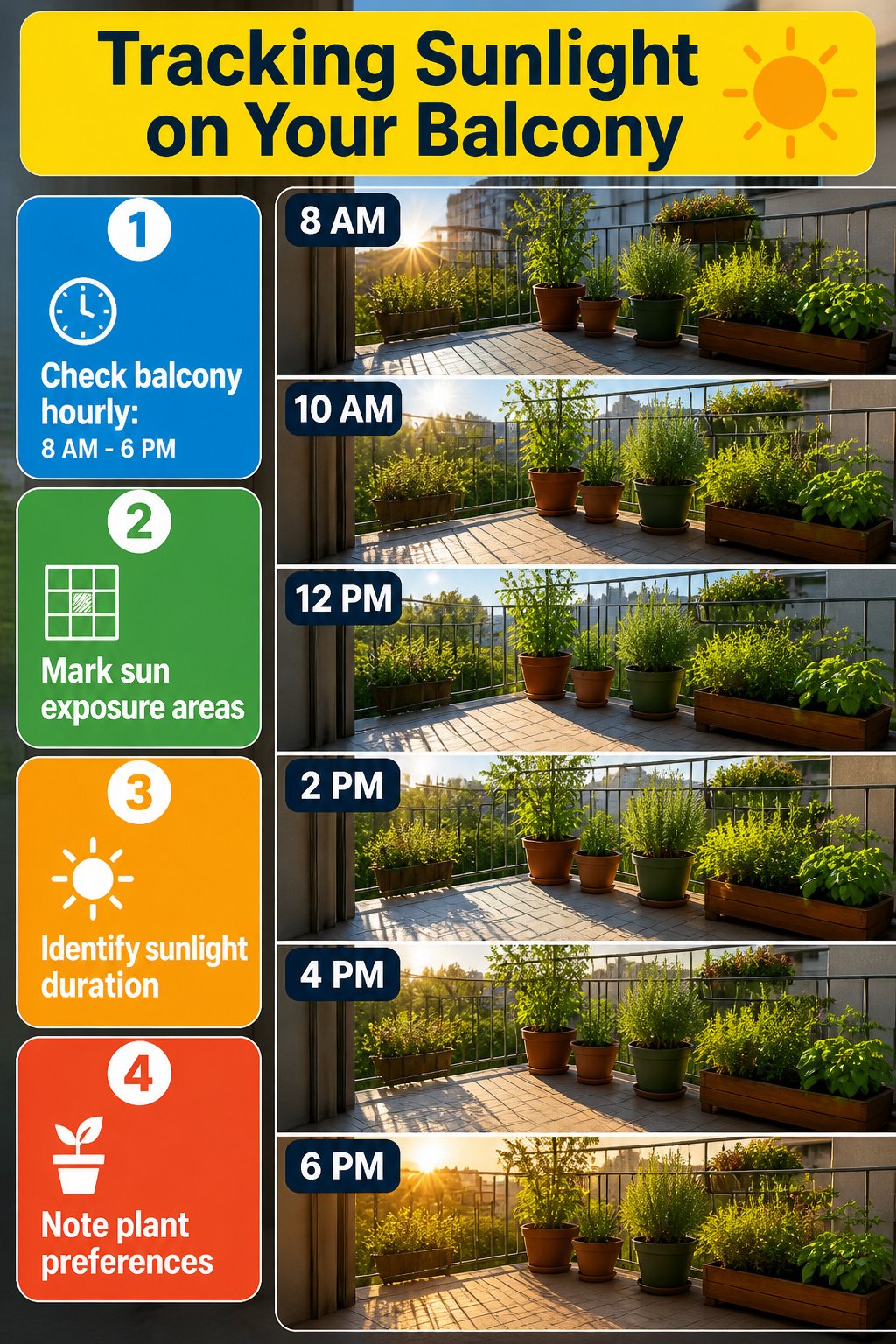
A clear day in late spring, before the trees leaf out fully, gives the truest reading. I check my balcony at the top of each hour from 8 AM to 6 PM, marking which squares of floor and railing get direct sun versus the dappled kind that filters through a neighbor’s oak. Six to eight hours of direct sun opens the door to tomatoes, peppers, and basil; three to four hours suits lettuce, spinach, hostas, and ferns just fine.
South-facing balconies usually win the light lottery, but nearby buildings matter more than compass direction in my experience. A north-facing ledge is not a failure; it is a mint and parsley ledge. The first year I skipped this step, I placed a cherry tomato where it got maybe four hours and spent July watching it stretch and sulk. Ten minutes of hourly notes would have saved the season.
Wind and Weight Rules
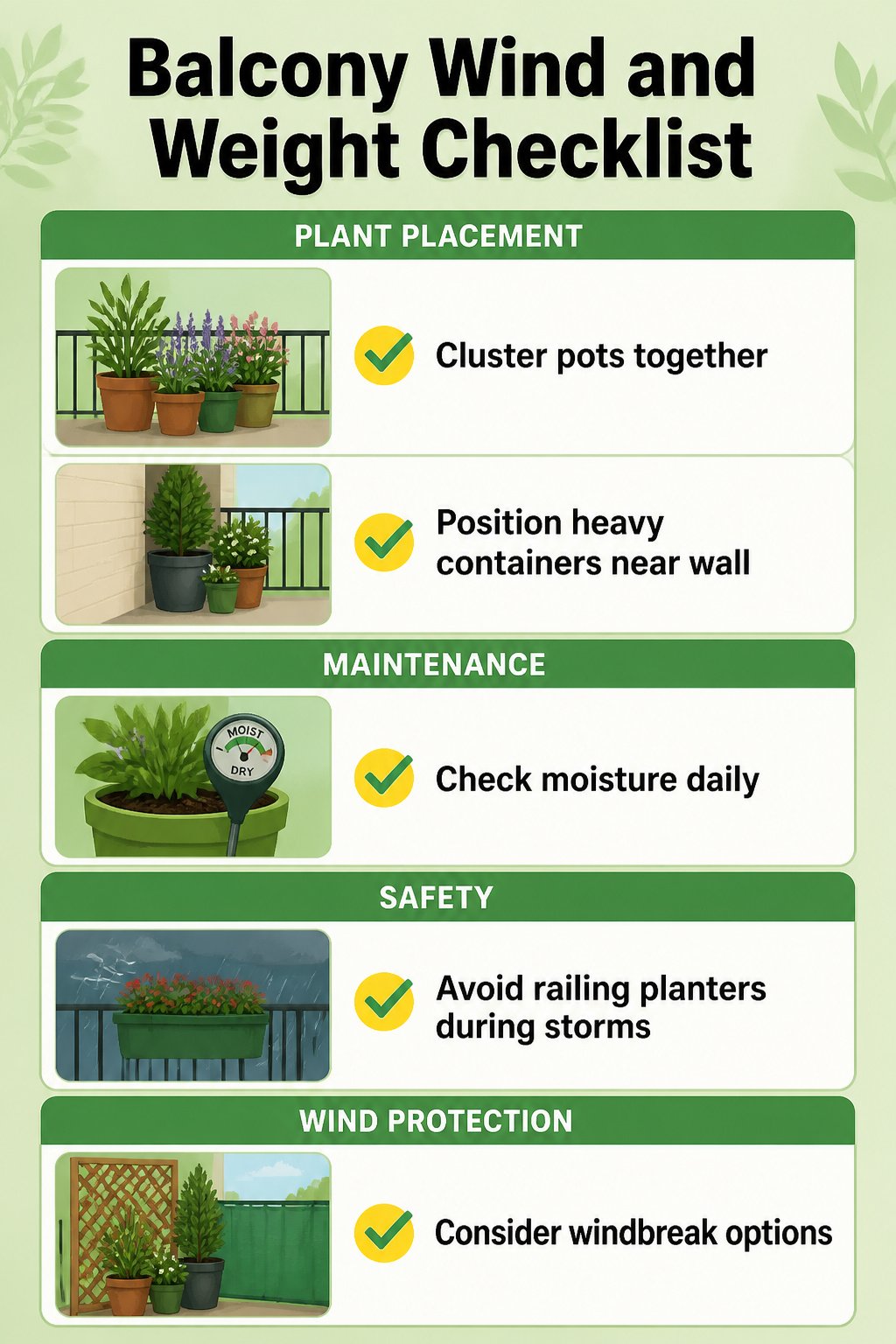
Wind on a balcony is stronger than ground level, and wet soil turns ordinary pots into real weight fast. Before I set anything out, I check what my building allows for load and anything hung from railings. Some management companies have rules about drainage too, and a quick call beats a nastygram later.
Here is how I keep things upright and within limits:
- Cluster pots in groups so they shelter each other. I put the taller, sturdier plants on the windward side and tuck smaller ones behind them.
- Keep the heaviest containers near the building wall, where the structure handles weight best and the wall itself blocks some gusts.
- Check soil moisture daily in summer. Wind pulls water out of pots fast, and dry soil is lighter soil, which means a top-heavy plant is easier to knock over.
- Never trust a railing planter in a storm. I learned that the hard way last spring. Even a wide-based pot gets leverage from height; in severe weather I bring them in or set them on the floor against the wall.
A decorative trellis or a length of garden fabric can break the wind without turning the balcony into a box. Just leave gaps so air still moves through.
Watering What Dries Fast
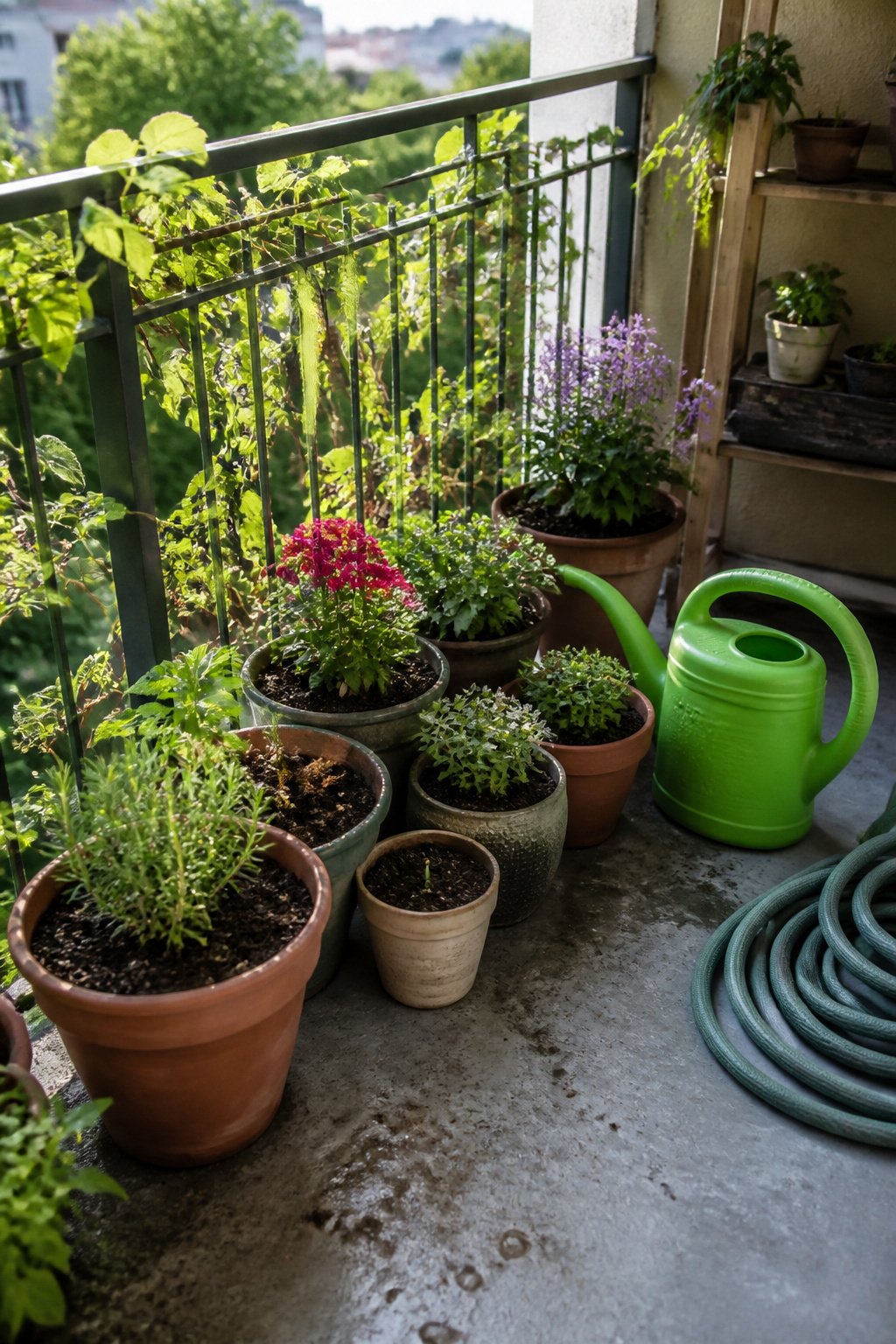
Wind and direct sun can strip moisture from a small container faster than you expect. The first summer I kept pots on a balcony, I learned that water when the top inch of soil feels dry is the only rule that actually matches what the plants experience. In peak heat, that means checking daily, sometimes every one to two days. A lightweight watering can keeps the trip from sink to railing from becoming a chore; a two-gallon size holds enough without getting heavy. Collapsible cans flatten for storage if space is tight.
Self-watering pots bought me back a day or two between rounds, but they did not let me skip checking entirely. The reservoir can read full while the soil surface has already pulled dry from wind exposure. For larger setups, a coiled nylon hose that attaches to a kitchen faucet with an adapter removes the carrying entirely. Water in early morning so less evaporates before the roots can take it in, and cluster containers close together so they shield one another from drying gusts.
Plants I Grow for Pollinators
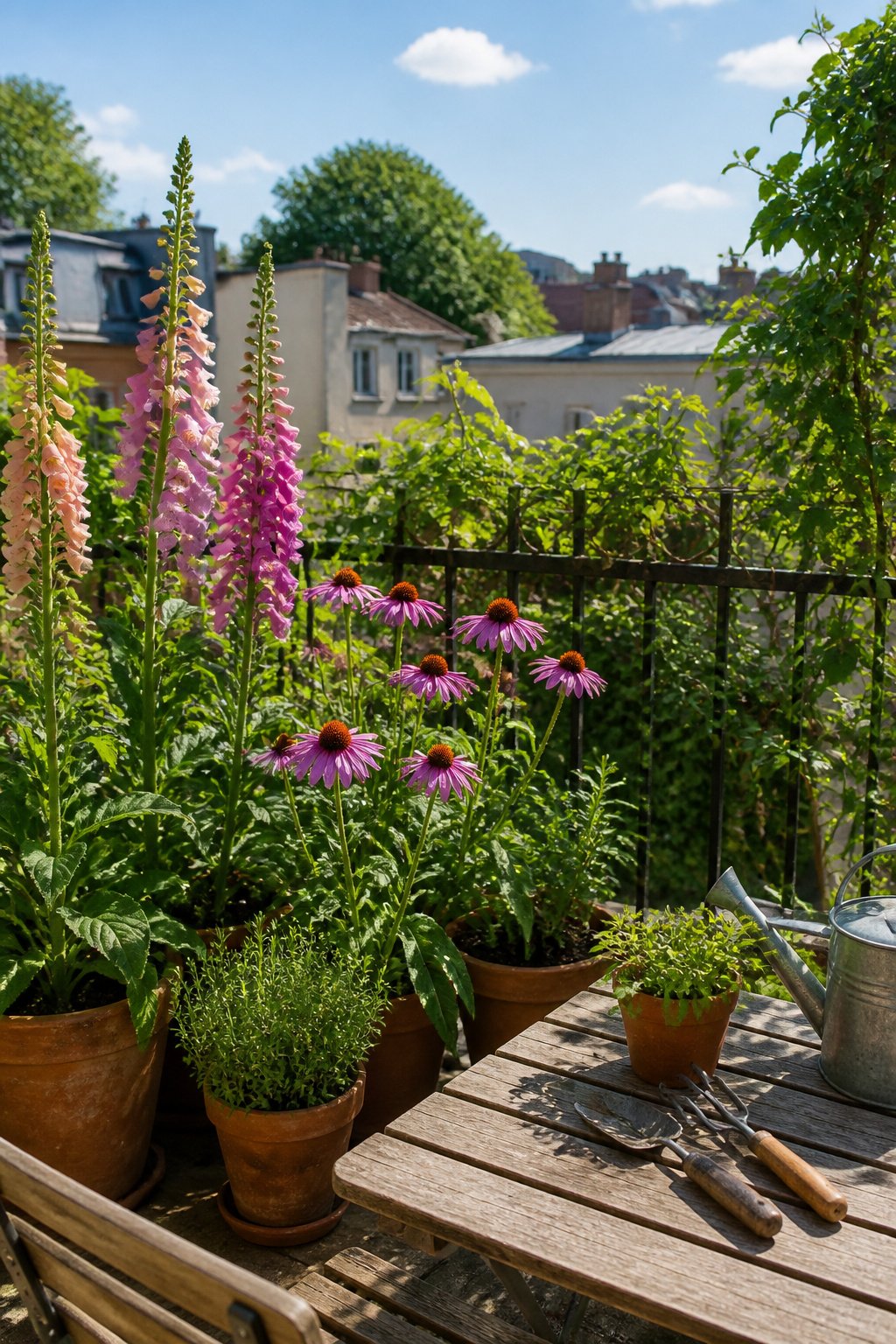
Coneflowers and foxgloves draw bees and hummingbirds to a balcony even when the nearest ground garden is half a block away. I noticed the difference most on my tomatoes and peppers. Before I added pollinator plants, fruit set was spotty one floor up, with plenty of flowers but fewer actual tomatoes forming. After tucking a few coneflowers into 5-gallon containers beside the vegetables, bee traffic picked up, and the fruit set improved noticeably on both crops.
Foxgloves work better as a spring draw in partial shade, which matters if your balcony only gets morning light. They reseed readily in a deep container, so one purchase can last several seasons. The coneflowers handle full sun and drought once established, which helps on a balcony where pots dry fast.
Leafy greens, herbs, and compact vegetables like cherry tomatoes and peppers already suit small containers well. Pairing them with pollinator flowers makes the whole setup more productive without needing more space. A 12-inch-deep pot with drainage holes handles either type of plant, so the same container rules apply across the board.
Frequently Asked Questions
What are the best plants for small balcony spaces with limited sunlight?
Shade-tolerant plants like hostas, ferns, and leafy greens thrive in low-light conditions. Lettuce and spinach manage on three to four hours of sun and actually prefer afternoon shade once July hits. On a north-facing balcony, plan for mint, parsley, and salad greens rather than sun-loving vegetables.
How do I know if my balcony gets enough light for vegetables and herbs?
Track sun exposure by checking hourly from 8 AM to 6 PM on a clear day in late spring. Mark which spots get direct sun versus dappled shade, then tally the hours of direct light. Six to eight hours of direct sun supports tomatoes, peppers, and basil; three to four hours suits lettuce, spinach, hostas, and ferns.
What size containers should I use for different types of plants?
Use containers at least 6 to 10 inches deep for herbs like basil and mint; vegetables like cherry tomatoes and peppers need 12 to 18 inches deep and at least 5 gallons in volume. Small containers dry out faster and limit root growth, so choose the largest size your balcony can safely support given weight and wind.
How often should I water container plants on a balcony?
Water when the top inch of soil feels dry, which typically means daily in peak summer heat and sometimes twice daily in the hottest zones. Wind and direct sun strip moisture from small containers faster than ground plantings. A lightweight watering can or a coiled nylon hose with a kitchen faucet adapter makes the job easier.
How do I deal with wind damage to balcony plants?
Cluster pots together so taller, sturdier plants shelter smaller ones on the windward side. Keep the heaviest containers near the building wall where the structure handles weight best. Check soil moisture daily, since dry soil is lighter and makes top-heavy plants easier to knock over. Bring railing planters down or move them to the floor during severe storms.