
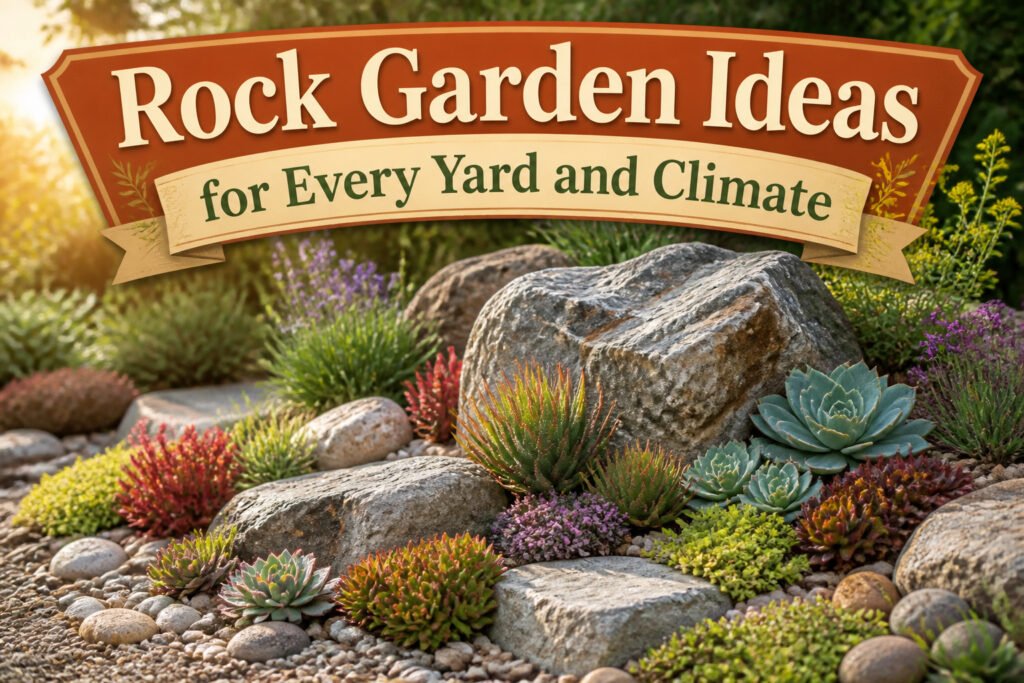
Rock gardens scale from a balcony tray of raked sand to a hillside holding back topsoil, and the right one depends on whether your ground is flat, sloped, or actively eroding. The critical detail is drainage: flat yards need a gravel base or berm, while slopes already have the runoff control built in.
1. Traditional Rock Garden
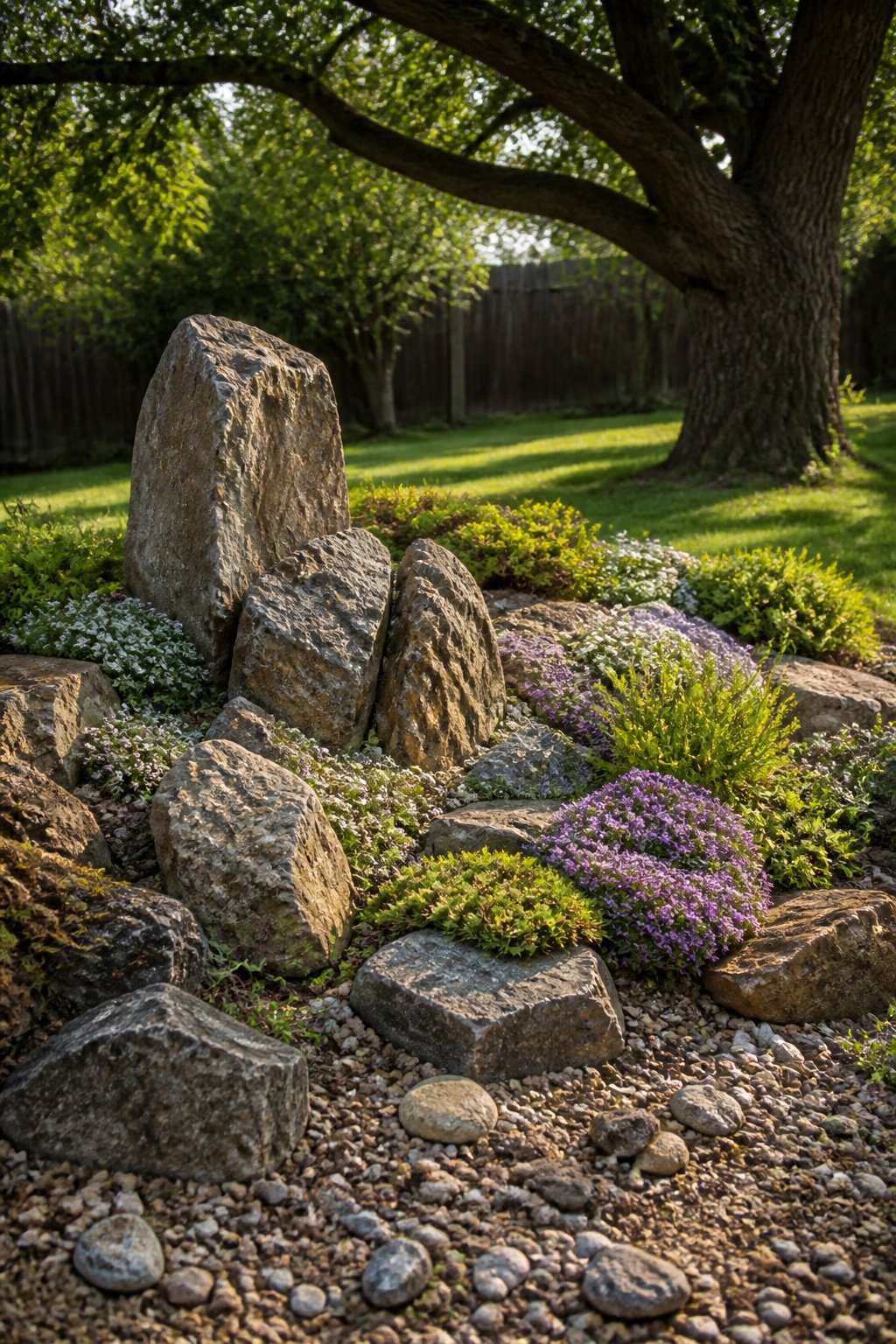
A traditional rock garden starts with a simple formula: tall rocks in the center, smaller stones at the edges, and plants tucked into the gaps. This classic structure works because it mimics how stones settle in nature, and it gives beginners a clear blueprint to follow rather than leaving them to guess at placement.
Rockcress and Stone Crop are the usual starting plants here, along with Creeping Thyme, Candytuft, and Creeping Phlox. These all appreciate the sharp drainage between stones and need less water than border plants, which matters when you’re still learning to read your soil. The first rock garden I planned, I spaced everything too evenly and the whole thing looked like a display rather than a garden. Uneven grouping, I learned later, reads as intentional; symmetry without perfect execution reads as a mistake.
What makes this style the entry point for most rock gardens is that it forgives experimentation. You can start with a corner heap of stones and expand outward, or keep it contained to a raised bed. The plants either thrive in the lean soil or they don’t, and the ones that do will seed into cracks you didn’t plan for. That self-filling quality is how a beginner gains confidence: the garden starts doing some of the design work itself.
2. Zen Rock Garden
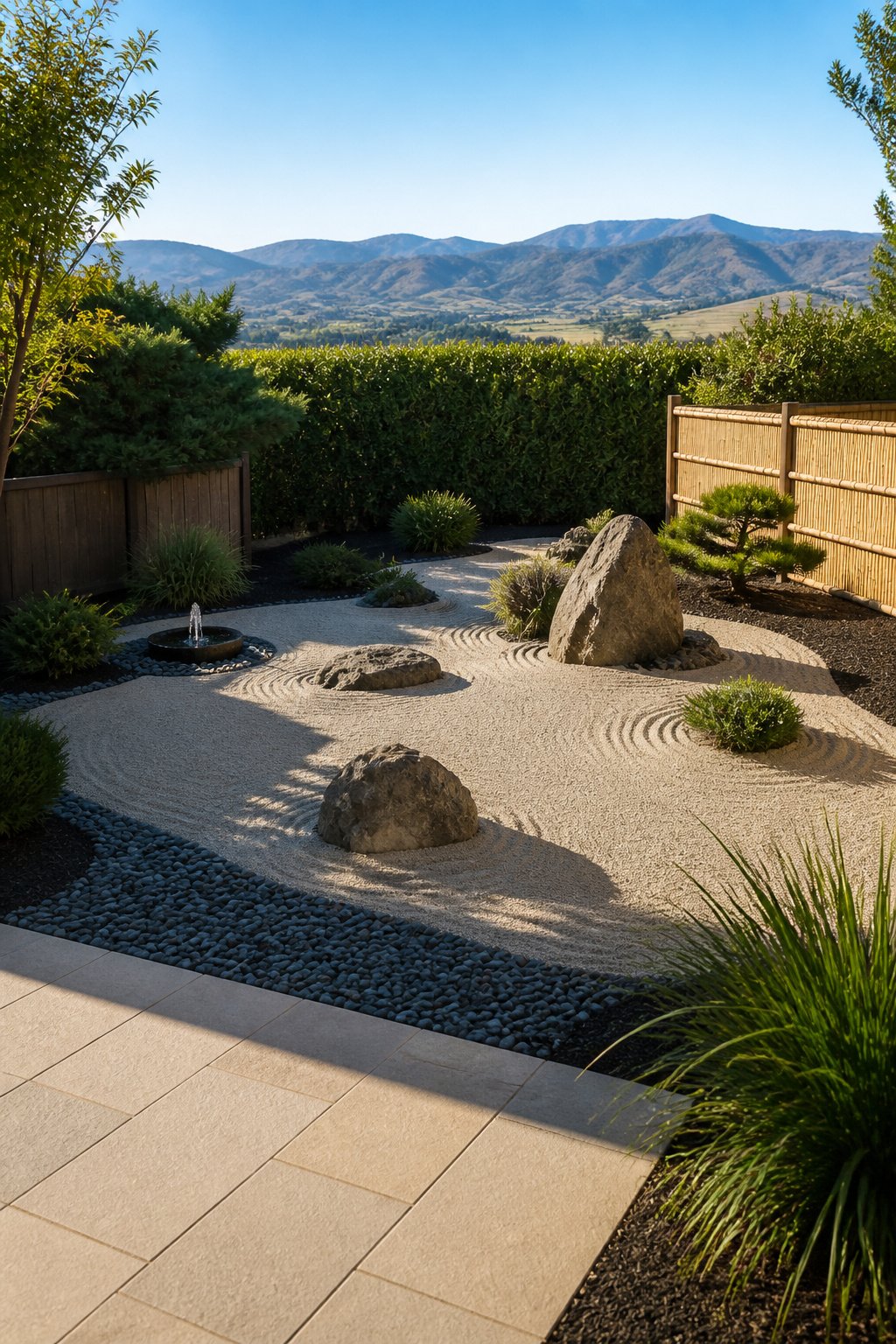
A zen rock garden strips the idea down to sand, stone, and silence. Raked gravel stands in for water, large boulders get half-buried so they look weather-worn, and plantings stay sparse: maybe Hakone grass, a dwarf Japanese garden juniper, or Angelina’s Teacup sedum spilling at the edges. The draw is the maintenance. No deadheading, no staking tomatoes, no wondering if you watered enough. Just patterns in the sand and the sound of a small fountain if you add one.
What separates this from plant-heavy rock garden ideas is the intent. A traditional rock garden wants you to notice the flowers in the cracks. A zen garden wants you to notice nothing at all for a while. Space shrinks or expands the design without changing the formula: a balcony can hold a single stone and a tray of sand; a yard can frame a bench facing inward so the shrubs block the sightline to the neighbor’s fence. The raking itself becomes the gardening. I have never kept one, but I understand the appeal after a season of fighting squash bugs: a garden where the work is repetitive and the result is never finished, only reset.
3. Dry River Bed Rock Garden
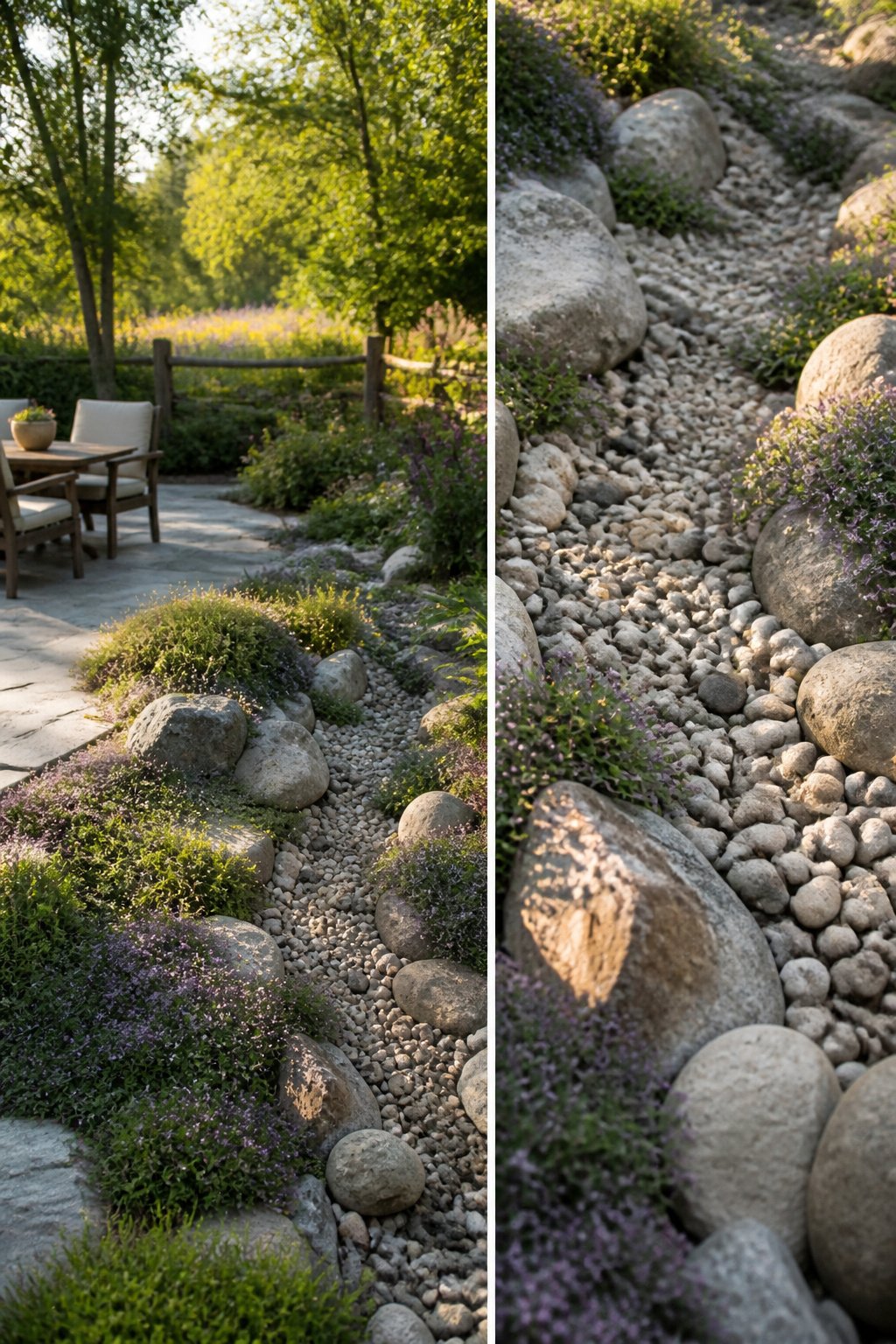
A dry river bed rock garden turns the spot where water always pools into the feature you actually want to look at. I laid mine after watching a summer storm turn one corner of the patio into a swamp for the third time. The fix is a shallow channel, 6–12 inches deep, lined with larger stones and rocks along both edges and filled with fine pebbles or pea gravel down the center to read as water. Angle it so it carries runoff away from the house, and the "stream" solves the drainage problem while it reads as deliberate design.
Trailing plants sell the illusion. Creeping thyme or Lamium like Purple Dragon spill over the edge stones as if current carried them there. On a slope, flat stones set across the channel look like waterfall ledges; trailing Sedum such as SunSparkler Dazzleberry softens the drop. Spiky accents, Firewitch Dianthus or Bergenia, break up the low carpet so it does not go flat.
The whole project needs no liner if the goal is just to move water through. Drought-tolerant choices, once established, handle the dry stretches between rains without extra watering. My pebble "river" still flows every hard rain, and the patio beside it finally stays firm underfoot.
4. Cactus Garden
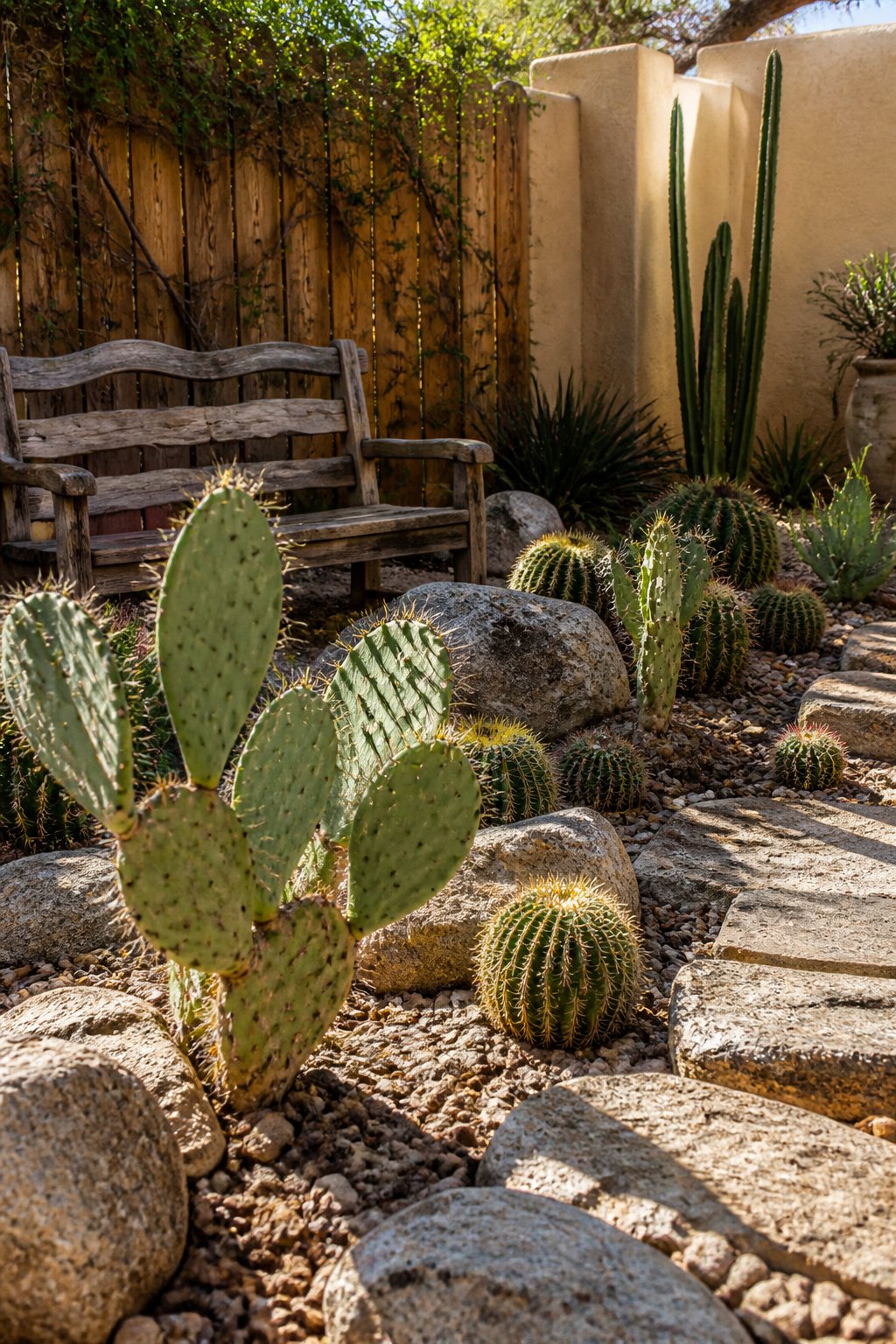
Hardy cacti and desert plants turn the driest corner of a yard into something that mostly takes care of itself. The trick is choosing species that survive light frost so you are not replanting after the first cold snap. Opuntia polyacantha and certain Escobaria varieties handle down to zone 5 without protection, while Echinocereus triglochidiatus shrugs off snow if the soil drains fast enough. Overwatering kills more of these plants than cold ever will; letting the soil stay dry for two to three weeks between soakings matches what they actually want.
A cactus rock garden fits a tight annual budget because the setup costs sit almost entirely in the first year. Rocks, gravel, and a few mature specimens replace lawn without calling for an irrigation system or the water bill that follows one. After that, ongoing spending drops close to zero: no fertilizer schedule, no mulch to refresh, no replacement flats after a wet spring. For someone gardening on roughly $500–800 a year, that near-zero maintenance cost is what makes this style worth considering against thirstier options.
5. Formal Rock Garden

Man-made stones, square pavers, and bricks can carry a rock garden as convincingly as anything quarried, and the symmetry is what sells the illusion. Concentric circles of matching plants, rows spaced to a ruler, and a single color story running through the whole bed give the eye that controlled, deliberate calm. Fire glass and smooth river stones that share a tone keep the palette tight; add low lights or a fire element and the geometry still reads after sunset.
The plants that survive this discipline tend toward the architectural: Hidcote or Sensational!® lavender, Horstmann Blue Atlas cedar, Moonglow juniper, Elijah Blue or Boulder Blue fescue. Lesser catmint and Silver Mound artemisia soften edges without breaking the lines.
The trade-off is maintenance for control. Dense ground covers like creeping phlox or sedum will eventually crowd out weeds between the stones, but only if you start with landscape fabric and refresh two to three inches of gravel mulch each spring. Without that discipline, the formal frame becomes a frame for chaos. This style suits a small patio or balcony where wildness reads as neglect, and where the gardener wants a clear answer for what to do this season: prune to the line, weed after rain, and let the structure do the work.
6. Crevice Garden
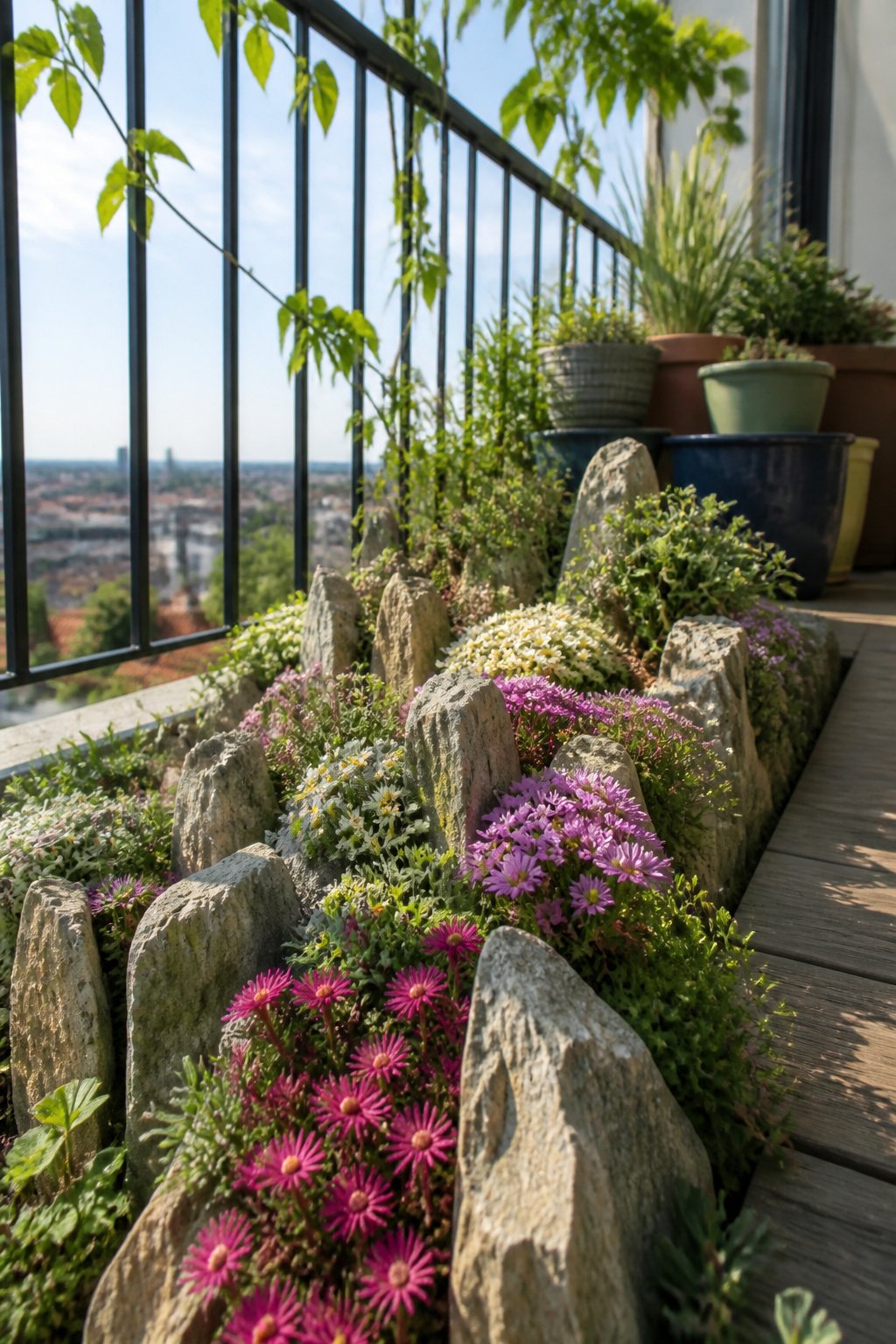
Flat stones set on edge, packed tight together, turn a narrow strip of patio or balcony into growing space that reads vertical instead of horizontal. The gaps between them, just wide enough to tuck soil and roots, are where ice plants, wooly thyme, and Lewisia cotyledon grab hold. Czech gardeners pioneered the method, and it has since caught on with apartment growers who need months of color from a footprint no deeper than a dish rack.
I have watched a single row of upright fieldstone along a railing transform a concrete balcony. The stones face south, the crevices warm faster than surrounding soil, and the whole thing stays compact enough to move if the lease changes. Container versions work the same way: a pot, a few stones tilted upright, soil in the cracks. Drainage matters more than size, so pick a container with holes before you worry about anything else.
The real efficiency is in the square footage. A crevice garden gives you depth without width, height without spreading out. For a gardener working a small budget and a smaller hardscape, that is the difference between tending something living and staring at empty concrete.
7. Mountain Craig Rock Garden
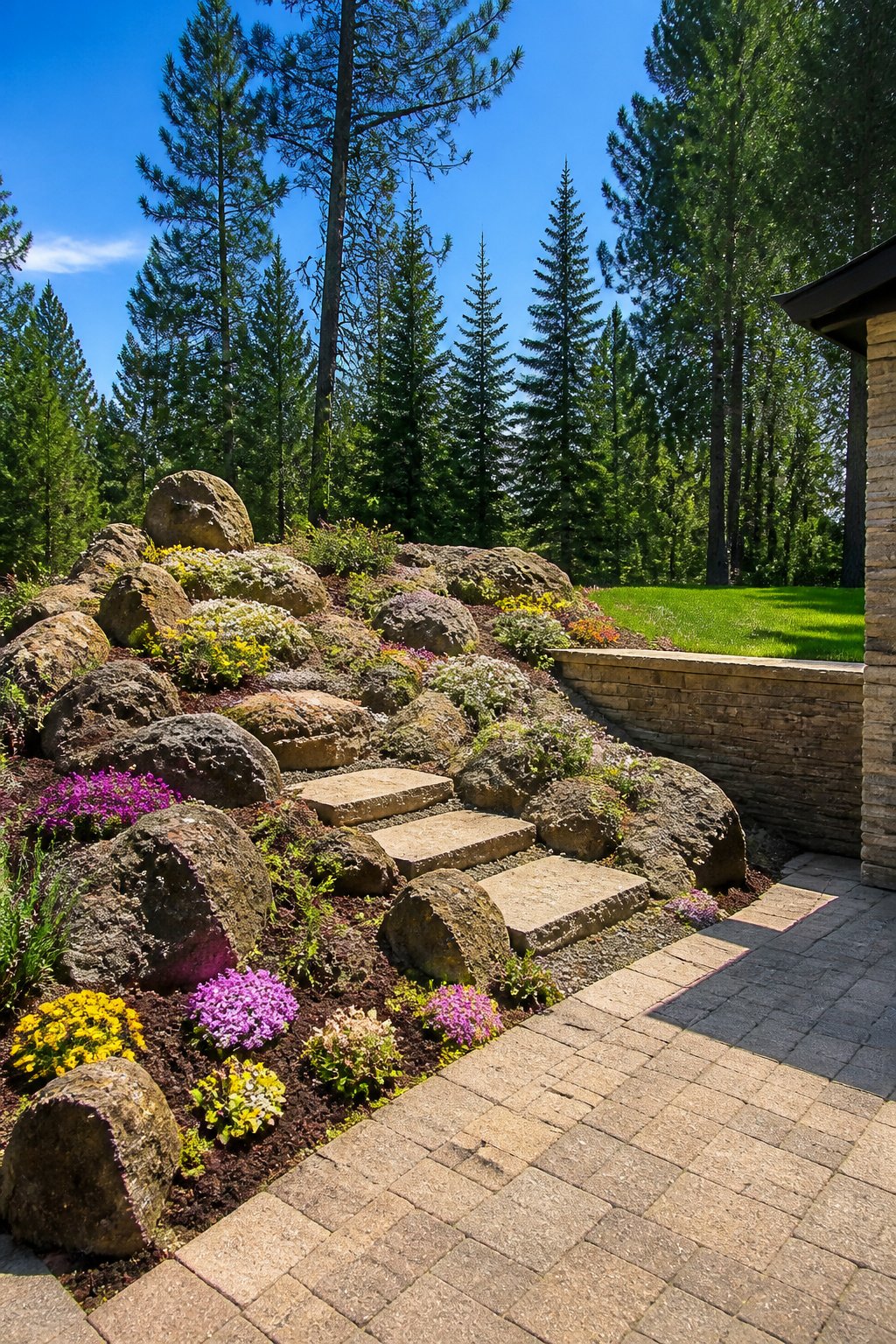
Steep ground that washes out every spring is exactly where a mountain craig rock garden earns its keep. The rocks themselves slow runoff, and the alpine roots knit the slope together underneath. I learned this watching a neighbor’s hillside after they pulled out their junipers; the soil went with them in the first hard rain.
For USDA zone 5, the plant list is short and specific. Creeping phlox, sedum, hens and chicks, and alpine asters handle the -20°F nights. Dwarf mugo pine and carpet juniper like Blue Pacific give winter structure. Spring color comes from species tulips and crocuses tucked between stones. Space the small perennials 6–12 inches apart, matching their mature spread, and plant after the last frost.
Volcanic lava rock mulch fills the gaps between features without looking mulched. Flat stones or weathered logs work as steps on the grade. A gnarled branch or exposed root makes a believable focal point, and the crevices hide small surprises well. A little waterfall tumbling down reads as a mountain stream if the scale stays modest.
The alpine varieties want sharp drainage and take the temperature swings. Sea Thrift Splendens, Saucy Seduction yarrow, and Basket of Gold all fit this mood. Ice plant and Purple Wood Spurge fill the hottest, driest pockets where little else holds. Sweet Woodruff handles the cooler, shaded steps between rocks.
The payoff is a slope that stays put and looks like it grew there.
8. Prairie Rock Garden
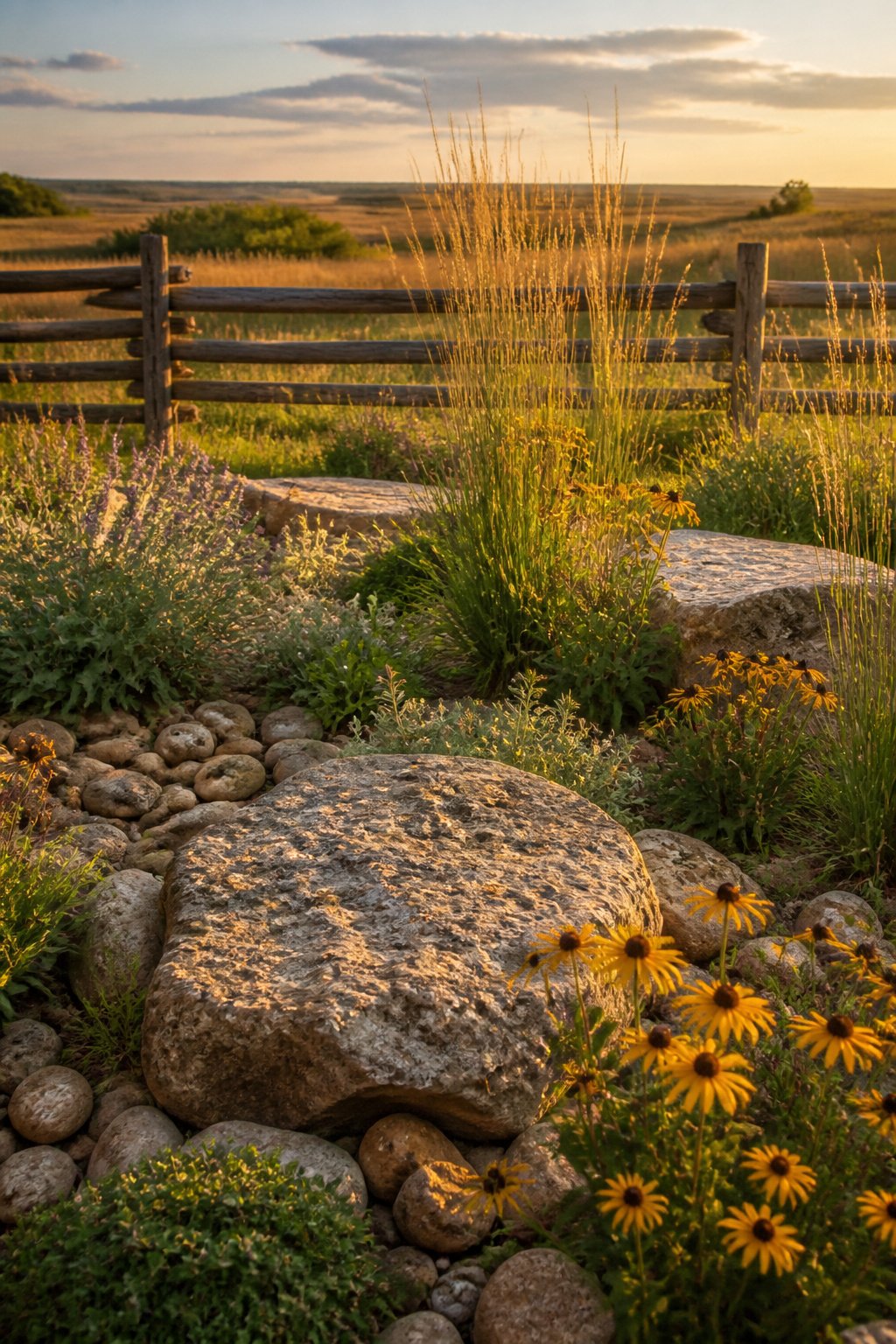
Prairie grass and stone belong together in a way that feels less designed than discovered. The same dry, sandy banks that make Midwestern summers brutal for water-hungry plants are exactly where native grasses like Big Bluestem and Prairie Dropseed root themselves and stay. I like that a garden built on this pairing needs almost no irrigation system; overwatering does more harm than good, and a soak every two to three weeks is usually plenty once plants are established.
The real budget stretch comes from self-seeders. Yellow Coneflower and native Stiff Goldenrod will spread themselves through the gaps between stones after the first season, and Moonbeam Coreopsis fills in so reliably that buying more than a few starter plants feels unnecessary. Let the plants reseed and you skip next spring’s replacement costs entirely.
For accents, weathered materials read better than new. A section of old split rail fence, terra cotta-colored stones, or even a pump from an antique well gives the garden the sense that it was always there. The grasses supply the movement, the stones give it backbone, and the wildflowers drop in color where they please.
9. Flowering Rock Garden
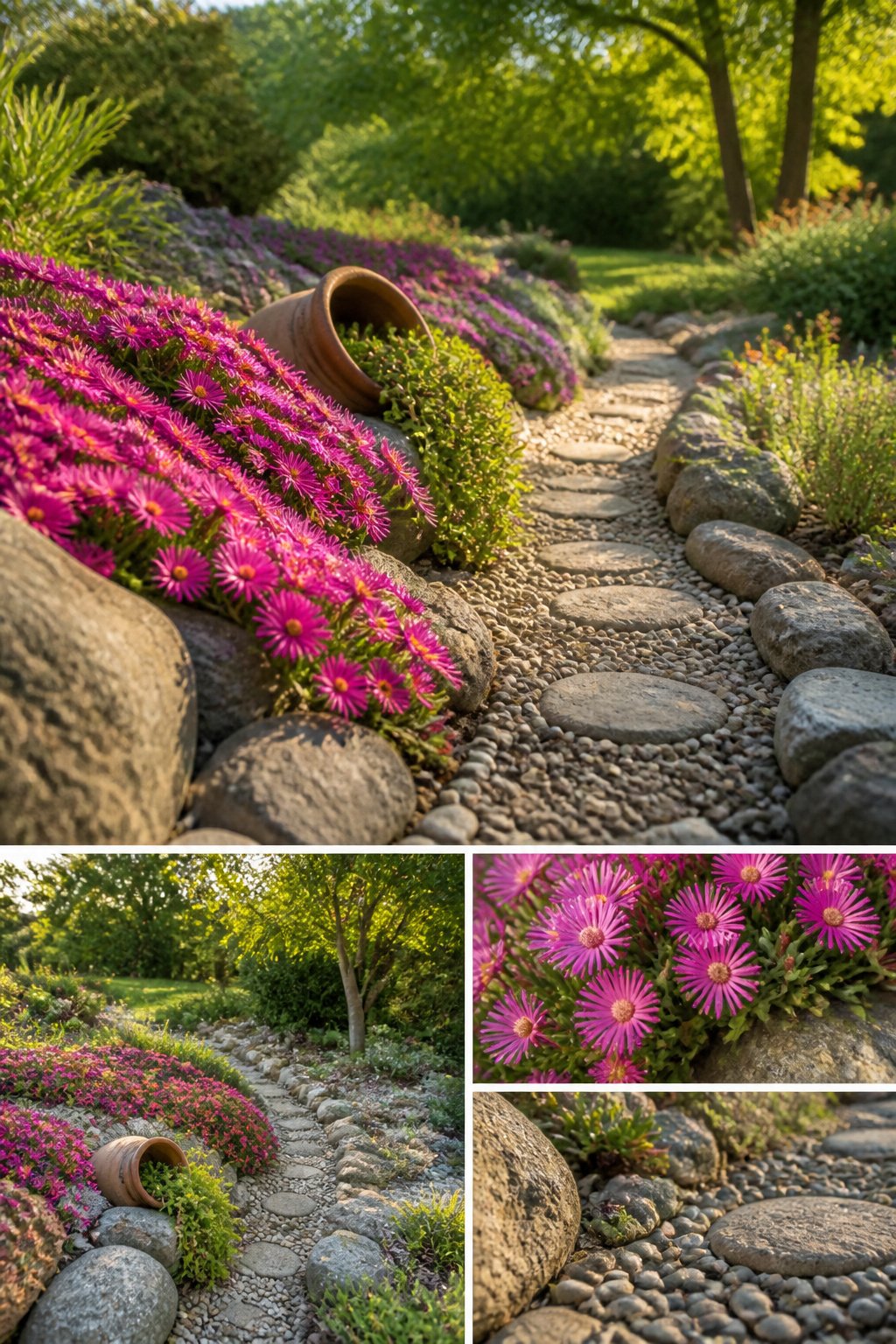
Rocks on their own read as hard and finished; flowers soften them into something that changes week to week. The contrast works because the two materials share nothing except the ground they occupy.
For color that lasts from spring through fall, ice plant (Delosperma) carries late spring into fall with daisy-like blooms on 3-to-6-inch mats that spread 12 to 30 inches wide. I would tuck these between larger stones where they can spill over edges, since they prefer lean, well-draining soil and dry heat.
Earlier spring interest comes from baptisia varieties like Solar Flare Prairieblues False Indigo, while coreopsis, particularly Mouse Ear, bridges the gap into summer. Blanket flower, including Arizona Apricot, and coneflowers keep the show going through the warm months. For structure that persists even when blooms fade, Golden Mop False Cypress adds a yellow-green accent that reads as color against gray stone.
The trick is placing plants where their roots can establish without sitting in water trapped by rock. A tipped ceramic pot with something creeping from the opening, set slightly off-center, gives height without blocking the low spreaders. Add a narrow path through the middle and you have a destination that rewards walking through rather than past it.
10. Seaside Rockery
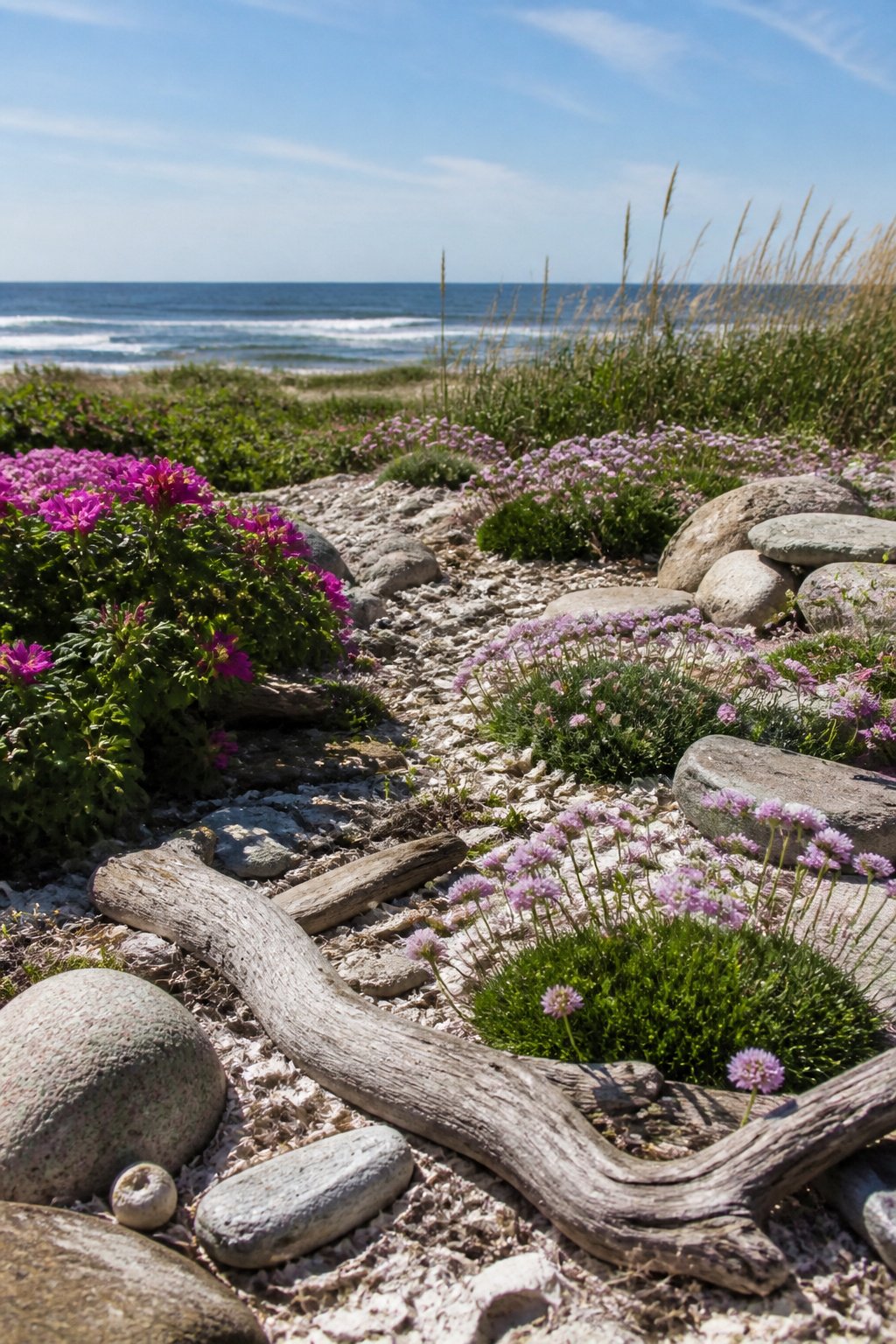
Salt spray kills most garden plants slowly, browning the leaves from the tips inward until the whole thing gives up. A seaside rockery turns that liability into the whole point by choosing what survives it. Rugosa roses, sea thrift, and sea holly actually stiffen up and grow sturdier with a little salt in the air. Bar Harbor juniper and Adam’s needle yucca handle the sandy, fast-draining soil that comes with coastal ground without demanding much beyond patience.
The look itself is simple to read: crushed seashells as mulch, whole shells and driftwood scattered between smooth weather-beaten stones, sand built into low dunes. It reads coastal even if you are three hours inland. A friend of mine in Ohio built one after a trip to Maine, using Northern sea oats grass and heavy metal switch grass where true dune plants would not survive the winter. She calls it her memory garden, and it works because the gesture is clear, not because it is botanically exact.
The maintenance is low by design. These are xeric plants in a xeric layout; once established, they tolerate drought the same way they tolerate salt. The trick is getting the drainage right from the start, since most of these plants rot faster in wet soil than they ever would in salt wind.
Why Rock Gardens Work
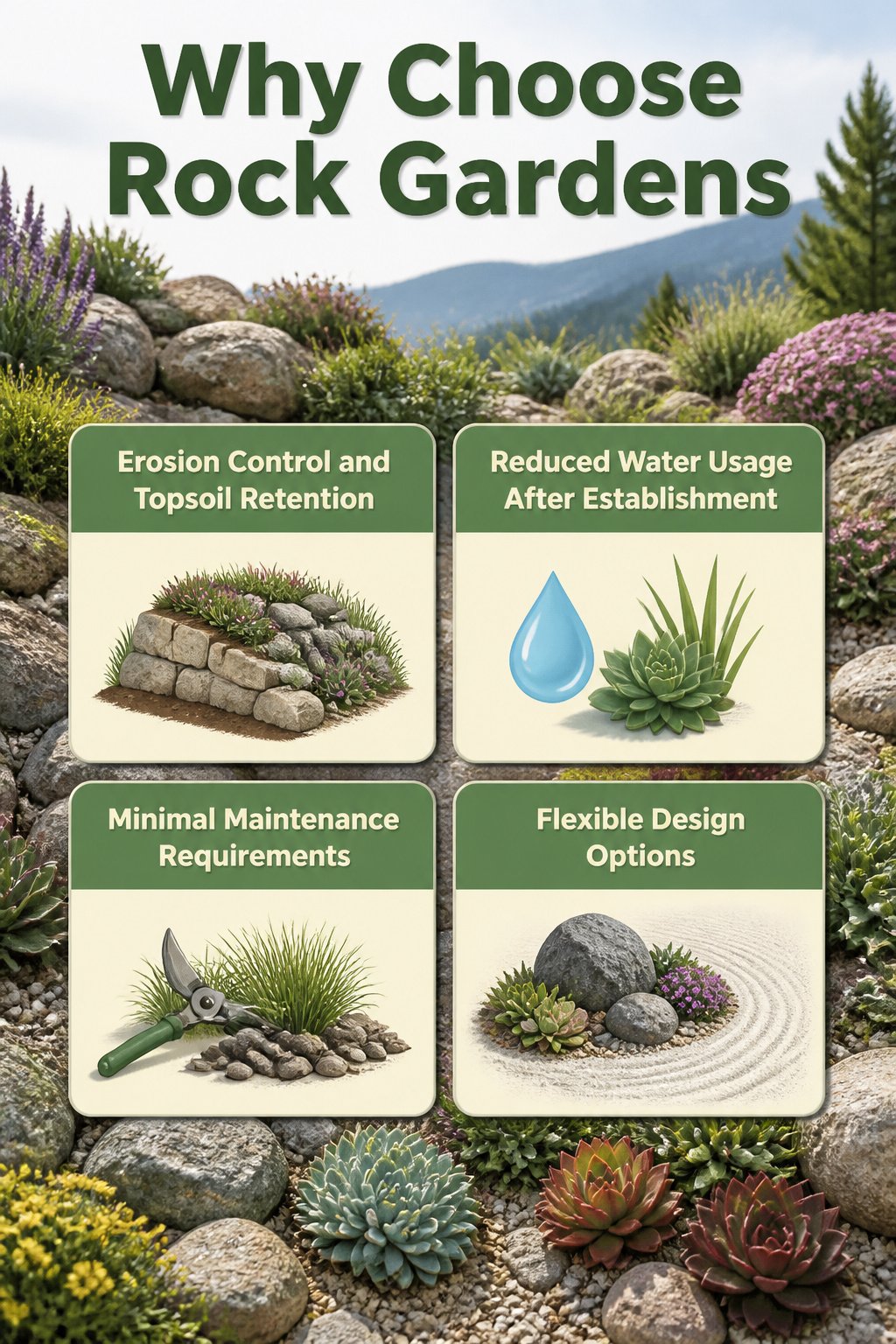
Rock gardens earn their keep in ways a traditional border never quite manages. The stones themselves slow runoff and hold topsoil in place on a slope, which matters more than I expected before I watched a moderate rain wash a bare hillside patch down to clay. Drought-tolerant plants, succulents, and prairie grasses with anchoring roots do the actual gripping, but the rocks give those roots time to establish and create pockets where water sinks in instead of sheeting off.
Water use drops sharply once the plants are established. Succulents store moisture in their leaves; native grasses and alpine flowers have already adapted to lean conditions. Compared with a lawn or perennial bed that wants steady moisture, the difference shows up in the utility bill and in how many mornings you skip dragging the hose out.
Maintenance shrinks too. There is no lawn to mow, little weeding once the stones are settled, and no pruning schedule beyond cutting back spent grasses in late winter. The visual interest holds year-round even when the plants are dormant; the stones and the structure do that work.
Two directions are possible with the same materials. A Zen-inspired arrangement reads as deliberate and quiet, with raked gravel and a few placed boulders. A wilder mountain style lets the rocks look dropped by glacier or landslide, with plants colonizing the gaps. Either way, the core benefits stay the same: less water, less erosion, less ongoing labor.
Plants That Survive the Gaps
The gaps between rocks are where a rock garden lives or dies, and after watching thyme creep through cracks I thought were too narrow, I now pack them tighter than feels right. Creeping thyme and its relatives root in pockets barely wider than a finger, spreading into mats that handle the reflected heat off stone.
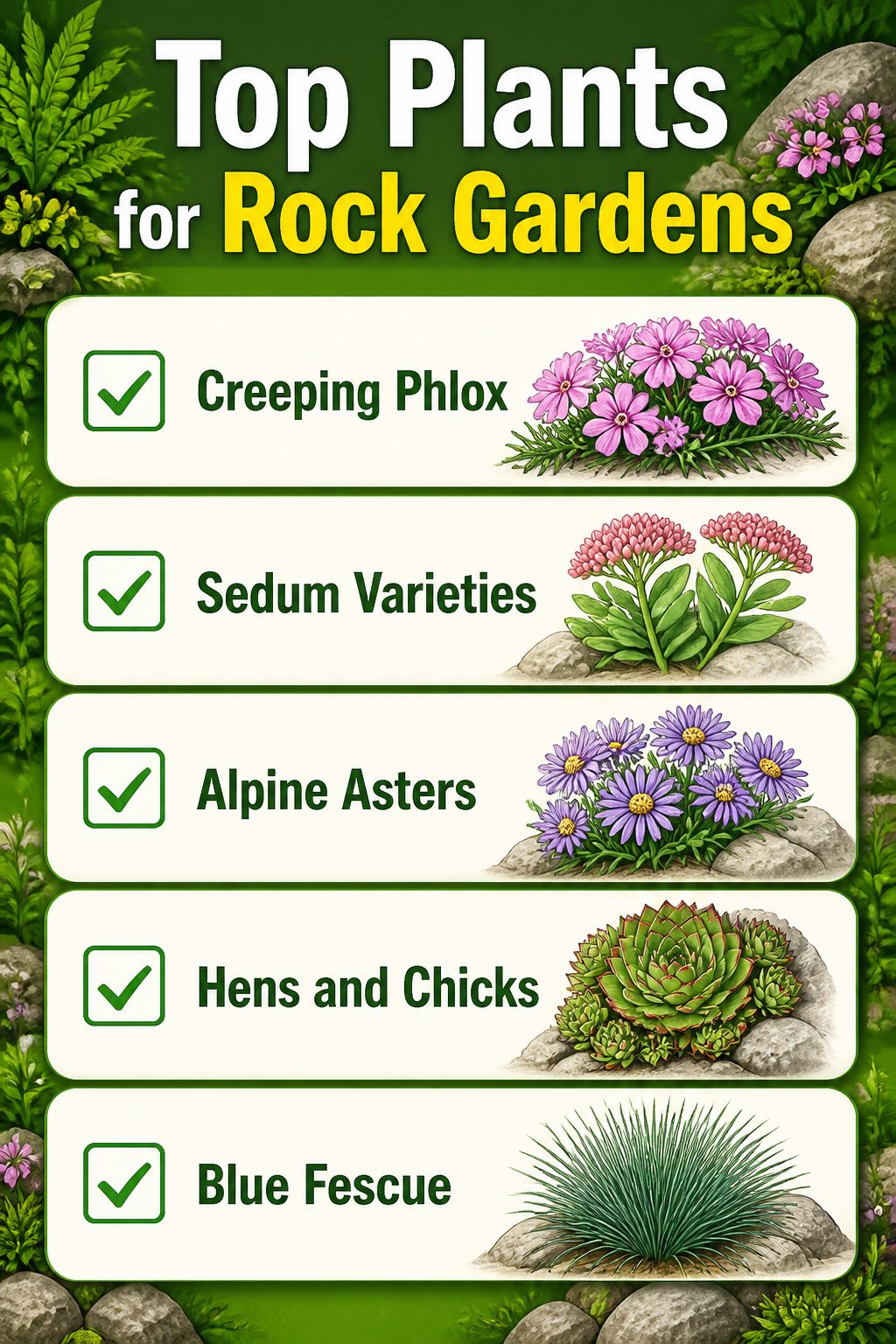
For USDA zone 5, where winter hits -20°F, these are the plants that have worked:
- Creeping phlox drapes over edges in spring with sheets of color
- Sedum varieties fill the late season; the fleshy leaves store water and the clusters keep going into fall
- Alpine asters add late color without asking for rich soil
- Hens and Chicks (Sempervivum) wedge into vertical cracks and survive on neglect
- Blue Fescue gives structure at 10–12 inches tall and 24–28 inches wide, a true clump that reads as grass without needing moisture
I space small perennials 6–12 inches apart depending on mature spread, planting in spring after the last frost. The sharp drainage between rocks means roots dry fast; that kills more plants than cold does.
Design Before You Dig
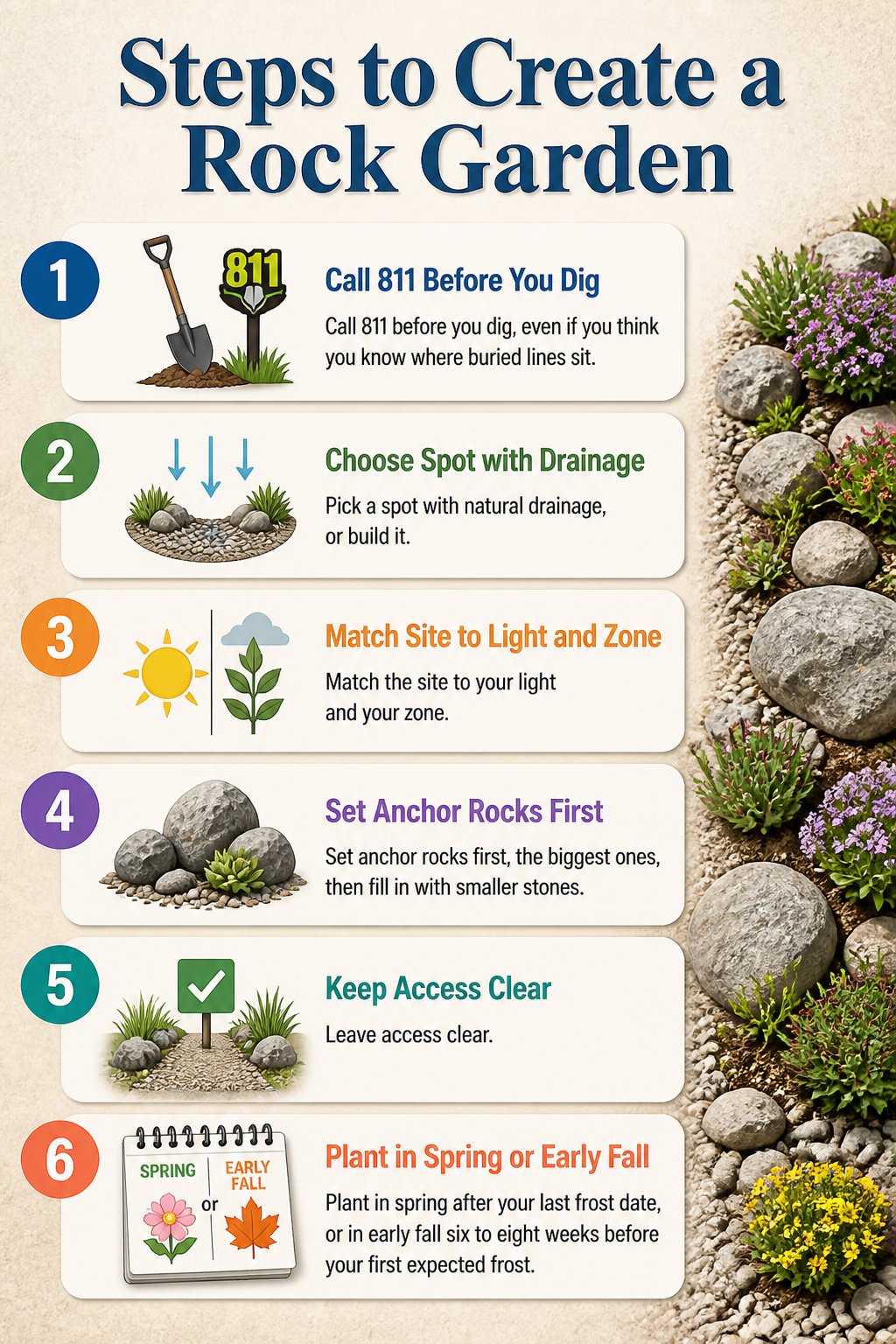
- Call 811 before you dig, even if you think you know where buried lines sit. I skipped this once on a raised bed project and spent an afternoon hand-tilling around a gas marker I hadn’t known was there.
- Pick a spot with natural drainage, or build it. Slopes work without extra effort; flat yards need a berm or gravel base so water doesn’t pool around plant roots.
- Match the site to your light and your zone. A rock garden can live in sun or shade, but the plant list changes completely depending on which you have.
- Set anchor rocks first, the biggest ones, then fill in with smaller stones in clusters that look like they settled together naturally. Start with a 4-by-6-foot area if you are new to this; the rocks are heavier than they look, and mistakes get expensive fast.
- Leave access clear. Avoid wellheads, septic fields, and anywhere snow removal equipment needs to pass. Truck access matters too if you are bringing in stone by the pallet.
- Plant in spring after your last frost date, or in early fall six to eight weeks before your first expected frost. Spring gives roots a full growing season to establish; fall uses cooler air and rainfall. Zones 3–6, focus on that April-to-May window. Zones 7–9, you have both windows.
- Buy container-grown plants rather than bare root for rocky, fast-draining soil. They handle the transplant shock better when there is not much loose soil to hold moisture around them.
Keeping It Alive
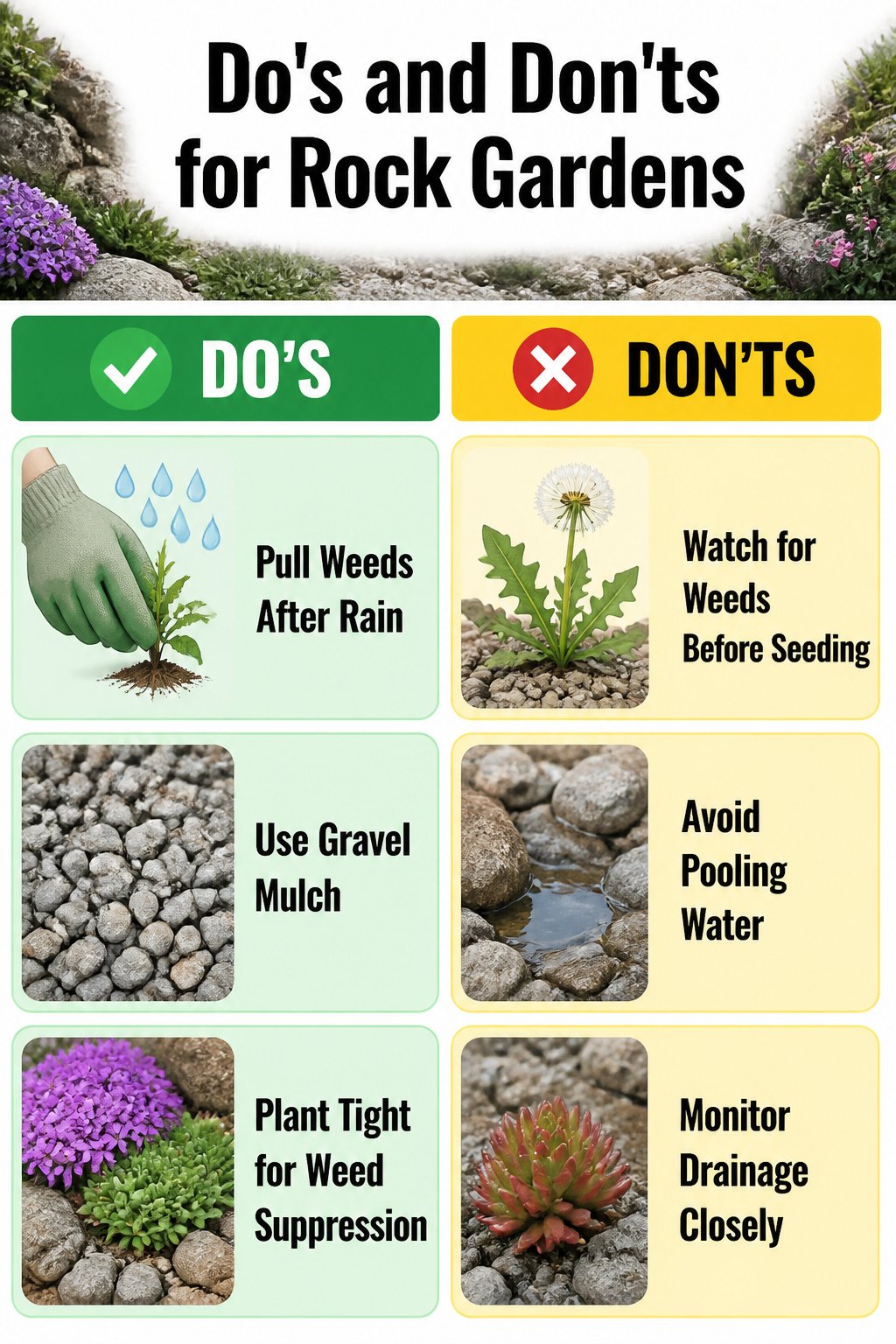
The weeds that slip through gravel are the ones you let set seed, so I check mine after rain when the soil loosens and pull anything small. A 2-3 inch layer of gravel or crushed stone mulch between plantings suppresses most germination to begin with, though it thins over winter and needs a refresh in early spring to stay effective. Landscape fabric underneath helps, but gaps at the edges or around new plants become entry points fast.
Drainage is the other silent killer. Rock gardens sit on slopes for a reason: water moves through instead of pooling. Flat ground demands more attention to how the base is graded, or you end up with sedum rotting in January from water it never saw in August. I lost a planting that way once, and now I watch where puddles form after a hard rain before I set a single stone.
Ground-covering perennials like creeping phlox or sedum do their own weed suppression once they spread, so spacing matters. Plant for mature size and let them fill the gaps; tight plantings mean less gravel to refresh and fewer openings for what you don’t want.
Frequently Asked Questions
What is a rock garden?
A rock garden is a landscaping area that combines rocks, pebbles, or boulders with plants, usually chosen for their ability to thrive in lean soil and sharp drainage. The rocks create well-drained pockets that mimic natural mountain or alpine conditions, while the plants soften the hard edges with color and texture. Functionally, rock gardens work as low-maintenance alternatives to lawns and perennial borders, especially on slopes or other challenging sites.
How do you design a rock garden?
Start by calling 811 to locate buried utilities, then pick a spot with natural drainage or build a berm or gravel base on flat ground. Arrange your largest anchor rocks first, filling in with smaller stones in uneven clusters that look settled rather than placed. For beginners, a 4-by-6-foot area keeps the project manageable; the rocks are heavier than they look, and mistakes get expensive fast. Plant in spring after the last frost or in early fall six to eight weeks before first frost, using container-grown plants that handle rocky soil better than bare-root stock.
What plants are best for a rock garden in USDA zone 5?
Hardy perennials that handle -20°F nights and sharp drainage include creeping phlox, sedum varieties, hens and chicks, and alpine asters. Dwarf conifers like mugo pine and carpet juniper give winter structure, while species tulips and crocuses add early spring color. Space small perennials 6 to 12 inches apart depending on mature spread, and plant after the last frost date so roots have a full season to establish before winter.