
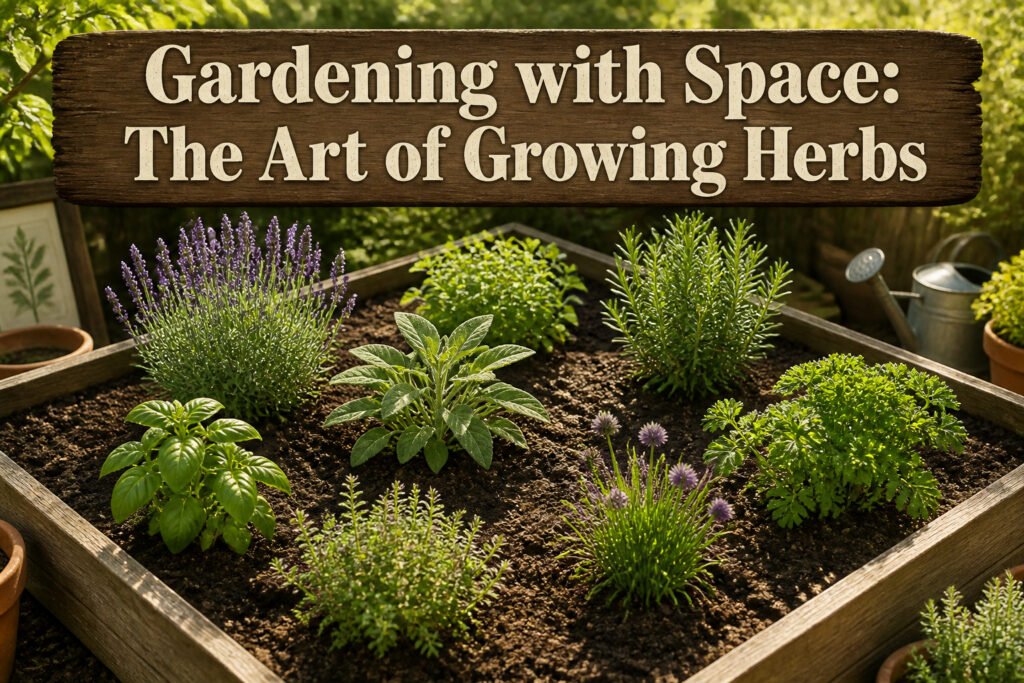
A four-by-four-foot raised bed hits the sweet spot for herbs, but only if you resist crowding them closer than 8–12 inches. Crowded herbs turn leggy and mildew-ridden as airflow drops. Sage wants to dry out between drinks; parsley stays thirsty. Keeping them separated by a foot or two saves the guesswork of who got soaked last.
1. Raised Bed Herb Garden
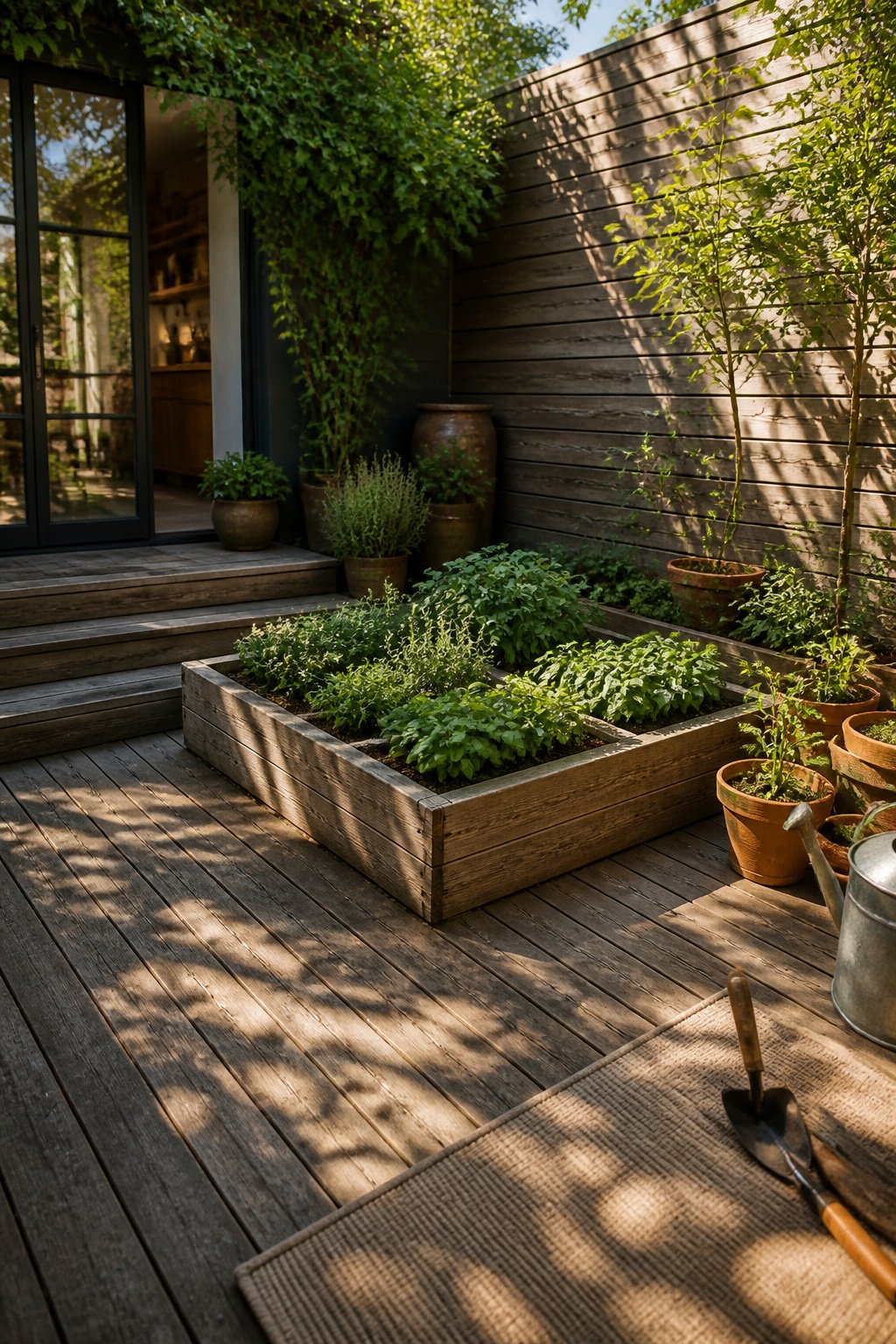
A four-by-four-foot raised bed hits the sweet spot for herbs. You can reach the center from any side without stepping into the soil, and that footprint fits most patios or small yards without eating the whole space.
Raised beds solve the drainage problem that kills more herbs than bad light. The soil sits above your native ground, so water moves through instead of pooling around roots that rot in heavy clay. That elevation also means less bending through a summer of clipping basil and harvesting thyme sprigs; your back notices the difference by August.
Inside that frame, the same 8-12 inch spacing rule still applies. Crowd herbs closer and you get leggy growth and mildew problems as airflow drops. Give each plant its zone and you can group by water needs too, which matters more than most beginners expect. Sage wants to dry out between drinks; parsley stays thirsty. Keeping them separated by a foot or two saves the guesswork of who got soaked last.
2. Container Herb Garden
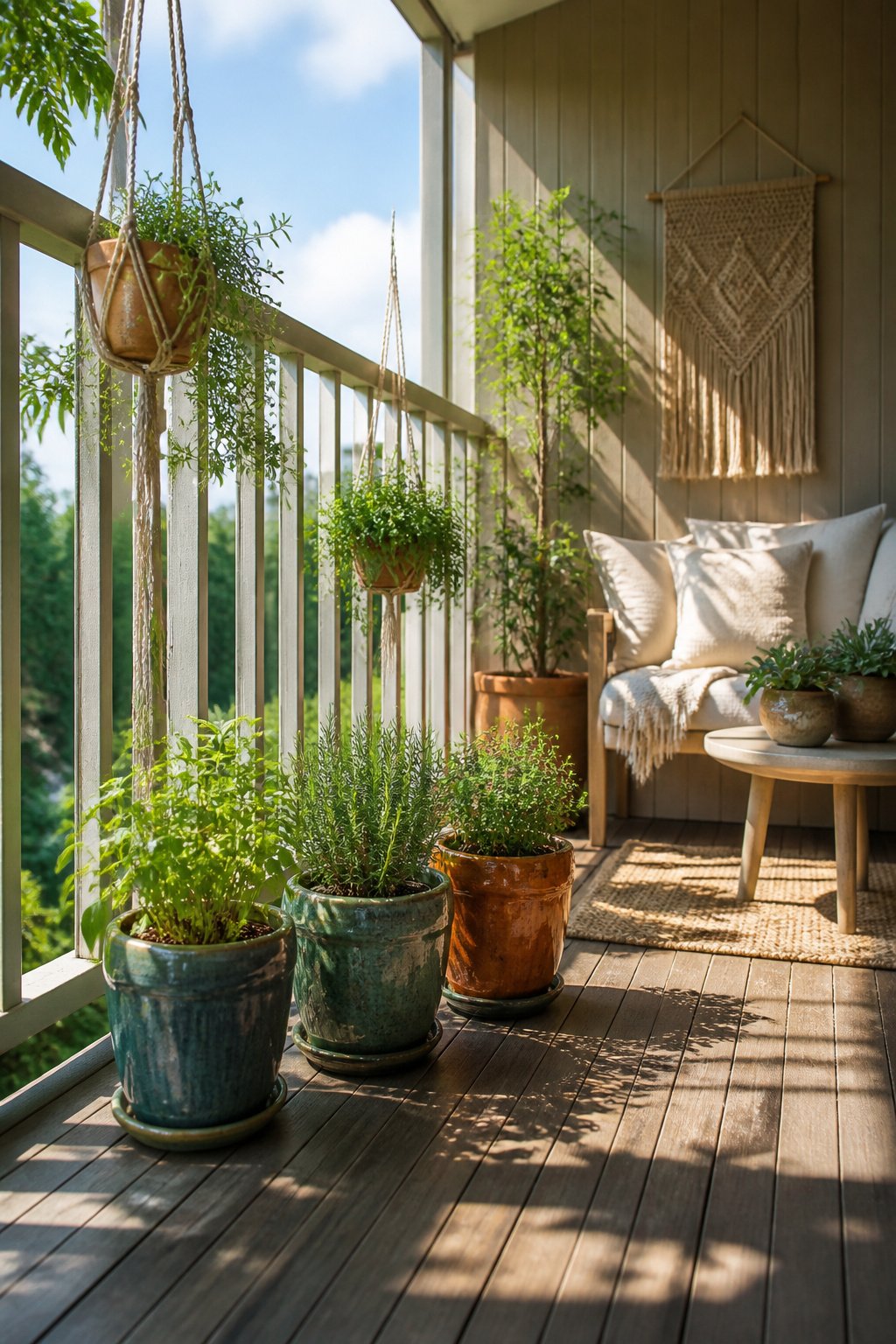
A cluster of pots on a balcony can outperform a full backyard bed if you treat the mobility as a feature, not a compromise. I shuffle mine across the concrete from March through October, chasing the moving stripe of sun that slips behind the neighbor’s roof by two in the afternoon. Rosemary and thyme move less than basil does; they’ve already adapted to the drier soil that containers naturally create, and that lean condition actually concentrates their oils. Drainage holes matter more than what the pot is made of — terracotta, resin, or the glazed ceramic you found at a yard sale all work if water exits freely. Leafy herbs like basil and parsley want richer, more moisture-retentive soil, so they need their own pots or a divided planter rather than sharing space with the Mediterranean types. Mint earns its own container regardless, unless you want it conducting a hostile takeover of whatever thyme was trying to establish next door.
3. Vertical Herb Garden
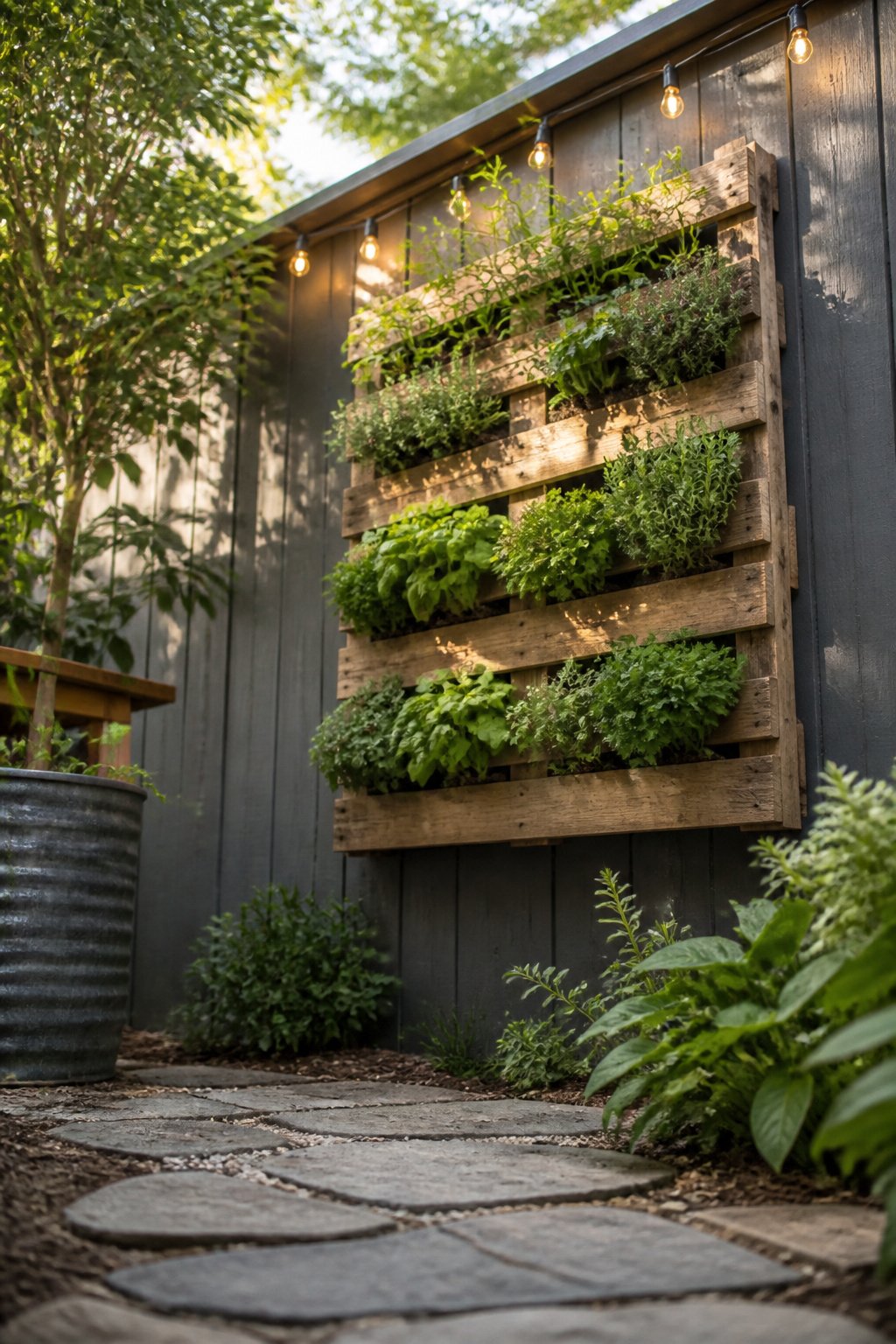
A wall-mounted planter turns a blank fence or balcony rail into usable growing space without sacrificing the square footage you actually walk on. I like the pallet approach for this: a recycled wooden pallet, stood upright and fitted with landscape fabric pockets, costs little and keeps herbs at working height. Shallow-rooted varieties like basil, cilantro, and parsley fit those individual pockets well.
Water runs downward, so the top tier dries out first while the bottom sits wetter longer. That gradient is useful once you plan for it. Mediterranean herbs that prefer to dry between waterings, rosemary and thyme, handle the top pockets better than moisture-loving basil, which wants the middle or lower rows where runoff collects. I check the top inch of soil with a finger before adding more water anywhere; the bottom pockets often lag behind by a day or two.
Tiered systems and wall kits work on the same principle, just with cleaner lines for a patio that doubles as living space. Either way, vertical growing means watering more frequently but with less volume each time, since the soil column is shallow and drainage is constant.
4. Hanging Herb Planters
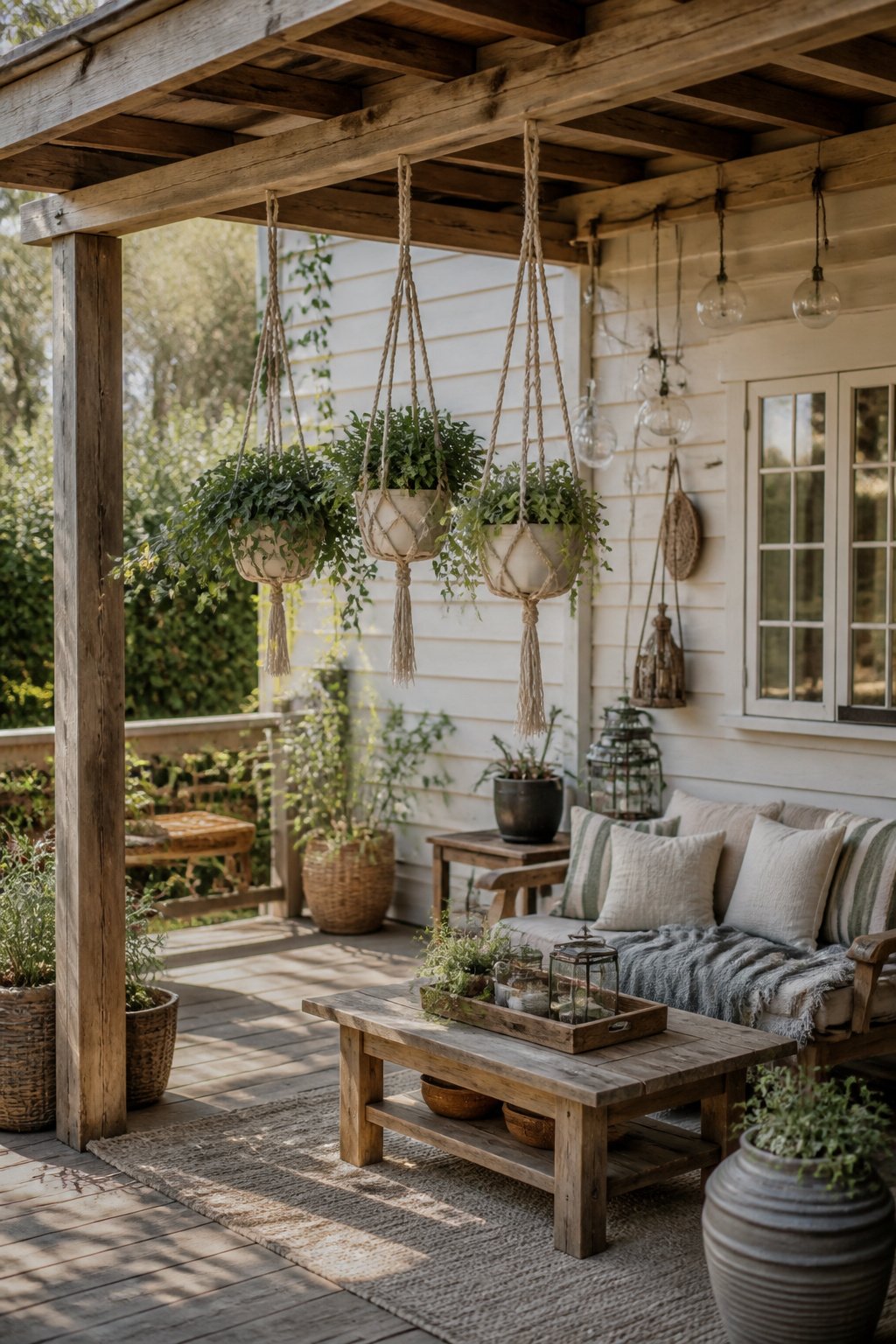
Ceiling hooks, railing brackets, and macrame hangers each solve a different hanging problem. Hooks screwed into a porch ceiling or wall joist carry the weight of larger baskets and keep thyme and oregano spilling downward at eye level. Railing brackets clamp onto a balcony rail without drilling, which matters for renters; they swing less than a suspended pot in wind, though they also eat the rail space you might need for your elbow while you work. Macrame hangers let you suspend a pot you already own with rope and a hook, and they move easily to chase sun.
The tradeoff is water. Air circulates on all sides of a hanging planter, so soil dries faster than it does at ground level. That makes rosemary and thyme natural fits; both prefer to dry out between waterings and will sulk in soil that stays wet. Basil wants steadier moisture, so if basil must hang, pair it with a coconut coir liner that holds some water, or keep a drip tray and check it daily. I learned the dry-out lesson with a trailing oregano that crisped in July heat while my potted sage sat happy on the step below, barely touched by the same week of sun.
5. Stacked Pot Herb Garden
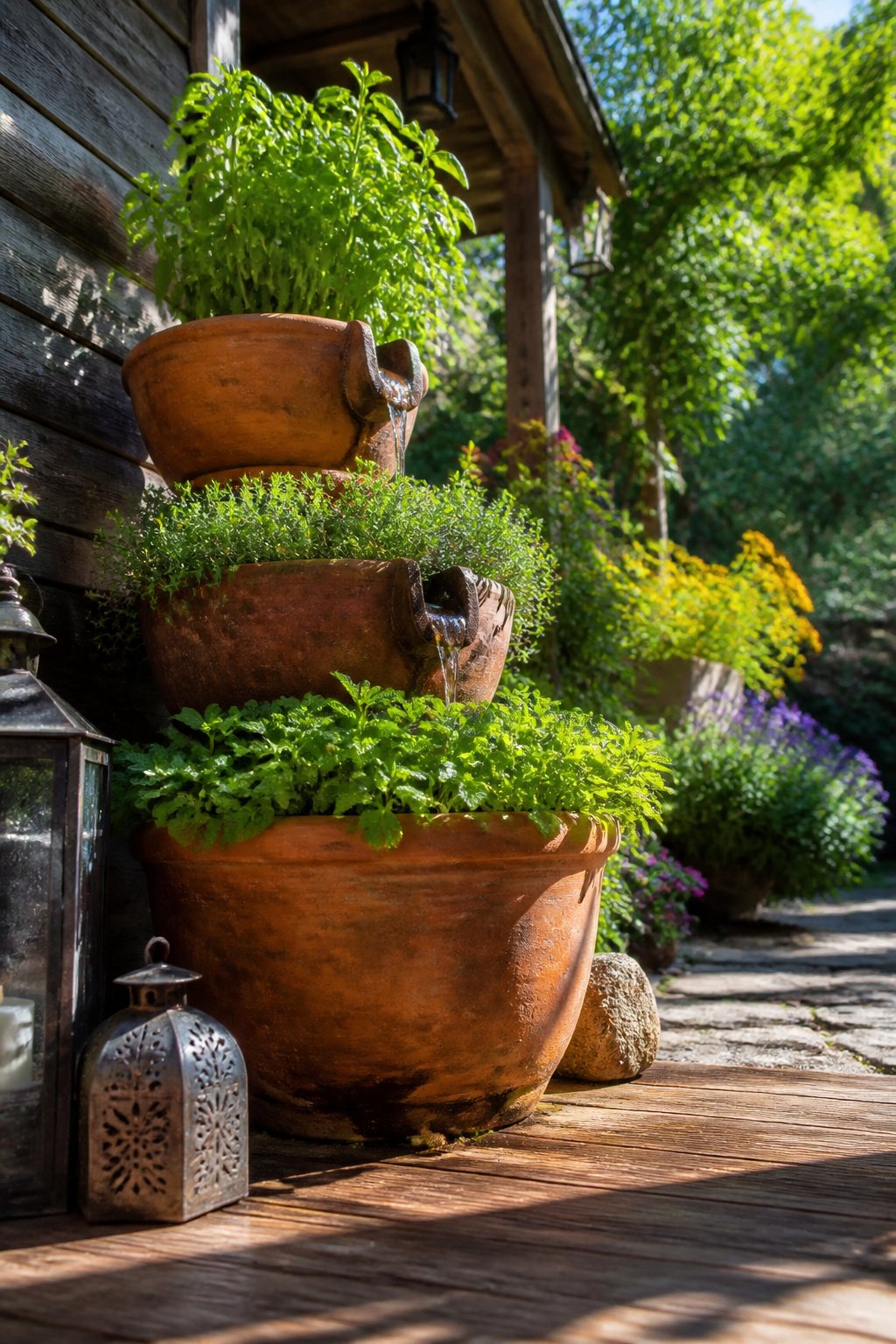
A set of tiered planters works like a strawberry pot for herbs: one large pot on the bottom, a medium pot nested inside it, then a smaller one on top. Each layer gets its own soil and its own plants, and pouring water into the top tier lets it cascade down through the others so you are not watering three separate containers.
The height itself becomes useful. Sun-loving basil, which can grow quite large if you give it the room, sits at the top where it gets the most light and the best drainage. Mint, which spreads aggressively and will take over any bed you give it, gets the bottom tier. Contained in its own pot, it can run as much as it likes without overrunning the basil or the thyme between them.
You can separate perennials and annuals this way too, or just group what you harvest together. The stack takes up one spot on a patio and reads as a single display from the sidewalk, which matters when square footage is what you are working with.
6. Herb Garden Pathway
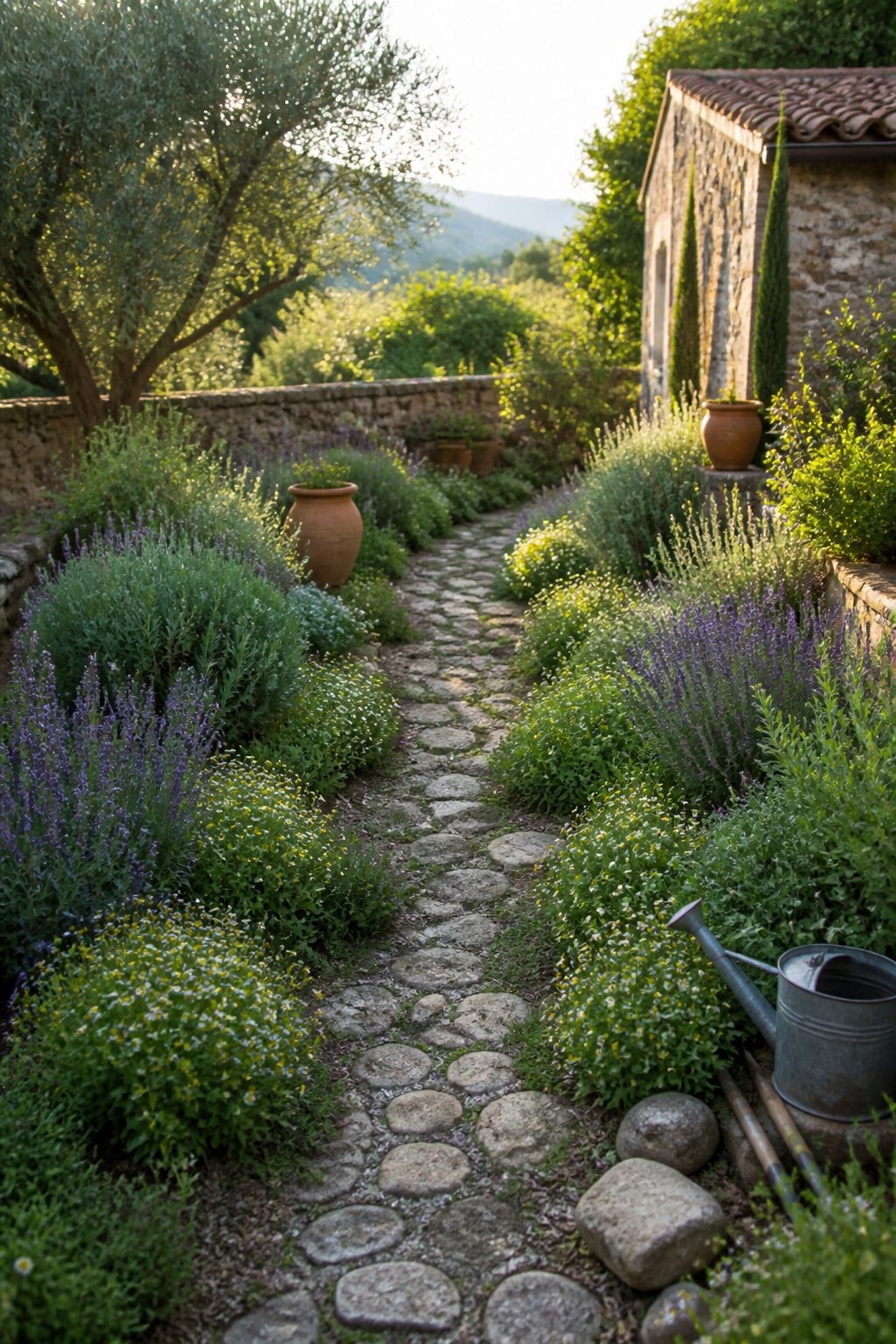
Creeping thyme and chamomile can take an occasional footstep, but spacing them at the path edge rather than inside it keeps the plants alive and the walkway usable. I learned that the hard way after watching a dinner guest flatten a whole chamomile mat because I’d planted it flush with the stone.
Rosemary and lavender work best as soft borders you brush past. Their oils release without any picking, so the scent hangs in the air on warm afternoons when you’re just walking through with a watering can. Mediterranean herbs like these prefer drier, leaner soil, which makes them forgiving along a path where drainage tends to be sharper than in a bed.
If the herb border runs alongside a kitchen garden or patio, keep it to about four feet wide at most. Anything broader and you’ll end up stepping on the soil to reach the back row, compacting what the roots need. A 15-foot length is standard for a full border, though you can shorten it to fit a narrow side yard or balcony edge. Let the herbs flower if you want the pollinators; the stems and foliage also shelter ground beetles through winter.
7. Kitchen-Adjacent Herb Garden
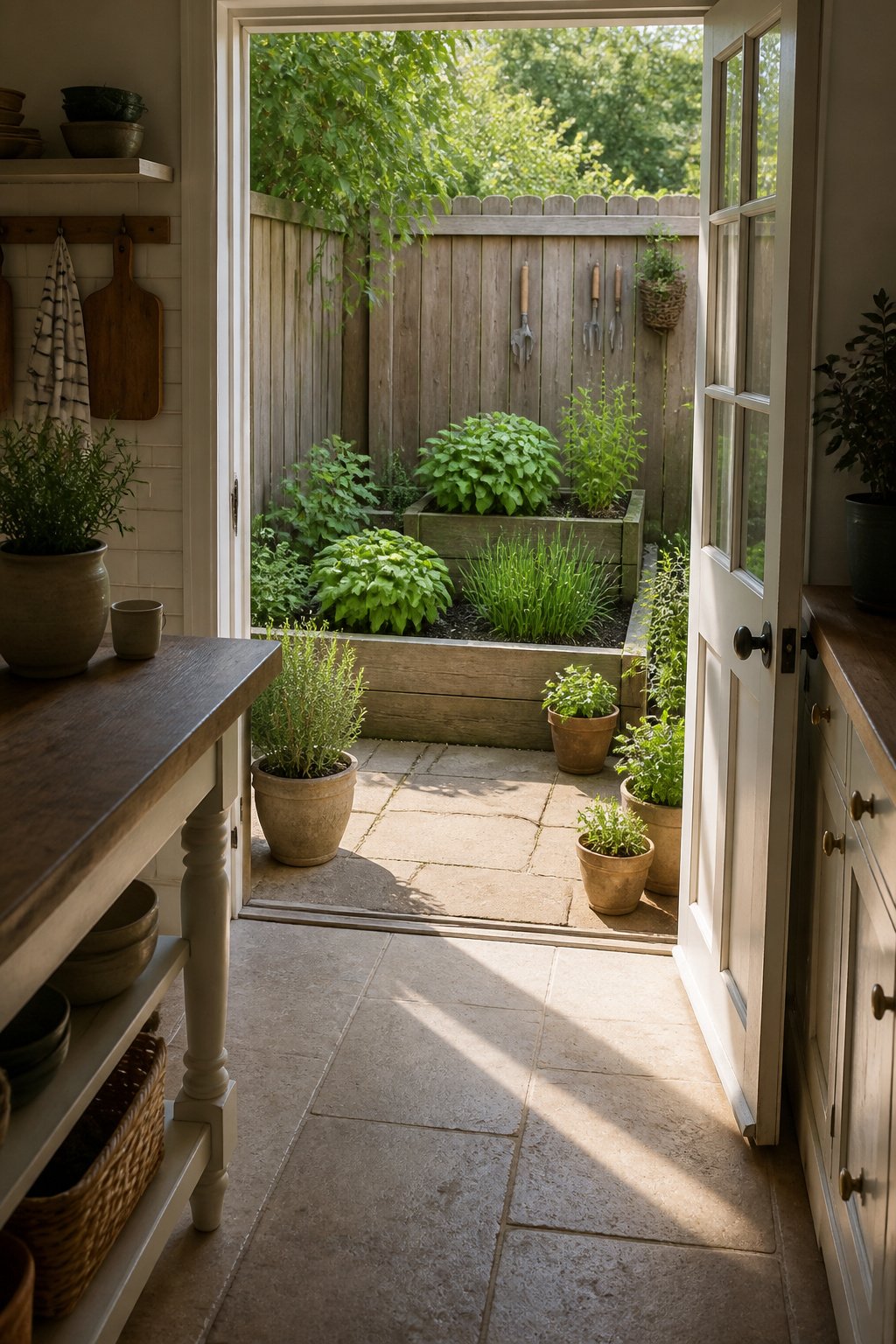
The spot right outside your kitchen door is where you will actually use your herbs, and that matters more than perfect soil. I keep mine within about twenty paces of the stove, close enough that I will dash out for chives or basil even when something is about to burn. Rain or not, if you have to cross the yard, you will grab the dried stuff from the pantry instead.
Which herbs earn that prime real estate depends on what you cook. Basil, chives, and dill get pulled almost daily in my house. Parsley, oregano, and thyme sit longer. Rosemary works as an anchor plant you shape and clip from steadily, but it grows woody and large, so give it room at the back edge or its own pot.
The soil against your foundation is usually the worst in your yard: compacted from construction, full of rubble, and slow to drain. Mediterranean herbs, where most culinary ones originate, need lean, gritty, fast‑draining soil and rot in wet feet. A small raised bed or containers let you control the mix instead of fighting what is there. Add grit or sand where needed, skip heavy fertilizing, and you are working with the plant, not against your ground.
8. Cottage-Style Herb Garden
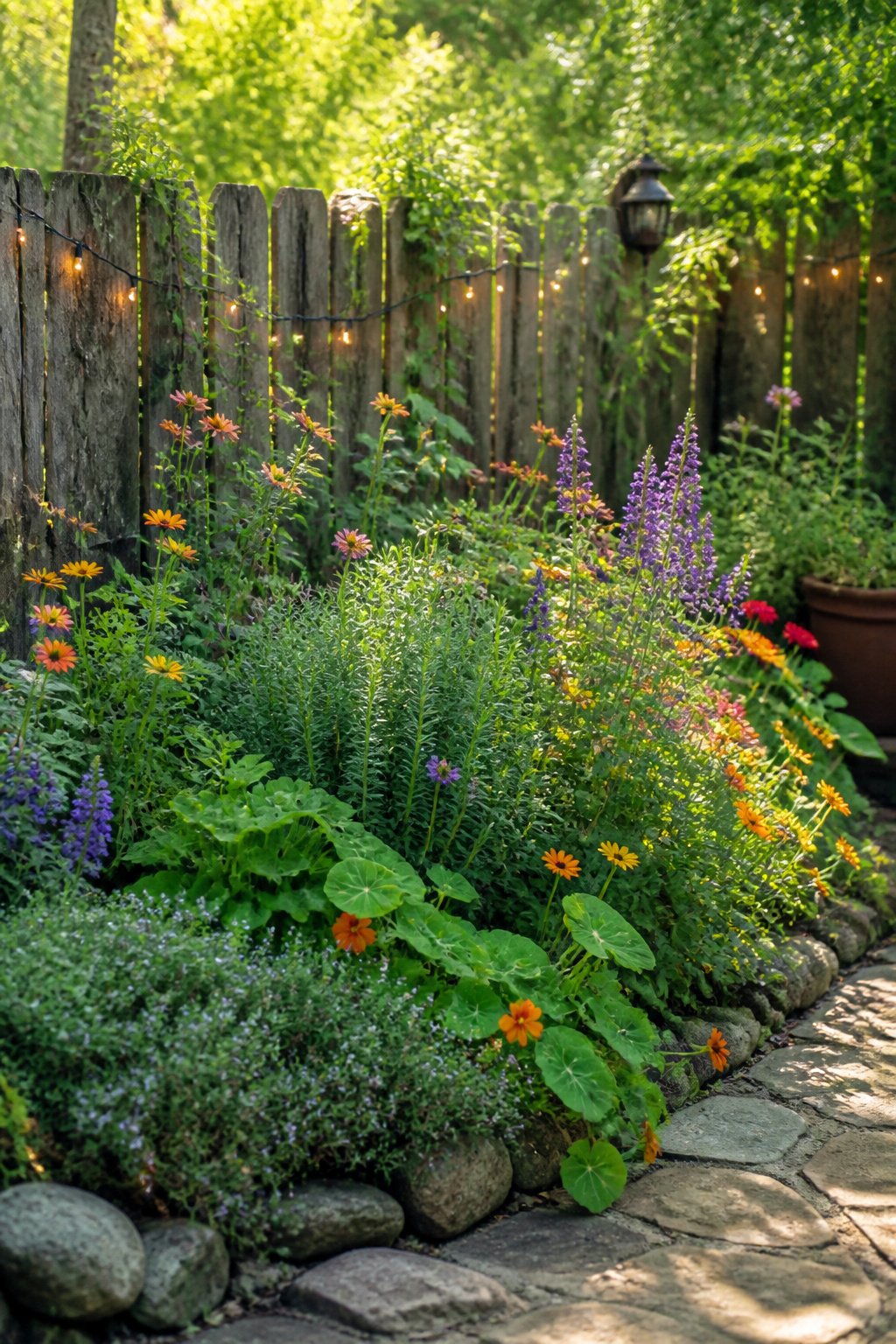
A cottage-style herb garden works because it hides the utility behind the romance. Calendula, nasturtium, and borage tuck between rosemary and thyme so the bed reads as flower border first, pantry second. I let my basil and dill flower out in this scheme; the pollinators arrive in droves, and the soft umbels look intentional rather than neglected. The trick is choosing herbs and companions that share needs. Mediterranean herbs like lavender and thyme prefer the drier pockets, while leafy basil and parsley want richer soil; calendula bridges both conditions happily. Letting herbs flower is not a mistake here; it is the design. Nasturtium trails over edges with peppery edible blooms, borage stands blue and bee-loud, and the whole thing looks like you planted for beauty alone. No straight rows, no visible logic, just a drifting mix where you harvest by reaching into what appears to be a flower bed. One plant per square foot keeps it lush enough to suppress weeds without turning to chaos. The grocery store stays your secret.
9. Herb Spiral Garden
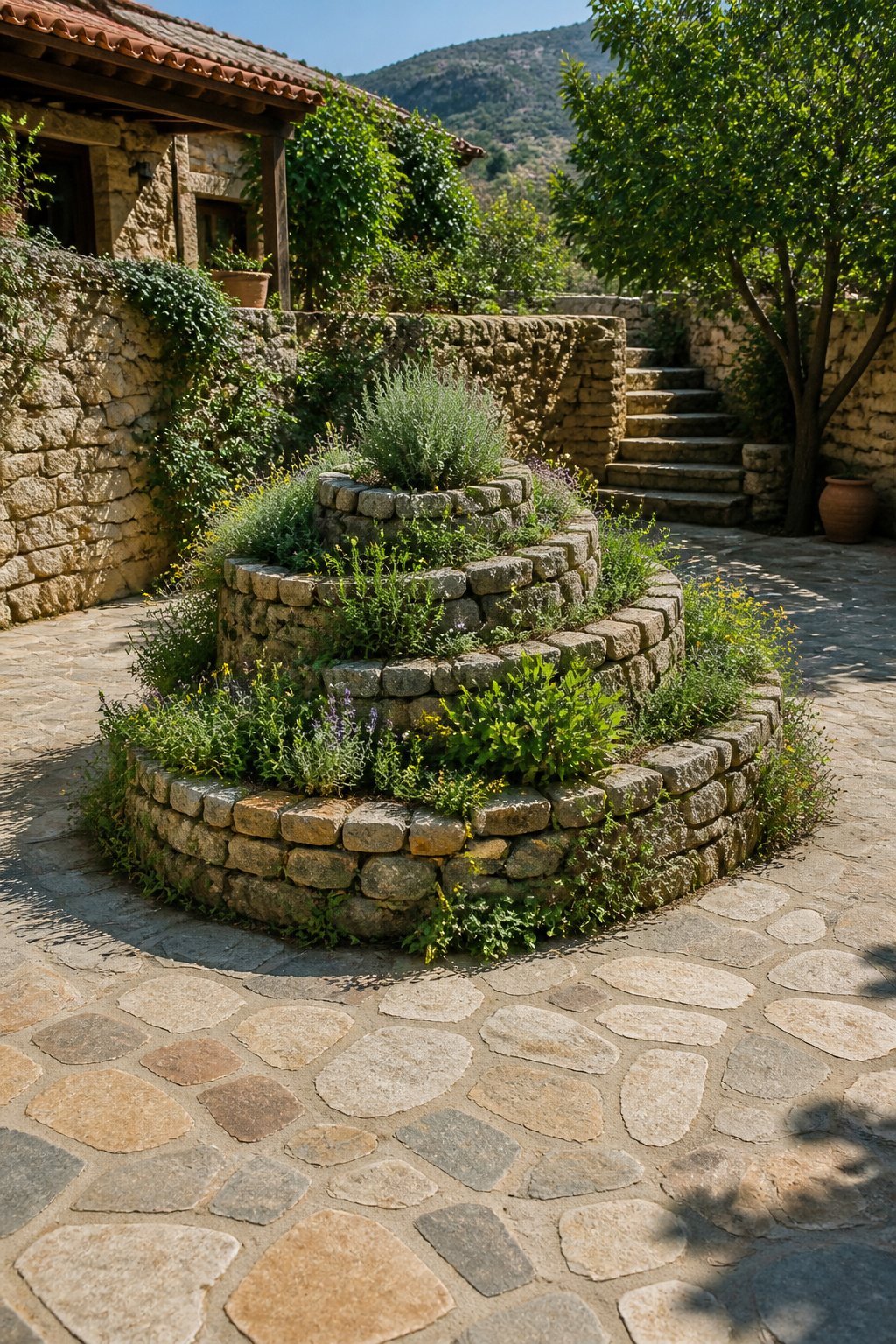
A herb spiral packs three or four growing zones into a footprint barely six feet across. Dry-loving rosemary and thyme sit at the summit where drainage is sharpest and sun hits longest; the south face stays warmer still. Water what you plant up top, and the runoff drains down through the coil to the base, where parsley and especially mint lap up the extra moisture. The north face, shadowed by the spiral’s own curve, runs cooler for herbs that flag in afternoon heat.
Stone or brick is the usual build, laid dry or mortared into a rising curl that holds soil without a frame. The height is the whole trick: one watering pass from the top feeds the whole stack, and the plants sort themselves by temperament without you moving a hose around. I like that it looks intentional from the street while working harder than a flat bed ever would.
10. Indoor Herb Garden
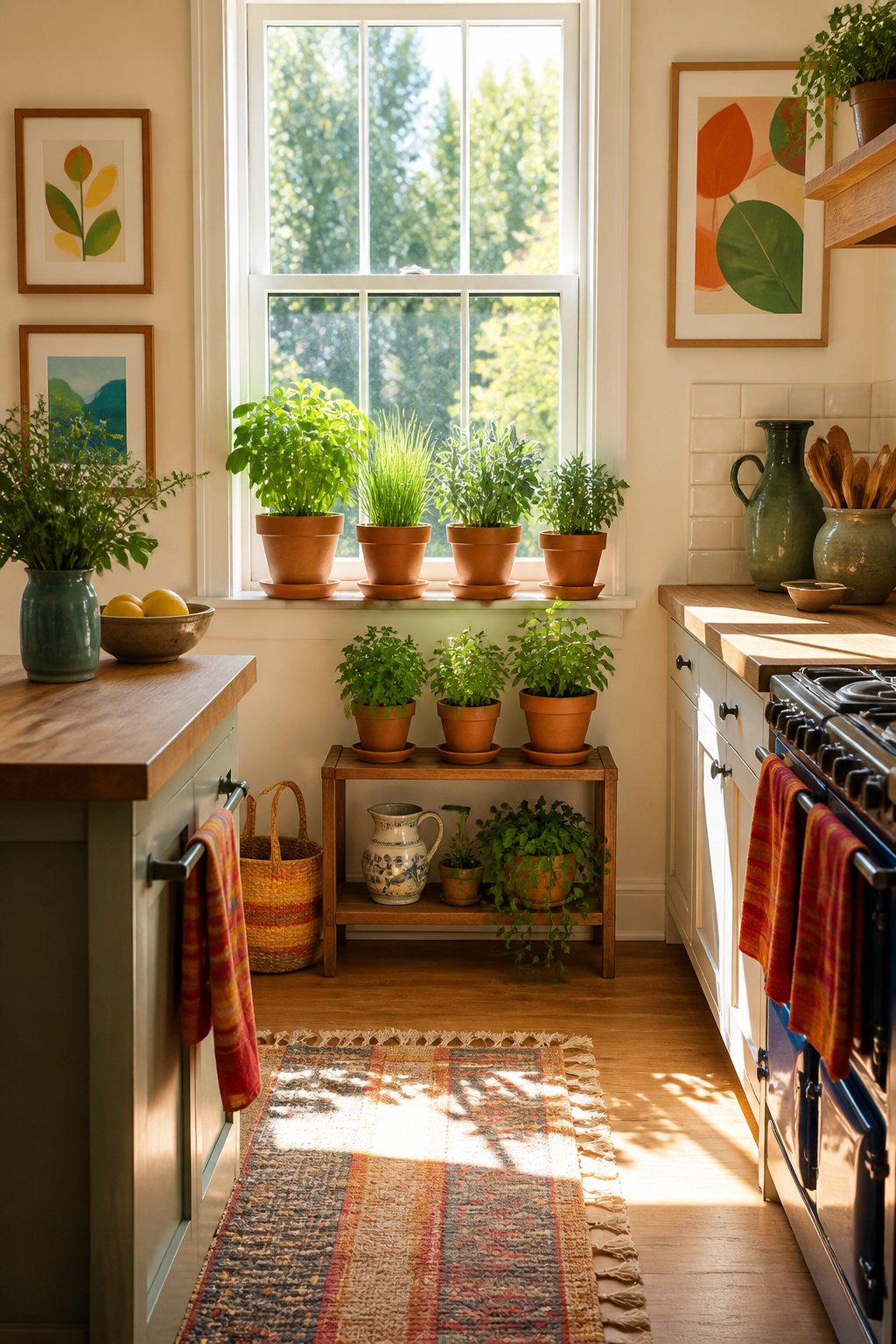
South-facing windows are the minimum for keeping herbs alive through winter, and anything else calls for LED or fluorescent grow lights. I learned this the hard way after watching a windowsill parsley plant stretch itself pale and stringy in a north-facing kitchen. The grow light setup does not need to be elaborate, but it does need to be consistent. Herbs want more than six hours of light daily, and in December that simply does not happen without help.
Overwatering kills more indoor herbs than darkness does. Drainage holes in the pot matter more than the pot’s looks, and saucers left full of standing water rot roots faster than most beginners expect. I water when the top of the soil feels dry, not on a schedule.
Basil, chives, and parsley genuinely thrive inside. Woody herbs like rosemary, thyme, and sage survive but grow slower and need less frequent watering. Mint and oregano fall somewhere between, forgiving enough for brown thumbs but happier with more sun than a typical apartment offers.
11. DIY Mason Jar Herb Garden
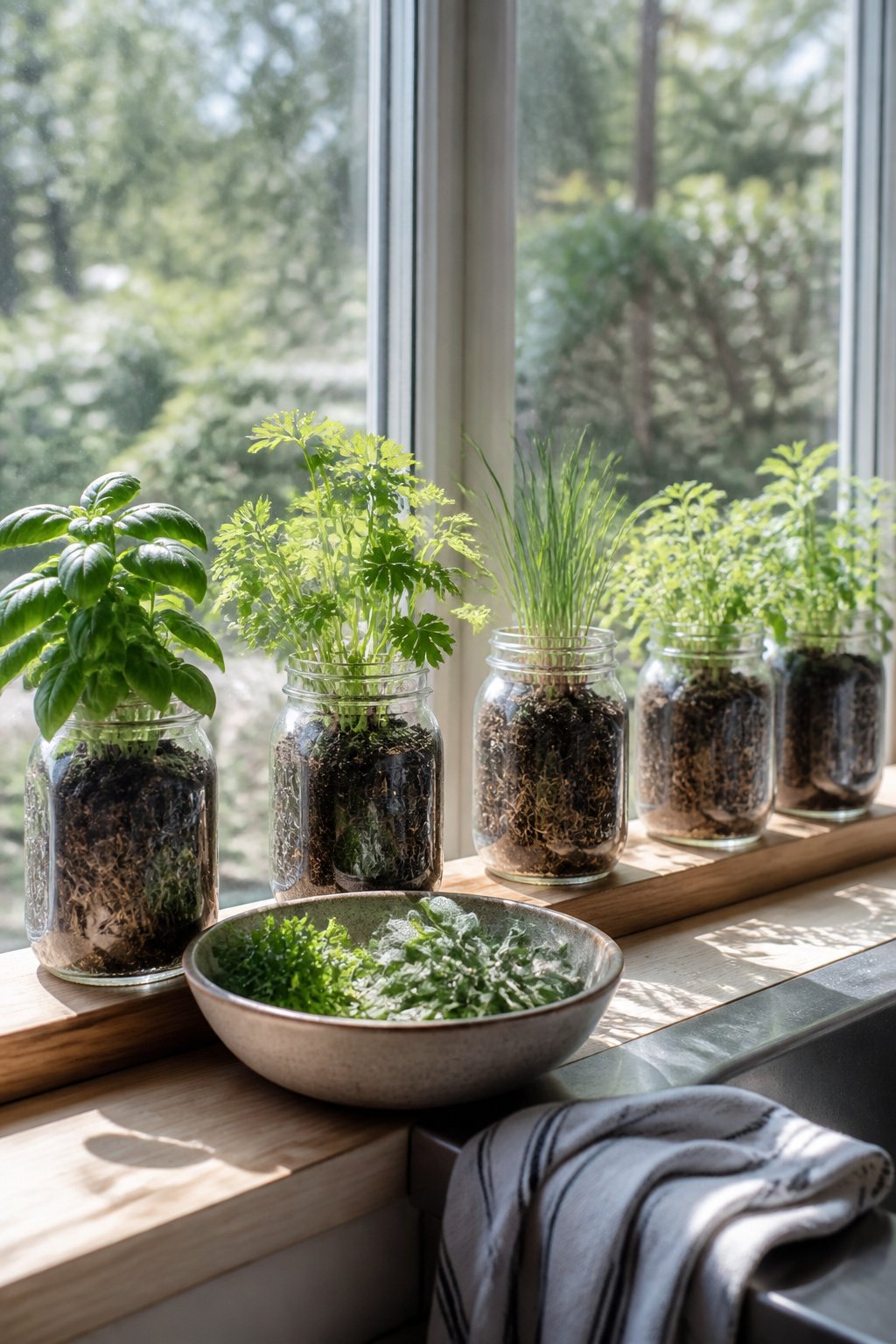
Glass mason jars look charming lined up on a windowsill, and the setup takes about ten minutes. Fill the jar with a well-draining potting mix, drop in a basil or parsley seedling, and you have what every Pinterest board promises: fresh herbs at arm’s reach while you cook.
The problem is the bottom. No drainage hole means water sits exactly where roots need air. I tried the pebble-layer compromise, stacking an inch of stones under the soil so excess water would collect below the root zone. It bought me a few weeks. Mediterranean herbs like rosemary and thyme failed first, their roots rotting in the trapped moisture. Mint and watercress held on longer, since those two tolerate, even prefer, wetter soil. Two basil plants turned black at the stems before I admitted the partial fix was only partial.
After that second basil, I moved everything into containers with actual holes. The jars stayed in the rotation as propagation stations and as vases for cut herbs from the garden, not as planters. The look is still there on the shelf, just with living plants in front of it instead of dying ones inside.
12. Herb Garden Grid Layout
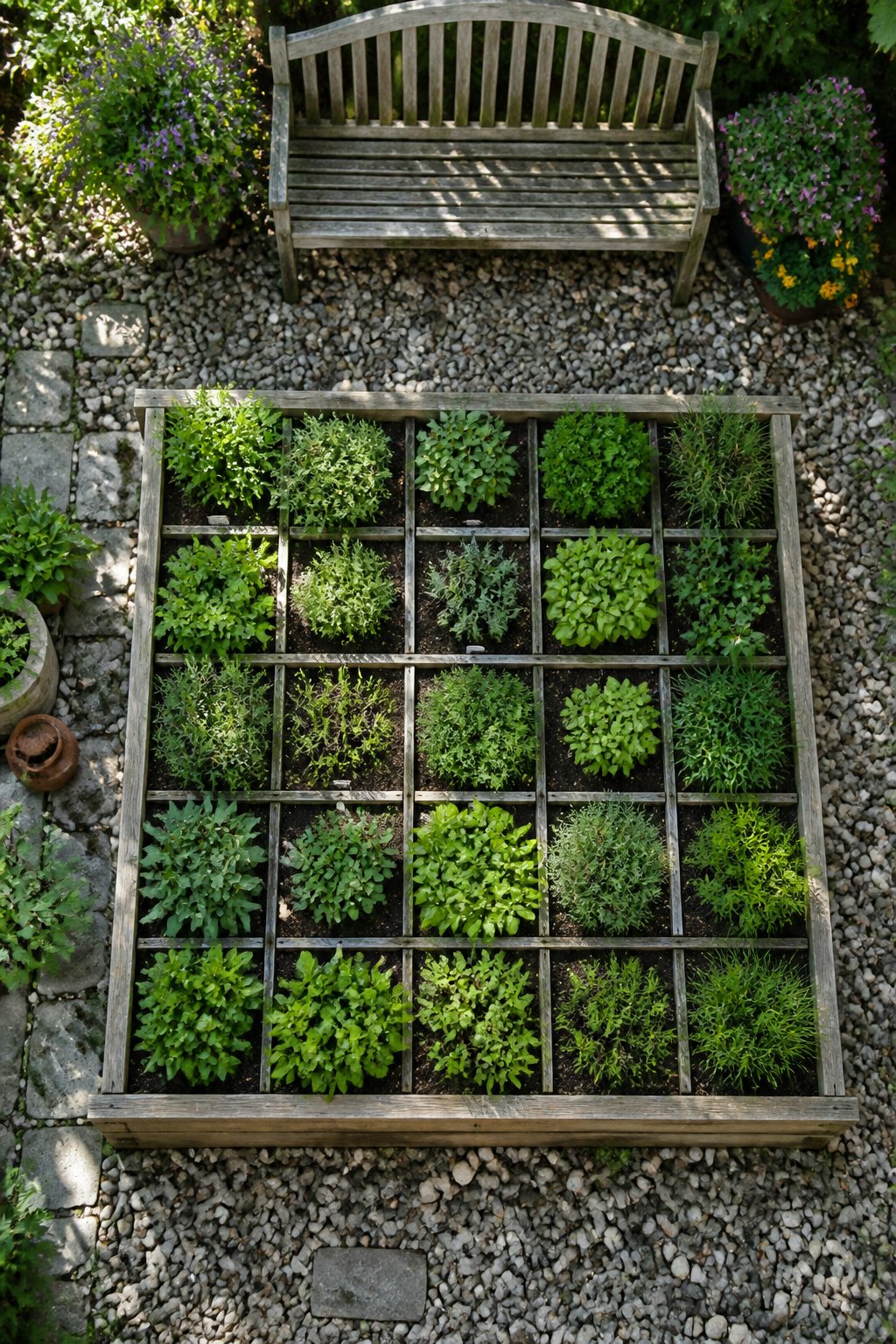
A grid layout gives an herb garden the same calm you get from a pantry where every jar faces forward. One square foot per plant is the spacing that keeps things legible; in my own beds, straight lines turned weeding from a guessing game into ten minutes with a hoe. You walk the paths, reach the plant, cut what you need. No searching for where the thyme ended up this year.
The visual discipline has a practical side. Spreading herbs stay in their cells instead of colonizing the sage. Mediterranean plants that want sharp drainage can sit on the drier ground between pavers, while basil and parsley take the richer soil of the planted squares. Mint still needs a buried pot or a corner you can watch, grid or no grid.
A checkerboard of stone and soil reads modern without feeling cold. Alternate single herbs with repeats of a favorite if you want rhythm rather than inventory. Let some flower for the pollinators; the structure keeps it tidy even when the plants go soft in bloom.
13. Herb Garden in a Vintage Ladder
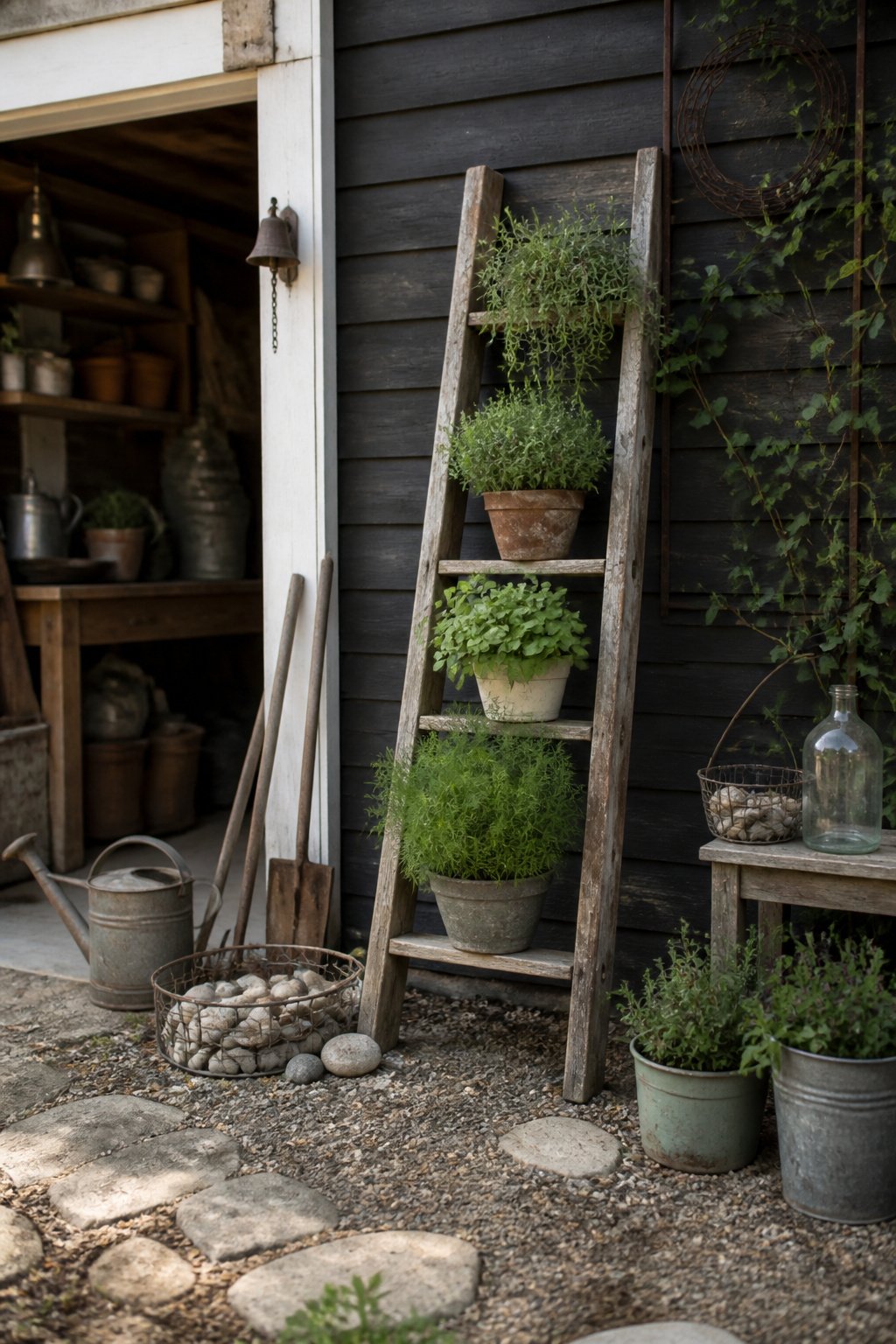
A weathered wooden ladder leaned against my garage wall for two years before I saw the planter in it. The trick is securing the feet with L-brackets bolted to a deck board or concrete paver base; otherwise a gust or a curious cat sends the whole display over. I drilled drainage holes through the treads, set nursery pots into the gaps, and let the herbs do the styling.
Top rung gets trailing rosemary, which softens the hard lines and spills down like a green waterfall. Middle steps hold compact thyme and oregano. Bottom rung is the only spot tall enough for dill, which reaches four feet and would shade everything below if placed higher.
Untreated wood weathers fast. My first ladder turned gray and started wobbling after one wet season. Pressure-treated or cedar lasts longer, or paint the legs with exterior deck stain and leave the treads bare for drainage. The ladder itself is just a frame; every plant stays in its own pot, making this container gardening with better curb appeal.
Choosing the Right Location
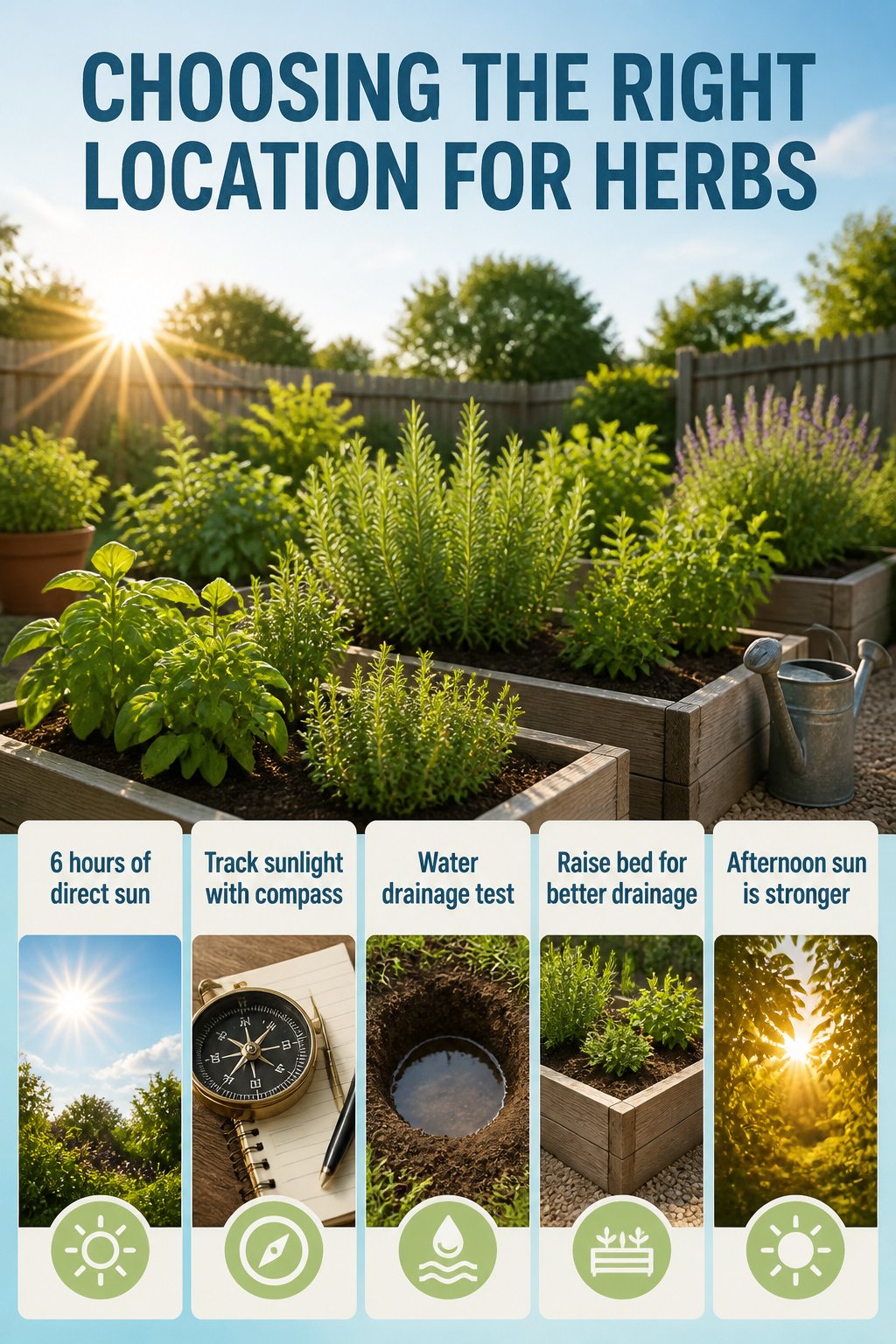
Six hours of direct sun is the figure most guides lead with, but your yard’s actual pattern probably differs from what you picture. I spent my first season assuming my patio hit the mark because it felt bright at 10 a.m.; the herbs told the truth by midsummer, stretching pale and leggy toward the single gap where afternoon light cut through. Track sun with your phone’s compass and a notebook, not memory: note where direct light falls each hour, then count only the unshaded stretches. Morning sun counts, yet afternoon rays run stronger and hotter, and that intensity matters more than duration for the volatile oils that give rosemary and thyme their punch. My basil never tasted as sharp in the east-bed spot that lost light by two o’clock.
Drainage fails more herb gardens than shade does. Before planting, dig a hole roughly a foot across, fill it with water, and watch. If it stands for hours, your soil holds too much moisture for Mediterranean herbs that prefer lean, dry conditions. The fix is not richer soil but better exit for what is there; work in grit or coarse sand, or raise the bed even six inches. Once water moves through, most herbs tolerate poor fertility far better than they tolerate wet feet. My thyme in half-composted construction fill outperformed the pampered pot every time.
Plant Selection for Beginners
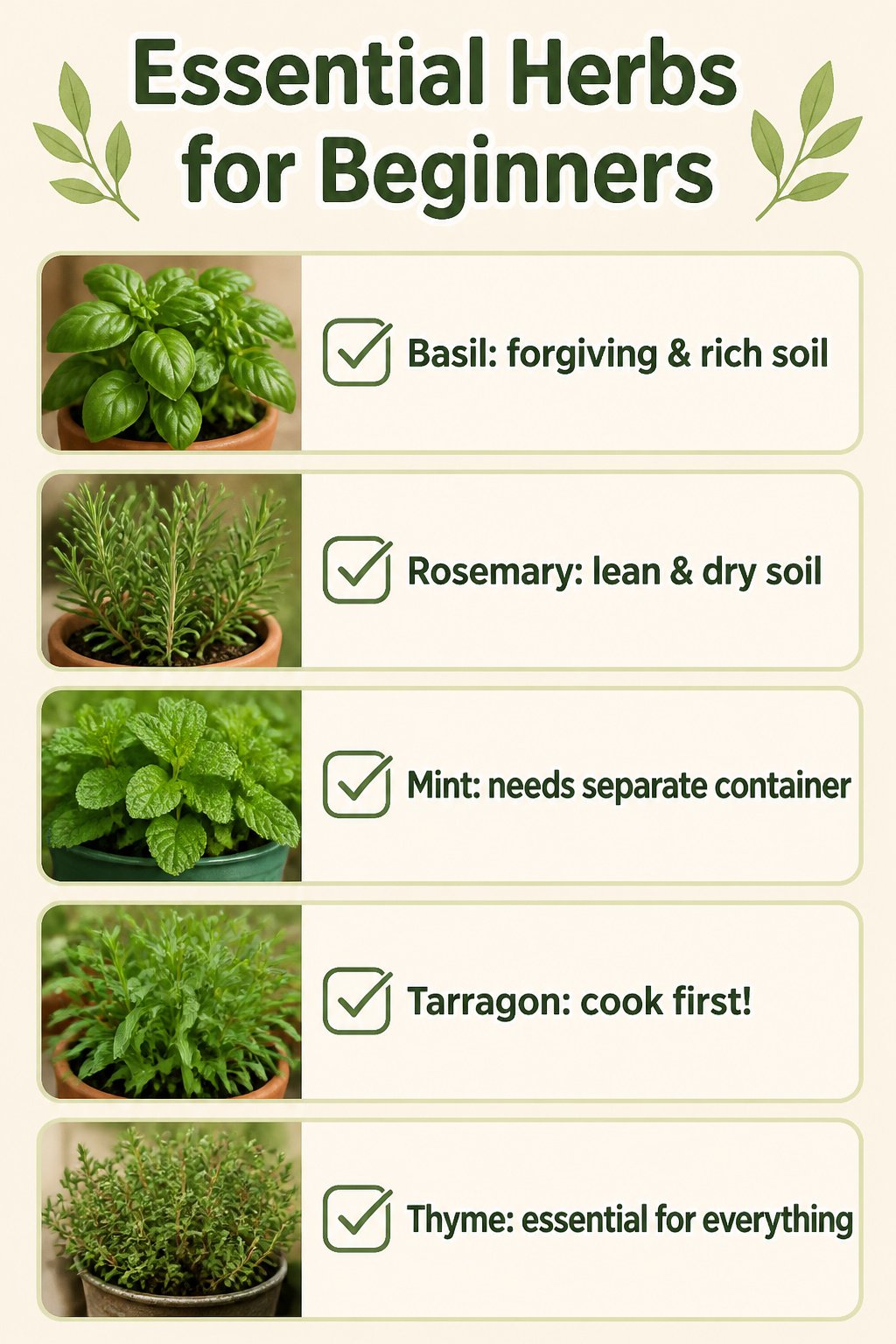
Basil was the first herb that ever forgave me. I forgot to water it for four days in July, and it still bounced back after a deep soak. That softness in the leaves means it wants richer soil and steady moisture, but it will not hold a grudge if you miss by a little.
Rosemary and thyme ask for the opposite. They like it lean and dry, the kind of conditions that turn basil crispy. Grouping them together in one container only works if you split the soil mix, and even then one side always suffers. Separate pots solve it.
Mint grows almost too willingly. Its roots will fill the entire space and crowd out anything else you planted, so mint needs its own container, full stop. Check it often or it turns leggy, but snipping the ends encourages the bushy growth you actually want.
Before you buy any of them, look at what you cook. Tarragon is lovely, but if you never make French dishes it will sit there while your basil gets harvested twice a week. Thyme goes in everything I cook, rosemary in half, and that ratio is what decided my shelf space.
Watering and Maintenance
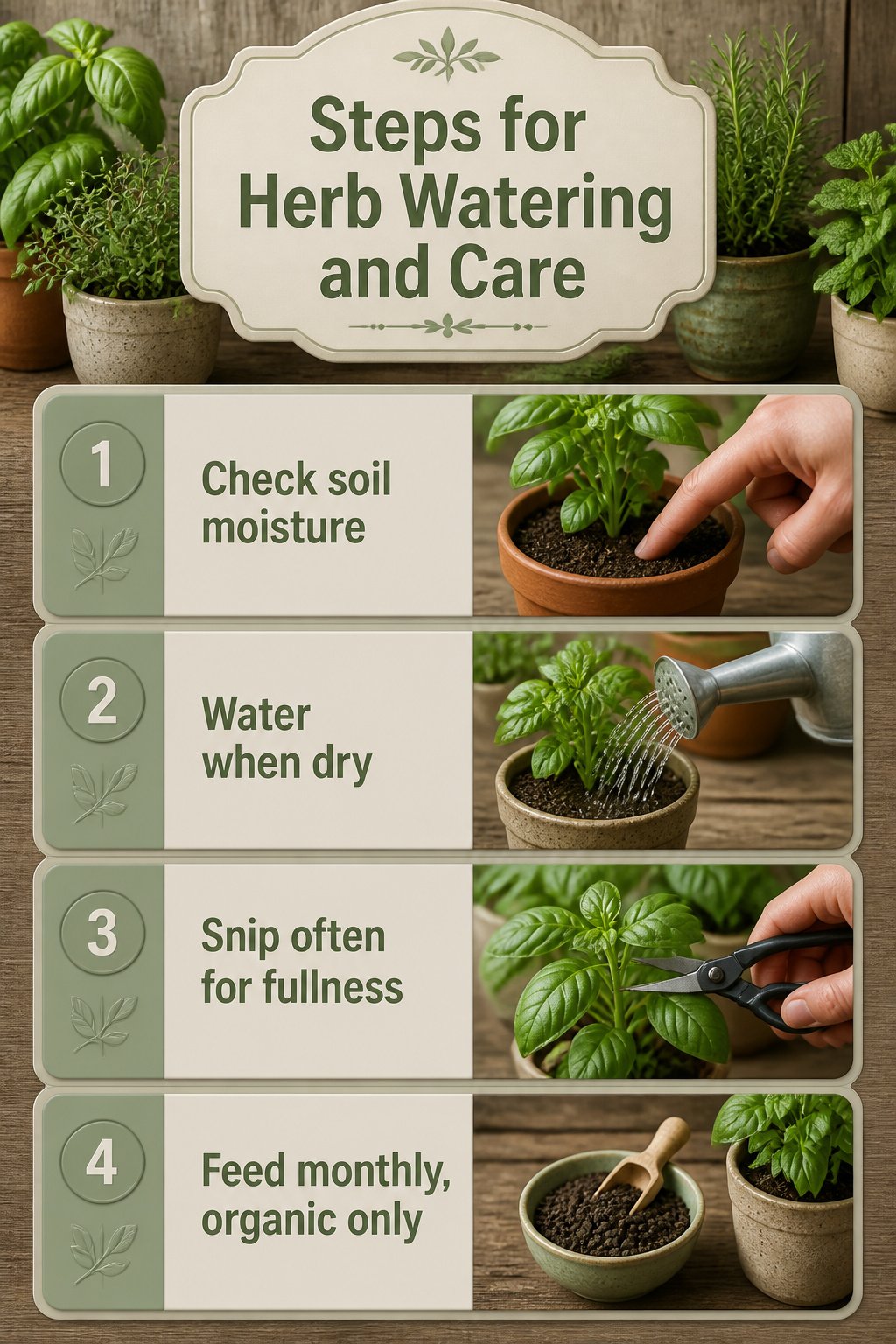
The finger test is the move that saved my basil more than once: press the top inch of soil and water only when it comes up dry. Herbs want steady moisture but not wet feet, and their roots rot faster than vegetable roots in soggy soil because most herbs evolved in lean, fast-draining ground.
Harvesting is not the reward at the end; it is the maintenance. Snip often, and the plant grows back bushier. With basil, pinch just above a node where two tiny leaves are forming, and those two become the new leaders. The plant fills out instead of stretching into a single lanky stem.
Feed monthly if you feed at all, and use organic fertilizer at half strength or weaker. Herbs grown too lush lose the concentrated oils that make them worth growing. A little hungry keeps them flavorful.
Designing for Looks and Function
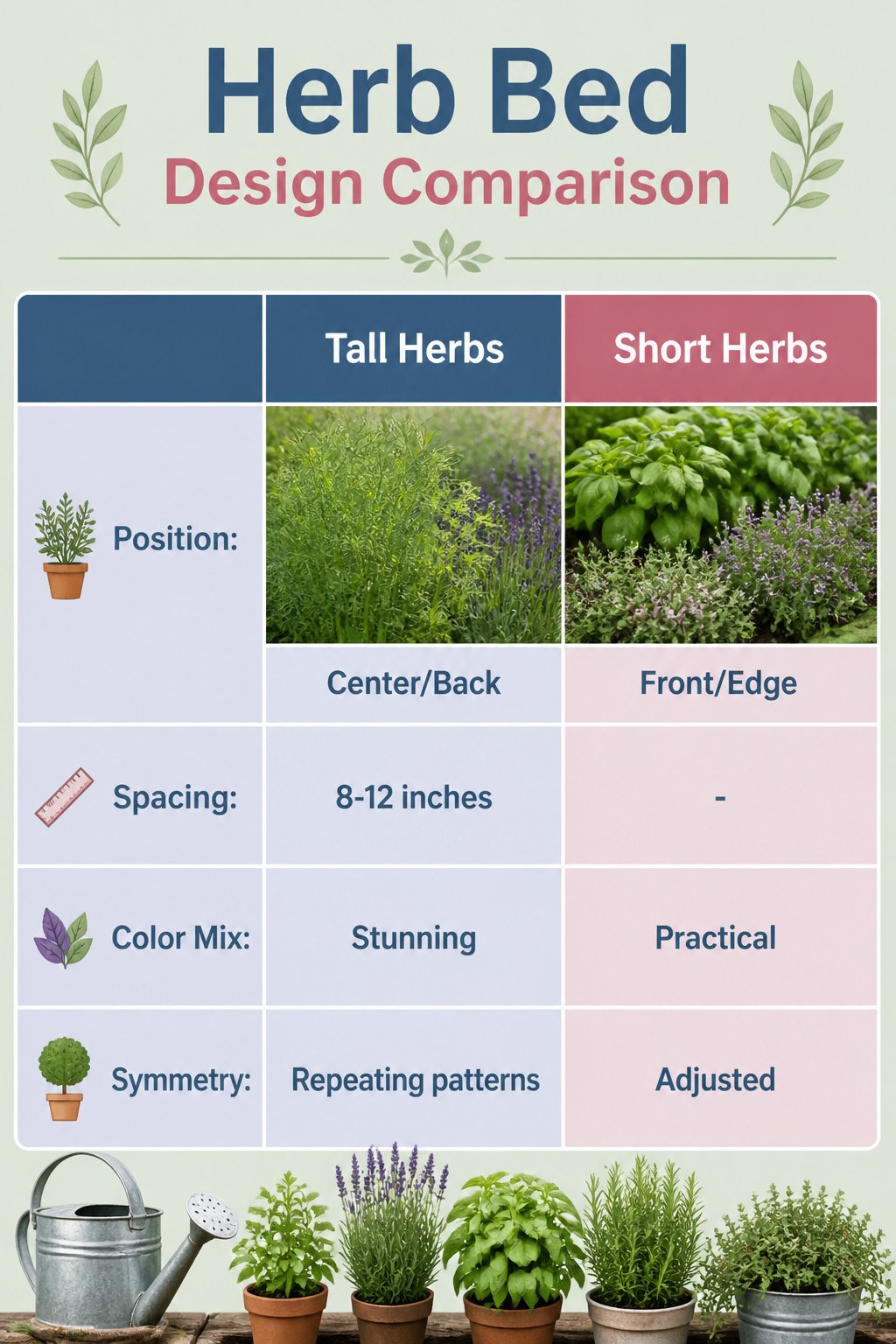
Tall herbs belong at the back or center, short ones at the front or edge. Dill behind thyme is the classic example, and the height difference matters as much for photos as for harvesting without stepping on anything. An herb bed that looks perfect from the doorway often has its basil tucked where you bruise half the leaves reaching past the lavender to get it.
8–12 inches between plants keeps air moving and roots from tangling, which also means each clump keeps its own shape instead of melting together into a green blob. Three of the same herb grouped together reads as intentional design and gives you a real handful when you need one.
Color is where I get tempted by the camera. Purple basil against silver sage is stunning until you realize you use one daily and the other twice a summer. A mix of woody and soft-leaved herbs, with one taller thriller and something trailing at the border, gives structure without turning harvest day into a rearrangement puzzle.
Symmetry helps: repeat a plant or a color across beds so the eye finds the pattern. A string grid at 12-inch crossings makes spacing obvious before anything goes in the ground. Step back with the pots still sitting on the soil, adjust, then plant. The grid beats guessing, but guessing still beats paralysis.
Upcycled Planters and Creative Containers
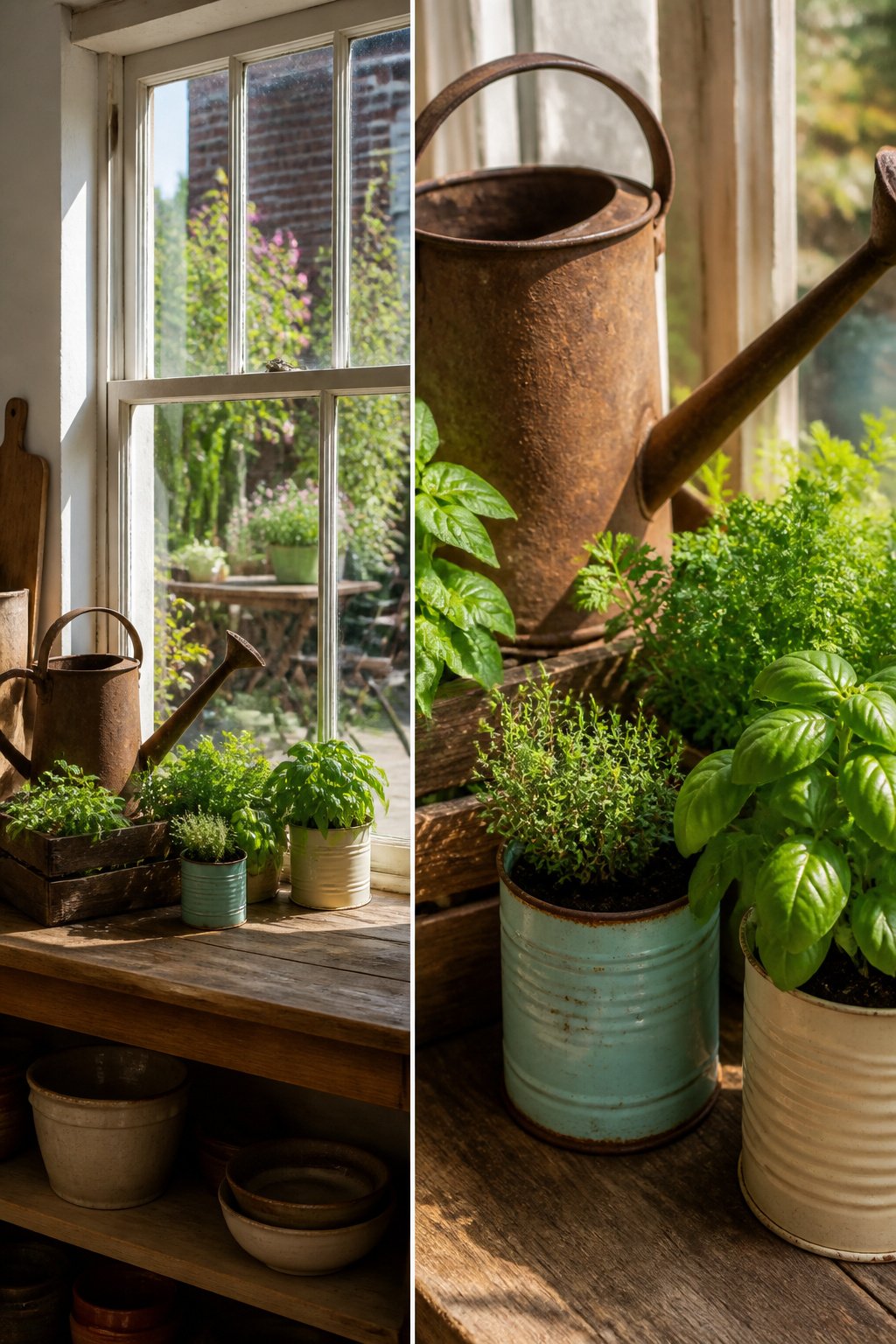
A vintage tea tin looks charming on a windowsill until the mint inside turns to black mush. That was my first attempt at an upcycled herb planter, and the mistake was pure drainage failure. I had not drilled holes. Now every container I repurpose gets at least three quarter-inch openings in the base, or it gets a plastic nursery pot slipped inside as a liner.
Teacups, old watering cans, and wooden crates all work, but materials behave differently outside. Metal tins and cans rust fastest once their coating wears, especially if you water herbs frequently. Wood rots where it sits in constant contact with damp soil, though a fruit box or wine crate lasts longer if you line it with plastic and punch drainage slits through the bottom. Woven baskets solve nothing on their own; they need that inner plastic container to hold the actual planting mix.
Drainage matters more than the container’s looks. Mediterranean herbs in particular hate wet feet, and a pretty planter without an exit route for water is just a slower drowning. Paint old vases or tins to match your decor, but drill before you paint, or the coating cracks around the hole. Mint, I learned, wants damp soil but still not standing water, so even that thirsty herb needs an escape route for the excess.
Herbs for Pollinators
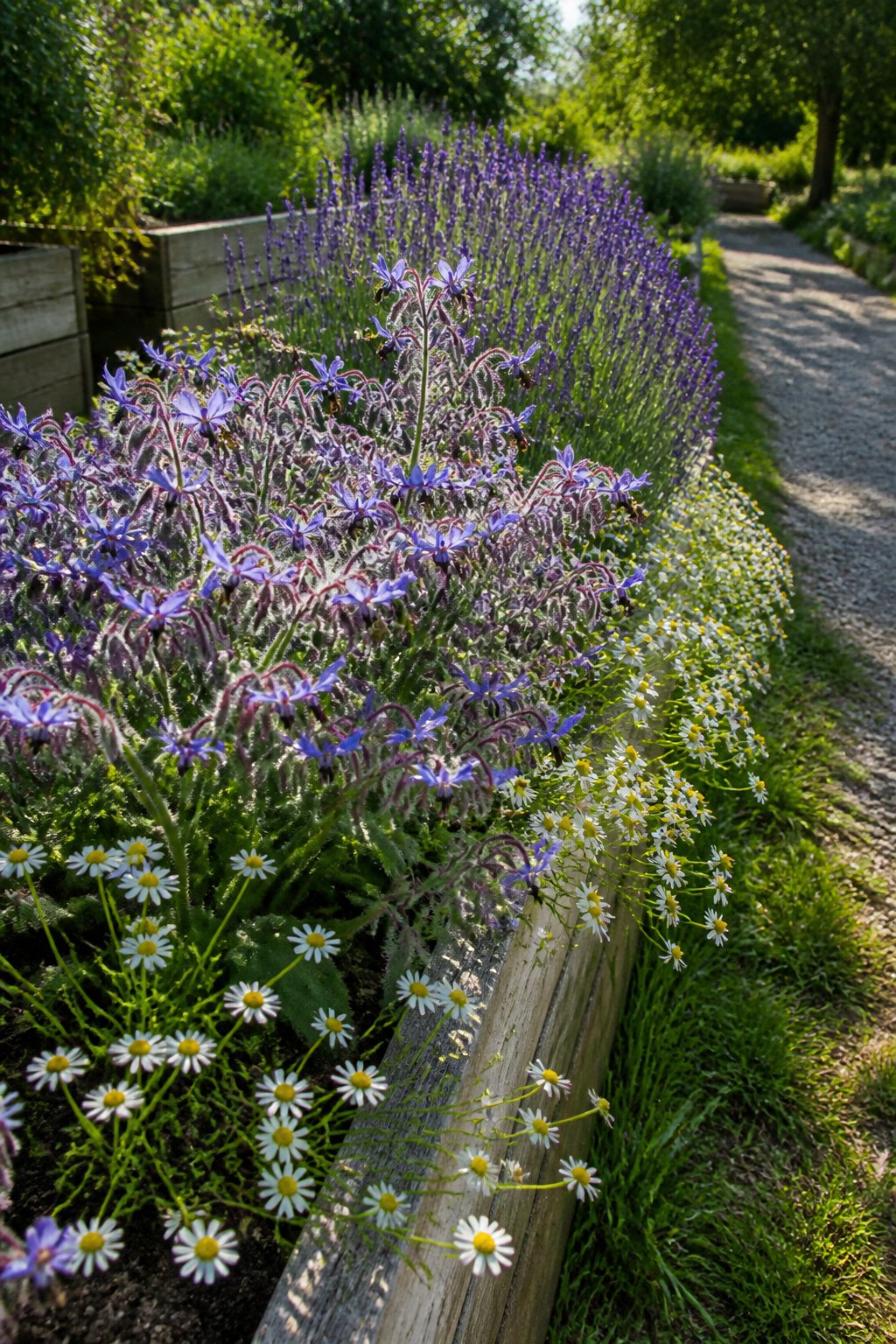
Some herbs pull double duty in the kitchen and the garden only if you time them right. Borage, lavender, and chamomile all bloom beautifully, and those flowers feed bees and beneficial insects from early summer straight through frost. The insects they attract often stick around to prey on aphids and other pests, which means less damage to nearby vegetables without any spraying on your part.
The tradeoff is real, though. Basil and cilantro lose their best flavor once flowering starts, so you have to choose: pinch the buds for leaves, or let them open for pollinators. Let one or two plants bolt while you harvest the rest. Oregano sits in the middle; pinching keeps the leaf flavor strong, but the pink flowers are edible too and milder than the foliage. A border about 15 feet by 4 feet along a path or patio edge gives you room to split the difference, with flowering varieties at one end and pinch-for-leaf types at the other. Leave the spent stems standing through winter, and beneficial insects will shelter there until spring.